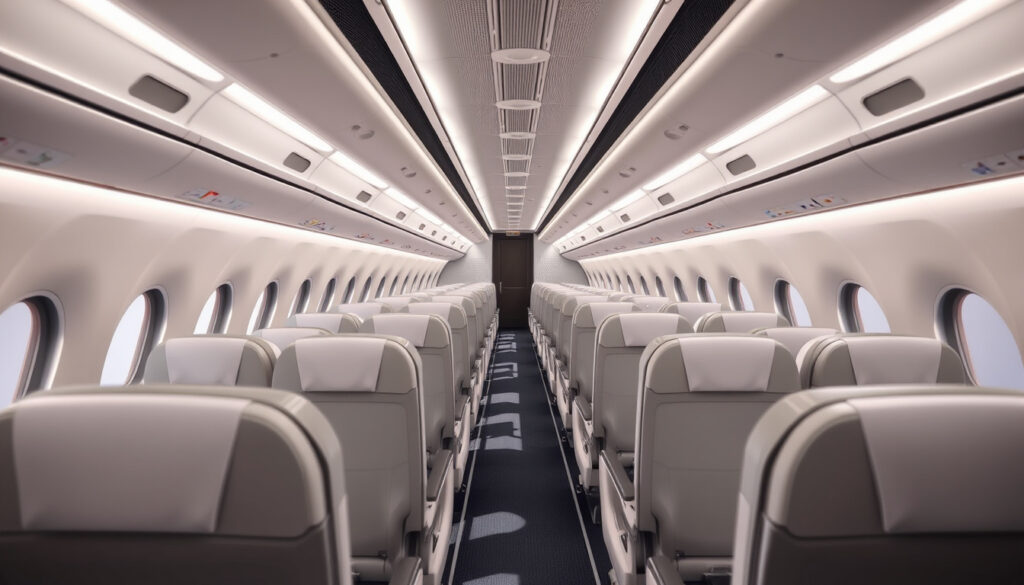
Boeing 787-10 Seat Map: Best Seats, Layout & Comparison
There’s a particular ritual to picking a seat on a wide-body flight, and the Boeing 787-10 makes it more interesting than most. The seating plan changes meaningfully between airlines — EVA Air fits 342 passengers in 34 Royal Laurel business seats plus 308 economy seats, while Singapore Airlines uses a different 337-seat layout. Here’s what the verified seat maps show, where the best seats actually are, and how the 787-10 compares with the 777-300ER.
Total seats: 342 (EVA Air typical 2-class) · Business class seats: 34 (Royal Laurel) · Economy class seats: 308 · Business seat pitch: 44 in · Economy seat pitch: 31–32 in
Quick snapshot
- EVA Air’s 787-10 seats 342: 34 Royal Laurel + 308 economy (EVA Air official fleet page)
- Singapore Airlines’ 787-10 seats 337: 36 business + 301 economy (Singapore Airlines official seat map)
- Business cabins use a 1-2-1 layout with direct aisle access, and economy is 3-3-3 (Mainly Miles fleet analysis)
- Which seats are “best” changes with airline configuration and personal preference
- Comfort versus the 777-300ER is subjective and tied to the cabin fit-out
- EVA Air runs a two-class layout: 34 Royal Laurel + 308 economy
- Singapore Airlines runs a two-class layout: 36 business + 301 economy
- Pull up the operating airline’s own seat map before you book
- The 787-10’s lower cabin altitude makes it a stronger pick for long flights
Key facts at a glance
Ten numbers, one read: the 787-10 is built around passenger experience, and each spec below shows up in the seat you actually feel. Figures are drawn from the EVA Air official fleet page, the Singapore Airlines official seat-map PDF, and Mainly Miles fleet analysis.
| Metric | Value | Source |
|---|---|---|
| Length | 68.3 m (224 ft) | EVA Air official fleet page |
| Wingspan | 60.9 m (200 ft) | EVA Air official fleet page |
| Range | 6,345 nmi (11,750 km) | EVA Air official fleet page |
| Cabin pressure altitude | 6,000 ft (1,800 m) | Mainly Miles fleet analysis |
| EVA Air seating | 342 (34 Royal Laurel + 308 economy) | EVA Air official fleet page |
| Singapore Airlines seating | 337 (36 business + 301 economy) | Singapore Airlines official seat map |
| Business seat pitch (EVA Air) | 44 in | EVA Air official fleet page |
| Economy seat pitch (EVA Air) | 31–32 in | EVA Air official fleet page |
| Business cabin layout | 1-2-1, direct aisle access | Mainly Miles fleet analysis |
| Economy cabin layout | 3-3-3 | Mainly Miles fleet analysis |
What are the best seats on the Boeing 787-10?
Short version: the best seats are the ones the airline’s seat map doesn’t advertise. On Singapore Airlines, that means the forward economy zone and the extra-legroom seats at row 58; on EVA Air, it starts with the Royal Laurel cabin.
Best seats in business class
- Singapore Airlines’ business cabin is a staggered 1-2-1 layout with direct aisle access for every passenger (Mainly Miles fleet analysis), with business rows at 11, 12, and 14-20 (SeatRecon seat-map tracker).
- EVA Air’s Royal Laurel class gives you 44 inches of published pitch (EVA Air official fleet page), and independent seat maps list the flat-bed seat pitch at about 76 inches with a 20-inch width (SeatMaps independent seat data).
- Solo travelers in a 1-2-1 layout tend to prefer the window-side singles; couples often pick the middle pair, which sits closer together. This is the standard advice for this cabin type, and it holds on both EVA Air and Singapore Airlines.
Best economy seats to choose
- Singapore Airlines’ forward economy zone (rows 41-47) boards and deplanes before the rest of the economy cabin, and six extra-legroom seats at row 58 are the closest thing to premium economy on this aircraft (SeatRecon seat-map tracker).
- On EVA Air, published economy pitch is 31-32 inches (EVA Air official fleet page); the airline’s own seat map is the place to find exit rows and bulkhead seats, which stretch that pitch further.
- Window seats anywhere on the 787-10 earn their keep: the Dreamliner’s windows are larger than on older jets, so the view is the economy cabin’s free upgrade.
Seats to avoid on the 787-10
- Singapore Airlines’ official seat map flags some economy window seats as windowless positions, and independent trackers put them at 16A/16K, 57A/57K, and other rear-cabin positions (Singapore Airlines official seat map; SeatRecon seat-map tracker).
- Seats near galleys and lavatories carry noise and foot traffic on any layout; the SQ plan also warns it is not drawn to scale, so read the PDF rather than the thumbnail (Singapore Airlines official seat map).
- Skip the rear-most rows of the economy cabin unless you need quick lavatory access — they pick up galley noise and boarding-time traffic without adding legroom.
Singapore Airlines’ row 58 and its forward economy zone deliver most of the business-class benefit — earlier boarding and real extra legroom — at a fraction of the fare.
What is the seating plan for a Boeing 787-10?
Two airlines, two nearly identical airframes, and two different seat plans. The layout you get depends entirely on the carrier that operates your flight.
Typical 2-class configuration
- EVA Air: 342 seats (34 Royal Laurel + 308 economy) per its official fleet page (EVA Air official fleet page).
- Singapore Airlines: 337 seats (36 business + 301 economy) per its official seat-map PDF (Singapore Airlines official seat map).
- Both carriers run the 787-10 as a two-class aircraft on these routes, with business and economy and no separate premium cabin (SeatGuru seat-map database).
- Singapore Airlines splits its economy cabin into forward and rear sections, so boarding and cabin service differ by zone (Mainly Miles fleet analysis).
EVA Air Royal Laurel Class layout
- Independent LOPA drawings confirm a 1-2-1 layout with 34 lie-flat seats (AeroLOPA seat-map specialist).
- Published pitch is 44 inches in Royal Laurel and 31-32 inches in economy (EVA Air official fleet page).
- Independent seat data adds a 20-inch business width and a flat-bed seat pitch of about 76 inches (SeatMaps independent seat data).
Singapore Airlines seat map overview
- Business: staggered 1-2-1 in rows 11, 12, 14-20; economy: 3-3-3 in rows 41-75 with a forward zone at 41-47 (SeatRecon seat-map tracker).
- Six extra-legroom seats sit at row 58 (SeatRecon seat-map tracker).
- The official PDF identifies standard, extra-legroom and bassinet seats, and warns the plan is not to scale (Singapore Airlines official seat map).
What this means: “check the seat map” has to mean the specific airline’s map. EVA Air and Singapore Airlines share the same airframe but different cabins, so a good seat on one means nothing on the other.
Is the 787-10 a big plane?
By modern wide-body standards, yes — with one caveat about what “big” means. The 787-10 is the largest Dreamliner you can book, and it still sits a clear step below the biggest 777s.
Dimensions compared with other wide-bodies
- Length is 68.3 m (224 ft), wingspan is 60.9 m (200 ft), and range is 6,345 nmi (11,750 km) per the official fleet publication (EVA Air official fleet page).
- Cabin pressure altitude is 6,000 ft — close to sea-level comfort, which is why the 787 family is known for less jet lag (Mainly Miles fleet analysis).
- Capacity in the 330-340 range sits above most mid-size wide-bodies but below the 777-300ER’s 396-seat high-density layouts.
Passenger capacity context
- EVA Air fits 342 passengers in two classes (EVA Air official fleet page).
- Singapore Airlines fits 337 (Singapore Airlines official seat map).
- Those are dense configurations for a wide-body, which is why the 787-10 feels busy on regional routes even when it is far from sold out.
How it fits in the Dreamliner family
- The 787-10 is the largest Dreamliner variant, seating more than the 787-8 or 787-9 in the same airline’s configuration.
- Within the family, the 787-10 is the capacity play; longer-range variants like the 787-9 trade some seats for distance.
- If you see a 787-10 and a 787-9 side by side, the extra fuselage length of the -10 is most visible behind the wing, as the independent LOPA drawings show (AeroLOPA seat-map specialist).
The pattern: the 787-10 is the biggest Dreamliner you can book, full stop. Next to a 777-300ER at the same gate, though, it is still the smaller aircraft — which sets up the comparison travelers actually argue about.
Is 787-10 bigger than 777?
Short answer: no. The 777-300ER is longer, carries more passengers, and flies farther; the 787-10 counters with a newer, quieter, more comfortable cabin.
Length comparison
- Boeing’s published figures put the 777-300ER at 73.9 m, against the 787-10’s 68.3 m — a 5.6 m gap that shows up in the fuselage behind the wing.
- The extra length on the 777 buys additional rows, not additional legroom: seat pitch is set by the airline, not the airframe.
Capacity and range differences
- The 777-300ER carries up to 396 passengers in typical high-density layouts; EVA Air’s 787-10 seats 342, so the gap is about 54 seats (Boeing public specifications; EVA Air official fleet page).
- Range is 7,370 nmi for the 777-300ER versus 6,345 nmi for the 787-10 — roughly 1,025 nmi more for the 777 (Boeing public specifications).
- For airlines, that range difference shapes where each aircraft flies: the 787-10 handles mid-and-long-haul routes, while the 777-300ER keeps the ultra-long-haul assignments.
Comfort and cabin experience
- The 787-10 pressurizes its cabin to 6,000 ft, against roughly 8,000 ft on the 777-300ER; in practice, that lower altitude is linked to less fatigue, fewer headaches, and better sleep (Mainly Miles fleet analysis).
- Larger windows and LED lighting give the 787-10 cabin a more open feel, and the engines are quieter both inside and out (Boeing published features).
- Seat-level comfort still depends on the airline’s fit-out: a 17-inch economy seat is the same width on both aircraft if the carrier configures it that way (SeatMaps independent seat data).
For most travelers, the 787-10’s cabin beats the 777’s size advantage on any route both aircraft can fly. The 777 only wins when the route is long enough to rule out the Dreamliner.
The trade-off is simple: the 777-300ER is the bigger machine, but the 787-10 is the better flight experience for the same route. Choose range and seat count, or choose cabin altitude and noise — this matchup usually doesn’t let you have both.
Is the 787-10 a good plane?
Yes — and the reasons are measurable rather than marketing. The 787-10 addresses the three biggest passenger complaints about older wide-bodies: noise, dry air, and the fatigue that comes from cabin pressure.
Passenger comfort features
- Cabin altitude of 6,000 ft, against roughly 8,000 ft on older jets, reduces headaches and jet lag on long flights (Mainly Miles fleet analysis).
- Higher humidity and bigger windows are standard across the Dreamliner family, which is why the cabin feels less stuffy than older wide-bodies (Boeing published features).
- The engines are noticeably quieter, both in the cabin and on the ground (Boeing published features).
Fuel efficiency and environmental impact
- Boeing says the 787 family burns about 20% less fuel than similar-sized jets, which is the economic argument behind EVA Air and Singapore Airlines’ 787-10 orders (Boeing published figure).
- For passengers, the practical upside is that airlines can run the 787-10 on routes that would be marginal with a gas-hungry 777.
Airline and passenger reviews
- Consistent passenger praise centers on the smooth ride, better air quality, and quiet cabin — the traits that make a long flight feel shorter.
- The catch: seat comfort still depends on the operator. A 17-inch-wide economy seat on a 787-10 is not automatically better than a wider seat on an older aircraft (SeatMaps independent seat data).
- EVA Air and Singapore Airlines both built premium regional and medium-haul products around the 787-10, which is a practical endorsement from two demanding operators (EVA Air official fleet page; Singapore Airlines official seat map).
The 6,000-ft cabin altitude is the invisible feature that changes a flight more than any single seat dimension: lower pressure means less fatigue and better sleep. It’s the reason a 787-10 in economy can feel better than a 777 in a comparable seat.
Where this leaves you: the 787-10 is one of the few modern airframes where the engineering genuinely improves the passenger experience. The operator still matters — but the airplane makes their job easier.
Boeing 787-10 vs 777-300ER: side by side
Four metrics, one pattern: the 777-300ER wins every size-and-range checkbox, while the 787-10 wins the comfort argument. Boeing’s public specifications anchor the 777 column; EVA Air, Singapore Airlines, and independent seat-map sources anchor the 787-10 column.
| Metric | Boeing 787-10 | Boeing 777-300ER | Passenger takeaway | Source |
|---|---|---|---|---|
| Typical seating | 342 (EVA Air) or 337 (Singapore Airlines) | Up to 396 | The 777 fits about 50 more seats | AeroLOPA; SeatGuru |
| Length | 68.3 m (224 ft) | 73.9 m | The 777 is 5.6 m longer | EVA Air official fleet page |
| Range | 6,345 nmi (11,750 km) | 7,370 nmi | The 777 flies about 1,025 nmi farther | EVA Air official fleet page |
| Cabin experience | 6,000-ft cabin altitude, larger windows, quieter cabin | Conventional cabin altitude | The 787-10 feels newer and more restful | Mainly Miles fleet analysis |
The pattern: if the metric is a number, the 777 wins; if the metric is the feeling inside the cabin, the 787-10 wins. Your route length decides which column matters more.
Boeing 787-10 specifications and seat data
Ten specs, one read: the airframe is consistent, but every seat-level number changes with the operator. Independent databases fill in the gaps left by airline marketing pages — see SeatMaps independent seat data and SeatRecon for row-level detail.
| Item | Detail | Source |
|---|---|---|
| Aircraft family | Boeing 787 Dreamliner; largest variant | EVA Air official fleet page |
| Length | 68.3 m (224 ft) | EVA Air official fleet page |
| Wingspan | 60.9 m (200 ft) | EVA Air official fleet page |
| Range | 6,345 nmi (11,750 km) | EVA Air official fleet page |
| Cabin pressure altitude | 6,000 ft (1,800 m) | Mainly Miles fleet analysis |
| EVA Air business cabin | 34 Royal Laurel seats, 44-in pitch, 20-in width, ~76-in flat-bed pitch | EVA Air official fleet page; SeatMaps |
| EVA Air economy cabin | 308 seats, 31–32-in pitch, 17-in width | EVA Air official fleet page; SeatMaps |
| Singapore Airlines business cabin | 36 seats, 1-2-1 staggered, rows 11–20, 60-in pitch, 20-in width | Singapore Airlines official seat map; SeatMaps |
| Singapore Airlines economy cabin | 301 seats, 3-3-3, rows 41–75, 32-in pitch, 17-in width | Mainly Miles; SeatMaps |
| SQ forward economy zone | Rows 41–47 | SeatRecon |
| SQ extra-legroom seats | 6 seats at row 58 | SeatRecon |
| SQ windowless positions | 16A/16K, 57A/57K, plus rear-cabin seats per trackers | Singapore Airlines official seat map; SeatRecon |
The implication: seat-level data is only as reliable as the airline’s last configuration update, so independent databases are a guide, not a guarantee.
Boeing 787-10: what works and what doesn’t for passengers
Every aircraft is a compromise; the 787-10’s compromises are more pleasant than most, but they are still there.
Upsides
- Largest Dreamliner cabin, with 342 seats on EVA Air and 337 on Singapore Airlines
- Every business seat has direct aisle access on Singapore Airlines
- 6,000-ft cabin altitude and higher humidity cut fatigue on long flights
- Quieter engines and bigger windows than older wide-bodies
- Economy pitch up to 32 inches on Singapore Airlines
Downsides
- Economy width is about 17 inches on both carriers (SeatMaps independent seat data)
- Windowless seats exist on Singapore Airlines’ 787-10 (Singapore Airlines official seat map)
- Two-class fit-out means no premium economy on these aircraft (SeatGuru seat-map database)
- The 787-10’s range trails the 777-300ER by about 1,025 nmi (Boeing public specifications)
- The official SQ seat map is not to scale, so check the PDF before selecting
The catch: the 787-10’s pros are mostly about the airframe, while its cons are mostly about how the airline configures it. That split tells you where to put your energy when booking.
What’s confirmed vs what’s still unclear on the 787-10
Editor’s note: We cross-checked airline-published documents against independent seat-map specialists. Configurations change over time, so the airline’s own seat map is the final authority before you book.
Confirmed facts
- The 787-10 is the largest variant in the Dreamliner family.
- EVA Air operates 34 Royal Laurel + 308 economy seats; Singapore Airlines operates 36 business + 301 economy seats — configurations confirmed by official documents and LOPA drawings (AeroLOPA seat-map specialist).
- Singapore Airlines uses a 1-2-1 business layout and a 3-3-3 economy layout (Mainly Miles fleet analysis).
- EVA Air publishes 44-in business pitch and 31-32-in economy pitch (EVA Air official fleet page).
What’s still unclear or subjective
- Which seats are “best” depends on airline configuration and personal preference — a window seat matters more to some travelers than extra legroom does to others.
- Comfort versus the 777-300ER is subjective and tied to the cabin fit-out, not just the airframe.
- Independent databases list EVA Air business flat-bed pitch at 76 in, while the airline’s official page says 44 in; the gap likely reflects whether a source measures lie-flat bed length or upright legroom (SeatMaps independent seat data; EVA Air official fleet page).
- Row-level details from independent trackers can lag configuration updates, so treat specific row numbers as a guide, not a guarantee (SeatRecon seat-map tracker).
The honest read: the confirmed facts are solid — seat counts, layouts, pitch ranges. The unclear part is where comfort becomes personal, and that is where seat selection does the real work.
What the airlines and seat experts say
Three sources, three angles: the airline’s own seating numbers, the official seat-plan warnings, and an independent fleet analysis.
EVA Air’s published 787-10 configuration is a 342-seat, two-class cabin: 34 Royal Laurel seats with 44 inches of pitch, and 308 economy seats with 31 to 32 inches.
Singapore Airlines’ 787-10 seat plan identifies standard, extra-legroom and bassinet seats, warns that the plan is not to scale, and flags certain economy window seats as windowless positions.
Singapore Airlines’ 787-10 business class uses a 1-2-1 layout with direct aisle access for every passenger, and the economy cabin splits into forward and rear sections.
What the quotes share: the airlines publish the facts, and the seat experts fill in the gaps the airline pages leave out — which is exactly what a passenger needs before choosing a row.
The 787-10 is easier to enjoy than to label. On the two carriers that matter most for this aircraft, the seat map is the difference between a good flight and a great one: EVA Air’s 44-inch Royal Laurel pitch and Singapore Airlines’ direct-aisle business cabin are both class-competitive, while economy passengers should chase the forward zone or row 58. For the traveler comparing the Dreamliner with a 777, the decision comes down to route length: if the 787-10 covers it, take the quieter, lower-altitude cabin; if the route pushes past its 6,345-nmi range, the 777’s extra reach earns its keep. The implication for anyone booking this aircraft is clear: research the row before you book the flight, and the 787-10 will take care of the rest.
seatmaps.com, singaporeair.com, flightseatmap.com, flightseatmap.com, evaair.com, seatmaps.com, seatrecon.com, seatmap.app
Frequently asked questions
How many seats does a Boeing 787-10 have?
It depends on the airline operating it. EVA Air’s 787-10 has 342 seats (34 Royal Laurel + 308 economy), while Singapore Airlines’ has 337 (36 business + 301 economy).
What is the seat width in economy on the 787-10?
About 17 inches on both EVA Air and Singapore Airlines, according to independent seat-map databases such as SeatMaps. That is similar to most long-haul economy cabins, though it can feel snug on a full flight.
Does the 787-10 have window shades?
No. The 787 family uses electronically dimmable windows instead of pull-down shades; passengers adjust the tint with a button, and the crew can override the system. One catch specific to Singapore Airlines: some window seats are actually windowless positions, so a window seat does not always guarantee a view.
What is the best airline for flying on a 787-10?
For passengers in Asia, the two 787-10 operators you are most likely to book are EVA Air and Singapore Airlines. EVA Air offers Royal Laurel class with 44 inches of published pitch; Singapore Airlines offers a 1-2-1 business cabin with direct aisle access and a forward economy zone that is easy to recommend. Both run two-class configurations, so the best airline depends on whether you value the business hard product or the economy cabin geography more.
Are there any seats to avoid on the 787-10?
Avoid the windowless positions on Singapore Airlines (16A/16K and 57A/57K according to SeatRecon), plus any seat near a galley or lavatory. The rear of the economy cabin is noisier and busier, and the official SQ plan is not to scale, so check the airline’s PDF before choosing a row.
Does the 787-10 have premium economy?
Not on EVA Air’s or Singapore Airlines’ current 787-10 configurations. Both carriers operate the aircraft as a two-class layout (business + economy), so if premium economy is a must, check other aircraft types on the route.
How does the 787-10 compare to the 787-9 in terms of seating?
The 787-10 is the largest Dreamliner variant, so in the same airline’s configuration it seats more than the 787-9. EVA Air’s 787-10 carries 342 passengers and Singapore Airlines’ carries 337; a typical 787-9 is configured with fewer seats, which means the -10 often feels busier in economy but also offers more capacity on high-demand routes.
Related reading
More related posts
 Macclesfield vs Crystal Palace Lineups: FA Cup Shock 2026
 Battery Health Check iPhone – 2025 Step-by-Step Guide
 School Holidays 2026 Singapore: MOE Dates & Calendar
 Cream of Mushroom Soup – Simple Recipe and Variations
 What to Eat at NEX Mall: Best 22 Food Picks Guide
 A Knight of the Seven Kingdoms Episodes: Guide & Season 2 News
 Sindo Ferry Schedule 2025: Routes from HarbourFront & Tanah Merah
 Kolkata Knight Riders vs SRH Timeline: Head-to-Head History