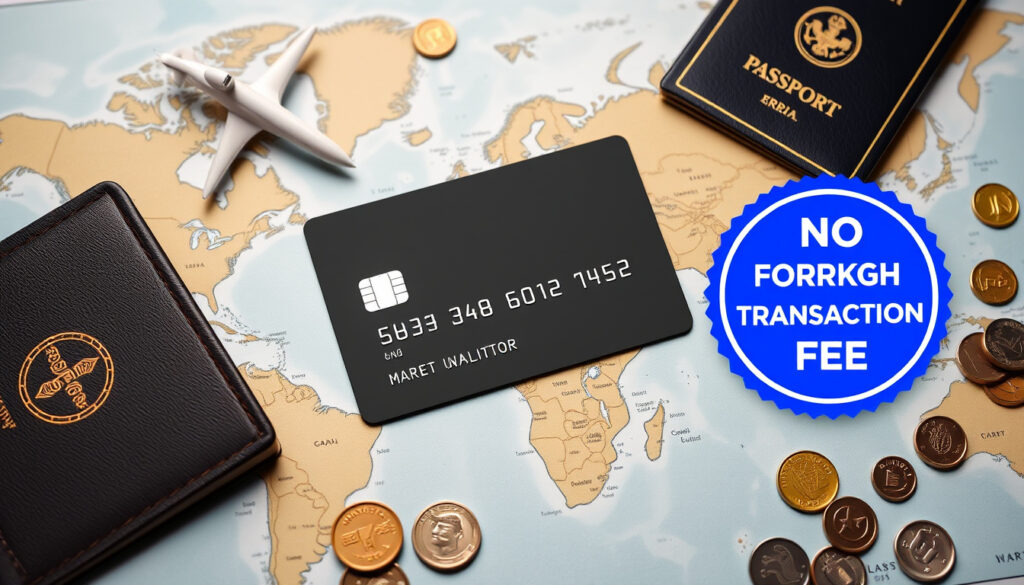
Best Credit Card for Overseas Spending 2026: No Foreign Transaction Fees
Anyone who has glanced at a credit card statement after a holiday knows the sting of a 3% foreign transaction fee. Yet with the right card, those charges vanish entirely, and we’ve compared the leading UK travel credit cards to find which ones genuinely save you money abroad – and where the hidden costs still lurk.
Typical foreign transaction fee: 3% ·
Cards with no foreign transaction fee (UK): 15+ ·
Visa merchant acceptance worldwide: 44 million locations ·
Mastercard merchant acceptance worldwide: 35 million locations ·
Top-rated no-fee card (UK): Halifax Clarity
Quick snapshot
- Always pay in local currency
- Reject dynamic currency conversion
- Avoid cash advances if possible
- Visa: slightly more merchants worldwide
- Mastercard: often better exchange rates
- Both widely accepted
Five key numbers tell the story of overseas credit card costs.
| Label | Value |
|---|---|
| Common fee | 3% |
| No-fee cards available (UK) | 15+ |
| Best UK card overall | Halifax Clarity |
| Best for rewards | Lloyds Ultra |
| Typical cash withdrawal fee | 3% or £3, whichever higher |
What credit card is best to use overseas?
Choosing the right travel credit card comes down to three criteria: no foreign transaction fee, competitive exchange rates, and low ATM fees. The MoneySavingExpert (UK consumer finance authority) rounds up the top options each year, and the same names consistently appear.
Top credit cards for overseas spending
- Halifax Clarity – 0% foreign transaction fee on purchases and cash withdrawals (interest applies after the grace period). MoneySavingExpert (UK consumer finance authority) calls it a “strong travel card”.
- Barclaycard Rewards – 0% foreign transaction fee on spending and cash withdrawals. Wise (money transfer specialist) notes it’s “unusual” for a UK card to waive fees on cash abroad.
- Santander All in One – 0% foreign transaction fee on purchases, plus 0.5% cashback (capped at £10/month). MoneySuperMarket (price comparison site) includes it among top picks.
- Virgin Money Travel Credit Card – fee-free for foreign exchange spending, but Virgin Money UK (bank) warns cash withdrawals incur a cash advance fee.
Criteria for choosing a card
Experian (credit reporting agency) explains that travel cards use competitive exchange rates. The primary criterion is a 0% foreign transaction fee, but check the fine print: some cards charge for ATM withdrawals even if purchases are free.
The pattern: three cards lead the pack on fee-free purchases, but their ATM policies differ sharply.
| Card | Foreign transaction fee | ATM withdrawal fee | Rewards |
|---|---|---|---|
| Halifax Clarity | 0% | 0% fee (interest from day one) | None |
| Barclaycard Rewards | 0% | 0% fee | Rewards points on spending |
| Santander All in One | 0% | 3% (min £3) | 0.5% cashback |
| Virgin Money Travel | 0% | Cash advance fee applies | None |
The trade-off: Barclaycard Rewards offers the most complete package (fee-free purchases and cash), but Santander All in One adds cashback for those who repay in full. For pure ATM withdrawals, Halifax Clarity is the safest bet among the big names.
All four cards eliminate the 3% foreign transaction fee on purchases. But a UK traveller using an ATM abroad faces a maze of different policies: Barclaycard Rewards and Halifax Clarity are the only ones that don’t add an extra fee on top of standard interest.
The implication: for UK travellers who use cash, the choice is between two cards – Barclaycard Rewards and Halifax Clarity – that waive the ATM fee, though interest still applies from day one.
How do I avoid foreign transaction fees?
The standard foreign transaction fee on UK credit cards sits at 3% per purchase, as Bankrate (financial comparison site) reports. Avoiding it is straightforward if you follow three rules.
Use a card with 0% foreign transaction fee
Many UK cards now offer 0% foreign transaction fees. MoneySuperMarket (price comparison site) lists over 15 such cards in its 2026 round-up. Always check the card’s terms before travelling.
Avoid dynamic currency conversion
When paying abroad, the terminal may offer to charge you in pounds instead of the local currency. This “dynamic currency conversion” typically adds 3–7% to the cost, according to Curve (fintech card issuer). Always choose “pay in local currency”.
Always pay in local currency
Selecting local currency lets your card’s network set the exchange rate (usually the interbank rate plus a small margin). MoneySavingExpert (UK consumer finance authority) emphasises this as the single biggest money-saver.
- Check your card has 0% foreign transaction fees.
- At the point of sale, say “no” when asked if you want to pay in pounds.
- Use a fee-free card for ATM withdrawals, but always take out larger sums to minimise interest.
The catch: even with a 0% fee card, cash withdrawals usually incur interest from the date of withdrawal – no interest-free period applies. Experian (credit reporting agency) warns that Halifax Clarity’s ATM policy is fee-free but interest accrues immediately.
The UK traveller who repays their credit card balance in full each month will pay exactly zero in fees and interest on purchases abroad. But anyone using the card for cash will be charged interest from day one – even on a 0% fee card like Halifax Clarity.
The pattern: fee-free purchases are easy; cash avoidance is the real test.
Is Visa or Mastercard better overseas?
Both networks are accepted at millions of locations worldwide, but small differences matter for the frequent traveller.
Acceptance comparison
MoneySavingExpert (UK consumer finance authority) notes that Visa has a slightly wider merchant network – 44 million locations compared to Mastercard’s 35 million. In practice, both are accepted at virtually all major retailers and hotels.
Exchange rates and fees
Mastercard sometimes offers marginally better exchange rates in certain regions. Wise (money transfer specialist) points out that the difference is usually tiny (under 0.2%). Neither network charges an extra fee on top of the exchange rate – the 3% fee comes from the card issuer, not the network.
A UK traveller using a Mastercard with 0% foreign transaction fee will typically get a slightly better exchange rate than a Visa user, but the gap is negligible for most purchases under £500. The real savings come from avoiding the 3% issuer fee, not from choosing one network over the other.
The implication: network choice is secondary; the primary driver is your card’s fee and exchange rate.
What is the cheapest card to use overseas?
The cheapest option isn’t always the one with the lowest fee – it’s the one that avoids all fees and uses a fair exchange rate.
Compare fees and exchange rates
MoneySuperMarket (price comparison site) ranks Halifax Clarity and Barclaycard Rewards as the cheapest for purchases because they charge 0% foreign transaction fees. For cash, Barclaycard Rewards is cheaper because it also waives the ATM fee.
Prepaid vs credit vs debit options
Prepaid travel cards often advertise 0% fees but may have loading fees or poor exchange rates. Credit cards with 0% foreign transaction fees and cashback (like Santander All in One) can be cheaper than debit cards that charge a per-transaction fee.
Why this matters: Over a two-week trip spending £2,000, a card with a 3% fee adds £60. A fee-free card costs nothing. The difference is a night in a decent hotel.
Upsides
- No foreign transaction fees on purchases
- Competitive exchange rates via Visa or Mastercard
- Cashback or rewards possible
Downsides
- Cash withdrawals incur interest immediately
- Dynamic currency conversion can undo the savings
- Not all fee-free cards are free for ATM use
Which credit card is free to use in Europe?
Post-Brexit, most UK credit cards still work without additional fees in the European Economic Area, provided they have 0% foreign transaction fees.
Card options for Europe
MoneySavingExpert (UK consumer finance authority) lists Halifax Clarity and Nationwide Select as “free to use” across Europe. Both have 0% foreign transaction fees on purchases.
European-specific considerations
Some European countries (like the Netherlands and Germany) rely heavily on debit cards or contactless. Credit card acceptance is still high, but always carry a backup fee-free debit card. Experian (credit reporting agency) recommends checking the card’s terms for ATM fees in specific countries.
The implication: for trips within the EU, any of the top 0% fee cards will work without charges – just avoid cash advances.
Confirmed facts
- Halifax Clarity has 0% foreign transaction fee (Wise (money transfer specialist))
- Visa is accepted at over 44 million merchants (MoneySavingExpert (UK consumer finance authority))
- Dynamic currency conversion typically adds 3-7% (Curve (fintech card issuer))
What’s unclear
- Which card offers the best exchange rate at any given moment (varies daily)
- Whether a specific card will be accepted in a particular small merchant abroad
- The exact exchange rate margin applied by Visa vs Mastercard is not published
“Halifax Clarity is the best all-round card for spending abroad – no fees and a competitive exchange rate.”
– MoneySavingExpert (UK consumer finance authority)
“Always check the foreign transaction fee before you travel – a 3% fee can ruin the savings from a cheap flight.”
For the UK traveller, the choice is clear: pick a card with 0% foreign transaction fees, always pay in local currency, and avoid cash advances. Do that, and overseas spending costs exactly what the exchange rate says – no more.
currencytransfer.com, yonder.com, capitalone.co.uk, youtube.com
If you’re looking for a card that eliminates foreign transaction fees entirely, consider the best travel credit cards with no fees which offer similar benefits tailored for UK travellers.
Frequently asked questions
What is the 2/3/4 rule?
It’s a guideline some lenders use: you can typically get the best acceptance rate if you apply for no more than 2 credit cards in 3 months, and apply for at least 4 months apart. Applying too often hurts your credit score.
How often should I apply for a credit card?
Every 3-6 months is safe, but limit to 2-3 applications per year to avoid damaging your credit file. Use eligibility checkers first.
Can I use my credit card abroad for cash withdrawals?
Yes, but interest starts from day one (no grace period) and ATM fees may apply. Cards like Barclaycard Rewards and Halifax Clarity waive the ATM fee but still charge interest.
Do credit cards charge interest on cash withdrawals abroad?
Yes, all UK credit cards charge interest from the date of withdrawal on cash, even if you pay your balance in full. Avoid cash if possible.
What is dynamic currency conversion?
It’s when a merchant offers to charge you in your home currency instead of the local one. The exchange rate is usually poor, adding 3-7% to the cost. Always say no.
Are prepaid travel cards better than credit cards?
Not usually. Prepaid cards often have loading fees, poor exchange rates, and no fraud protection. Credit cards with 0% fees are more cost-effective.
Does my credit card have travel insurance?
Some premium travel cards include travel insurance (e.g., Lloyds Ultra, Nationwide Select). Check your card’s summary box – many basic fee-free cards do not.
Related reading
More related posts
 LTA Renew Road Tax: Step-by-Step Guide for Singapore Drivers
 Lolla Restaurant Singapore Closing – Timeline, Staff Reactions, Legacy
 Convert AUD to SGD: Live Rate, Forecast & Costs (2025)
 Things to Do in Melaka – Top Attractions and Itineraries
 Gardens by the Bay Dinosaur: Jurassic World Experience 2025 Guide
 Happy Chinese New Year: Greetings, Meanings & 2026 Tips
 Red Crowns Senior Living: Guide to Co-Living, Costs, 2024 Fine
 Hong Kong Disneyland Opening Hours: Times, Schedule & Tips