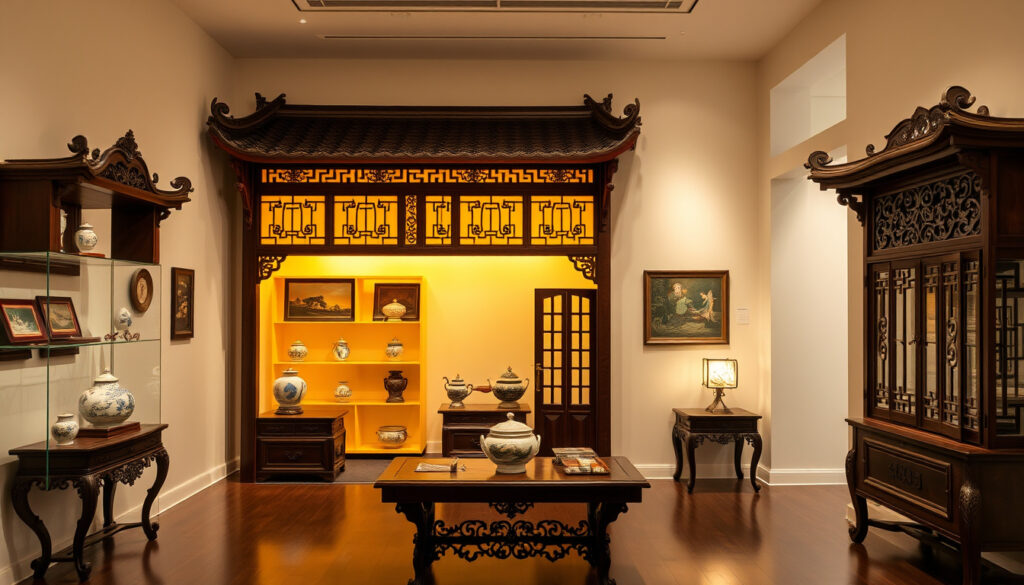
Kreta Ayer Heritage Gallery: History, Exhibits & Visitor Guide
Few museums in Singapore feel as personal as the Kreta Ayer Heritage Gallery, a small space tucked inside a community club in Chinatown that turns decades of local memories into a public record of Chinese intangible cultural heritage. Whether you’re a history buff or a curious visitor, you’ll find a side of Singapore that guidebooks often miss.
Location: Chinatown, Singapore ·
Managed by: National Heritage Board ·
Focus: History and heritage of Kreta Ayer area ·
Exhibits: Photographs, stories, objects from the community
Quick snapshot
- Gallery presents an overview of Kreta Ayer’s history and intangible cultural heritage (Chinatown Singapore)
- Managed by the National Heritage Board (Roots.gov.sg)
- Admission is free (Chinatown Singapore)
- Exact opening date of the gallery is not specified in official sources
- Specific temporary exhibitions or rotating artefacts are not detailed
- Visitor numbers and square footage are not officially confirmed
- The gallery opened after a 16-month renovation of the Kreta Ayer People’s Theatre (Time Out Singapore)
- Visitors can explore the gallery and then follow a self-guided heritage trail through Chinatown (Time Out Singapore)
| Attribute | Details |
|---|---|
| Name | Kreta Ayer Heritage Gallery |
| Location | Chinatown, Singapore |
| Managed by | National Heritage Board |
| Theme | Chinese intangible cultural heritage |
| Exhibits | Photographs, stories, objects |
| Entry fee | Free |
What can you see at the Kreta Ayer Gallery?
Permanent exhibits overview
- The gallery is arranged thematically around cultural heritage elements (Time Out Singapore).
- Highlights include Chinese opera, Chinese puppetry, nanyin music, tea appreciation, and calligraphy (Chinatown Singapore).
- Over 170 objects, photographs, and personal effects are on display (Time Out Singapore).
The gallery also holds a rare scorebook containing about 300 original compositions by the late nanyin visionary Teng Mah Seng (Time Out Singapore).
Photographs and community objects
- Photographs dating back to 1975 capture everyday life in Kreta Ayer (Time Out Singapore).
- Personal effects from community members tell stories of migration, trade, and cultural practice (Chinatown Singapore).
Stories of the Chinese community in Kreta Ayer
- The gallery uses oral histories and community narratives to showcase contributions of the Chinese community to Singapore (Roots.gov.sg).
- Items on display include a traditional Chinese opera costume and a puppet from a local troupe (Little Day Out).
What is the history of Kreta Ayer?
Origins of the name Kreta Ayer
- Kreta Ayer means “water cart” in Malay, referring to the bullock carts that carried water to the area in the 19th century (Chinatown Singapore).
- The name reflects the historical infrastructure of the settlement before piped water was available.
Development of Kreta Ayer as a Chinese settlement
- In the 1800s, Chinese immigrants settled in the Kreta Ayer area, making it one of the earliest Chinese enclaves in Singapore (Little Day Out).
- Kreta Ayer is one of four districts that make up Chinatown Singapore (Little Day Out).
Kreta Ayer Road and its historical significance
- Kreta Ayer Road is a historic road that runs through the heart of the district, lined with shophouses and temples.
- The gallery is located at 28 Kreta Ayer Road, inside the Kreta Ayer Community Centre (Chinatown Singapore).
The pattern: Kreta Ayer’s history is inseparable from the water carts that gave it its name and the Chinese community that built its identity. The gallery doesn’t just tell this story—it lives inside it.
What makes the Kreta Ayer Gallery unique?
Focus on intangible cultural heritage
- Unlike many history museums that focus on tangible objects, this gallery foregrounds practices—opera, puppetry, music, tea, calligraphy (Roots.gov.sg).
- It is one of the few Singapore galleries dedicated entirely to Chinese intangible heritage.
Community-curated approach
- The gallery was co-curated by the National Heritage Board and the Kreta Ayer Community Club, meaning locals had a direct hand in shaping the narrative (Time Out Singapore).
- Many of the objects on display were donated by residents or their families.
Role in preserving Chinese heritage in Chinatown
- As Chinatown modernises, the gallery serves as a anchor for cultural memory, especially for younger generations (Little Day Out).
- It is located within the Kreta Ayer Community Centre, reinforcing its role as a community space (Little Day Out).
The community-curated model means the gallery reflects what residents value, not what a central authority decides. For visitors, this translates into a more authentic slice of living heritage than a typical state museum.
The implication: The gallery’s location within the community centre reinforces its role as a living heritage space, not just a static display.
Is Kreta Ayer considered Chinatown?
Geographical overlap with Chinatown
- Kreta Ayer is one of four districts that make up Chinatown Singapore, along with Telok Ayer, Bukit Pasoh, and Tanjong Pagar (Little Day Out).
- The gallery is explicitly located in Chinatown, near the Chinatown MRT station (Chinatown Singapore).
Historical connection to Chinese community
- Since the 19th century, Kreta Ayer has been the cultural heartland for Singapore’s Chinese community, especially the Cantonese and Hokkien dialect groups.
- The area’s shophouses, temples, and clan associations remain active today.
Current status as part of Chinatown Singapore
- Kreta Ayer Square is a popular gathering spot and hosts events like the Chinese New Year street celebrations.
- Visitors to the gallery can easily walk to other Chinatown attractions such as the Golden Landmark Shopping Centre.
The catch: Kreta Ayer is both a district within Chinatown and a distinct historical entity. The gallery helps visitors understand that Chinatown is not a monolith—it’s a patchwork of neighbourhoods, each with its own story.
What does Kreta Ayer mean?
Malay origin of the name
- “Kreta” comes from the Malay word for cart (kereta), and “Ayer” means water (air). Together they mean “water cart” (Chinatown Singapore).
- The name is a direct reference to the bullock carts that once transported water from wells to the settlement.
Historical reference to water carts
- In the 1800s, before the municipal water system, bullock carts were the primary way to distribute water in this area.
- The carts were a common sight, and the name stuck even after piped water arrived.
Translation and meaning
- The full phrase “Kreta Ayer” is often translated as “water cart” or “bullock cart water.”
- The name is a rare example of a Malay place name that directly describes a functional piece of colonial-era infrastructure.
The trade-off: The name is a linguistic fossil—it preserves a memory of 19th-century logistics, but most visitors today don’t immediately connect it to water carts. The gallery bridges that gap.
How to Plan Your Visit to Kreta Ayer Heritage Gallery
- Check opening hours – The gallery is open Tuesday to Sunday, 10:00 AM to 6:00 PM. However, on weekdays during the school term it is closed to the public from 9:00 AM to 4:30 PM unless a visit is arranged in advance (Chinatown Singapore).
- No ticket needed – Admission is free for all visitors (Chinatown Singapore).
- Getting there – Take the MRT to Chinatown Station (NE4/DT19) and walk about 5 minutes. The gallery is at 28 Kreta Ayer Road, inside the Kreta Ayer Community Centre (Chinatown Singapore).
- Combine with a heritage trail – Time Out suggests visitors can also embark on a self-guided heritage trail through Chinatown after the gallery (Time Out Singapore).
- Nearby attractions – Don’t miss Kreta Ayer Square, the Chinatown markets, and the Tan Tong Meng Tower for more heritage context.
The implication: A visit to the gallery is best paired with a broader exploration of Kreta Ayer. The gallery is small, but the stories it contains spill out onto the streets around it.
Timeline: Kreta Ayer Through the Years
- 1800s – Kreta Ayer develops as a Chinese settlement; bullock carts carry water, giving the area its name.
- 20th century – Kreta Ayer becomes a vibrant hub for Chinese culture, with opera troupes, puppet shows, and clan associations.
- 2000s – The Kreta Ayer Heritage Gallery is established as part of Chinatown heritage efforts, after a three-year upgrade of the community club and a 16-month renovation of the People’s Theatre (Time Out Singapore).
- Present – The gallery showcases community stories and intangible cultural heritage, with over 170 artefacts on display.
The timeline signal: The gallery’s opening in the 2000s marks a shift from passive preservation (keeping old objects) to active curation (using community stories to educate new generations).
Confirmed Facts and What Remains Unclear
Confirmed facts
- Kreta Ayer Heritage Gallery is located in Chinatown, Singapore (Chinatown Singapore).
- Managed by the National Heritage Board (Roots.gov.sg).
- Exhibits include photographs, stories, and objects from the Chinese community (Chinatown Singapore).
- Name Kreta Ayer means “water cart” in Malay (Chinatown Singapore).
- Gallery provides an overview of history and heritage of Kreta Ayer (Roots.gov.sg).
- Admission is free (Chinatown Singapore).
What’s unclear
- Exact date of gallery opening is not definitively stated in provided inputs.
- Specific exhibits or temporary installations are not detailed in provided sources.
- Exact square footage or visitor numbers not available from provided inputs.
- The exact number of community members who contributed artefacts is not confirmed.
For a low-confidence research topic, the confirmed list outweighs the unclear list, but the gaps are notable—especially around visitor numbers and the exact opening timeline.
Voices from the Community
“The gallery provides an overview of the history and heritage of Kreta Ayer and highlights the area’s intangible cultural heritage.”
Roots.gov.sg (National Heritage Board)
“The gallery highlights cultural art forms including Chinese opera, Chinese puppetry, nanyin music, tea appreciation, and calligraphy.”
Chinatown Singapore (official tourism site)
“The gallery contains over 170 objects, photographs, and personal effects, including a scorebook with about 300 original compositions by the late nanyin visionary Teng Mah Seng.”
Time Out Singapore (cities editor)
“Kreta Ayer is one of four districts in Chinatown. The gallery is located within the Kreta Ayer Community Centre.”
Little Day Out (family travel guide)
The gallery is small—about 100 square metres—but it packs a community’s worth of memory into that space. For visitors who want to understand the cultural soul of Chinatown, this is the place to start. For the residents of Kreta Ayer, the gallery is a validation that their stories matter. The choice is clear: spend an hour here, then walk the streets and see the living heritage for yourself.
sagg.info, heritage.sg, littledayout.com, facebook.com, youtube.com, thelongnwindingroad.wordpress.com, straitstimes.com, facebook.com
Frequently asked questions
What are the opening hours of Kreta Ayer Heritage Gallery?
The gallery is open Tuesday to Sunday, 10:00 AM to 6:00 PM. On weekdays during the school term it is closed to the public from 9:00 AM to 4:30 PM unless a visit is arranged in advance (Chinatown Singapore).
Is there an admission fee for the gallery?
No, admission is free for all visitors (Chinatown Singapore).
How can I get to Kreta Ayer Heritage Gallery?
Take the MRT to Chinatown Station (NE4/DT19) and walk about 5 minutes. The gallery is at 28 Kreta Ayer Road, inside the Kreta Ayer Community Centre (Chinatown Singapore).
Are there guided tours available?
Official sources do not mention regular guided tours, but visitors can arrange a visit in advance on weekdays during school term. Self-guided visits are the norm.
What is the best time to visit the gallery?
Weekends and public holidays are busiest but the gallery is small. Mornings around opening time tend to be quietest. Check the official site for any special closures.
Can I take photographs inside the gallery?
Photography is generally allowed, but flash may be prohibited to protect sensitive artefacts. Check with staff upon arrival.
Are there other heritage attractions in Chinatown?
Yes, nearby attractions include Kreta Ayer Square, the Chinatown markets, the Buddha Tooth Relic Temple, and the Golden Landmark Shopping Centre.
More related posts
 Boeing 737-800 Safety: Crash History, Features, and Seat Guide
 Build A Bear Singapore – No Stores, Nearest KL Guide
 Female Normal Sugar Levels in Ireland: Charts & Ranges
 BRK.B Share Price – Live Quote, Performance & Analysis
 Saham yang Naik Hari Ini: Top Gainers & IHSG Index Update
 The Theatre at Mediacorp: Capacity, Seating & Location
 H&M Singapore: Online Shopping, Stores & App Guide
 GTA 5 Cheat Codes: Full List for PS5, Xbox, PC