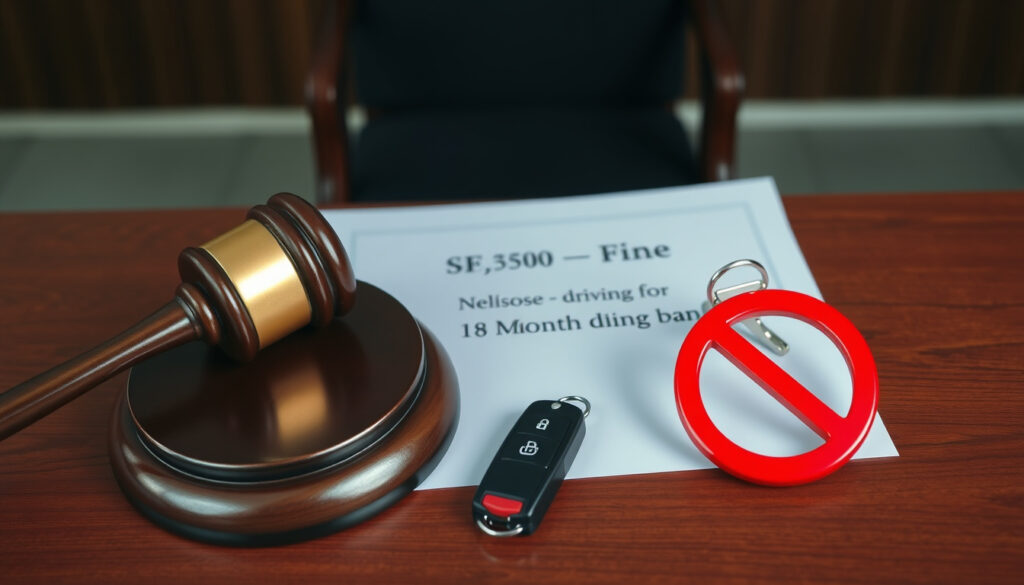
Grab Driver Teo Negligent: Fined S$3,500, Banned 18 Months
A routine ride turned into a hospital visit when a 75-year-old Grab driver drove off before his passenger was fully inside the vehicle. The resulting injury led to a S$3,500 fine and an 18-month driving ban for Teo Shim Yian. This case raises hard questions about what recourse passengers have when a driver’s negligence causes real harm.
Driver: Teo Shim Yian (75) ·
Fine: S$3,500 ·
Disqualification: 18 months ·
Charge: Causing grievous hurt by negligence ·
Date of verdict: Feb 16, 2026 ·
Source: Channel NewsAsia (Singapore news outlet)
Quick snapshot
- Teo Shim Yian pleaded guilty to causing grievous hurt by a negligent act (Channel NewsAsia)
- The 75-year-old passenger fractured her knee after falling from the vehicle (Channel NewsAsia)
- Court imposed a S$3,500 fine and 18-month driving disqualification (Channel NewsAsia)
- Grab’s code of conduct prohibits reckless driving that endangers passengers (Grab Singapore (ride-hailing platform))
- The exact extent of the passenger’s injuries and recovery status is not publicly documented
- Whether Grab deactivated or suspended Teo’s driver account after the incident
- Whether the passenger pursued civil action against the driver or Grab
- February 2026: Incident occurs when driver moves off while passenger is still boarding (Channel NewsAsia)
- February 16, 2026: Teo pleads guilty, receives fine and driving ban (Channel NewsAsia)
- February 18, 2026: Media coverage highlights driver’s poor driving record as aggravating factor (Channel NewsAsia)
- Grab may face pressure to clarify its driver deactivation policies
- Passengers may seek clearer guidance on reporting negligent driving
- Similar cases could prompt regulatory review of ride-hailing safety standards
The table below lays out seven key facts from the case at a glance.
| Fact | Detail |
|---|---|
| Driver Name | Teo Shim Yian |
| Age | 75 |
| Fine | S$3,500 |
| Charge | Causing grievous hurt by negligent act |
| Disqualification | 18 months |
| Date of incident | February 2026 |
| Source | Channel NewsAsia, Mothership, The Independent |
How do I report a Grab safety incident?
When you’re the one who gets hurt — or you witness something unsafe — knowing how to file a report can make the difference between a pattern being addressed and a driver continuing unchecked. Grab provides a dedicated safety incident report function in the app, designed for situations like the one Teo’s passenger experienced.
Using the in-app safety feature
- Open the app and go to your Ride History. Select the ride in question.
- Tap “Report Safety Issue” — this opens a form specifically for safety concerns (Grab Help Center (ride-hailing platform)).
- Describe what happened. You can attach photos or screenshots as evidence.
Reporting after the ride
- Even if you didn’t report during the ride, you can file a report through the same Help Centre up to several days later.
- Reports can be made anonymously — Grab states it does not disclose the reporter’s identity to the driver (Grab Help Center).
- Grab says it investigates all reports within 24 hours and suspends driver accounts during the investigation (Grab Help Center).
What information is needed
- Your ride details: date, time, and driver name or plate number.
- A clear description of the incident: what the driver did, where it happened, and any witnesses.
- Any supporting evidence: photos of injuries, screenshots of the ride details, or medical reports.
Can I report a grab driver for driving recklessly?
Reckless driving is not just a frustration — it’s a direct violation of Grab’s driver code of conduct. The company’s policy explicitly states that drivers must not commit traffic violations or drive in a way that endangers users, other road users, or pedestrians (Grab Singapore (ride-hailing platform)).
Defining reckless driving
- Speeding, running red lights, swerving, and distracted driving all qualify.
- In Teo’s case, the driver was reportedly distracted by an ambulance and moved off without checking whether passengers had boarded (Channel NewsAsia).
- Grab’s code of conduct also requires compliance with traffic laws, speed limits, and road signals (Grab Singapore).
Reporting through the app
- Use the same Report Safety Issue function in Ride History.
- Grab will review the driver’s trip data and any evidence you provide.
- If the report is substantiated, Grab may deactivate the driver — though the company does not publicly confirm individual deactivations.
Providing evidence
- Dashcam footage is ideal. If you have a recording, note the time and location.
- Witness statements strengthen the report.
- For serious incidents, file a police report separately — the court system can impose fines and bans that Grab cannot.
How do I complain about a Grab driver?
Not every complaint involves injury — sometimes it’s about rudeness, a wrong route, or a dispute over fare. The process is similar to a safety report but with different channels depending on the issue.
Filing a complaint via the app
- Go to the Help Centre in the app and select the specific ride.
- Choose the category that matches your complaint: “Driver behaviour,” “Route issue,” or “Fare dispute.”
- Write a clear summary and submit.
Contacting customer support
- Grab’s help centre also offers email and chat support for complaints that don’t fit the standard categories.
- Include your ride ID (found in Ride History) and a detailed description.
- For urgent issues, such as a driver refusing to end the ride, use the in-app emergency button.
Escalating the issue
- If Grab’s response is unsatisfactory, you can escalate to Singapore’s Land Transport Authority (LTA) through its public feedback channels.
- For legal matters — like the injury in Teo’s case — a lawyer can advise on civil action against the driver or the company.
- The Small Claims Tribunals handles disputes up to S$20,000 for property damage or service issues.
Do grab drivers know who reported them?
The short answer is no — but the policy comes with caveats. Grab’s official stance is that reports are treated confidentially, and the driver is not told who filed the complaint (Grab Help Center).
Confidentiality of reports
- Grab states it does not share the reporter’s name, phone number, or email with the driver.
- The driver only learns that a report was filed — not by whom.
Grab’s policy on anonymity
- You can choose to remain anonymous when filing a safety report.
- However, if Grab needs additional information to investigate, they may contact you through the app or email — but your identity is still withheld from the driver.
Exceptions
- If the case goes to court — as with Teo — your identity may become part of legal proceedings.
- If you file a police report, your name becomes part of the official record.
- Grab may disclose information to law enforcement if legally required.
Anonymity protects reporters, but it also means the driver never faces direct accountability from the person they harmed. For serious injuries like Teo’s passenger sustained, a public complaint may be the only way to push for systemic change.
How to raise a dispute with Grab?
Disputes can range from a wrong fare to a serious safety complaint. The process is structured but time-sensitive.
Steps to submit a dispute
- Open the app, go to the specific ride, and tap “Help” or “Report an issue.”
- Select the reason — fare adjustment, incorrect route, driver conduct, or “Other.”
- Provide a clear explanation and any supporting screenshots.
- Submit and wait for Grab’s response, typically within 24 to 48 hours (Grab Help Center).
Time limits for disputes
- Most disputes must be submitted within 7 days of the ride.
- Safety-related disputes may have a longer window, but it’s best to file as soon as possible.
- For legal claims, Singapore’s statute of limitations for personal injury is 3 years.
Possible outcomes
- Fare adjustments: Grab may refund or adjust the fare if the route was incorrect or there was an issue with the driver.
- Driver action: For substantiated complaints about driver behaviour, Grab may issue a warning, suspend, or deactivate the driver (Grab Singapore).
- No action: If the evidence is insufficient, Grab may close the case — in which case you can escalate to LTA or the courts.
Grab investigates reports within 24 hours and suspends drivers during that period — but only if the report is about safety. For fare disputes, the response can take longer. If you’re injured, don’t wait for Grab’s process to run its course before seeking medical attention and legal advice.
The implication: Grab’s dispute process moves faster for safety issues, yet passengers with non-urgent complaints may face delays that erode trust.
Timeline
The sequence of events shows how quickly a routine ride can turn into a court case — and how long the consequences last.
- February 2026: Grab driver Teo Shim Yian drives off while his 75-year-old passenger is still boarding. She falls and fractures her knee (Channel NewsAsia).
- February 16, 2026: Teo pleads guilty to one count of causing grievous hurt by a negligent act. He is fined S$3,500 and disqualified from driving for 18 months (Channel NewsAsia).
- February 18, 2026: Additional media coverage reveals the prosecution pointed to Teo’s poor driving record as an aggravating factor (The Independent).
The implication: the court treated this as part of a pattern of negligent behaviour, not a one-off mistake. For Grab, that pattern raises questions about what the company knew and when.
Confirmed facts
- The incident occurred when Teo Shim Yian drove off while the passenger was still boarding (Channel NewsAsia).
- The passenger, aged 75, fractured her knee (Channel NewsAsia).
- Teo was fined S$3,500 and disqualified from driving for 18 months (Channel NewsAsia).
- He pleaded guilty to causing grievous hurt by a negligent act (Channel NewsAsia).
What’s unclear
- The exact extent of the passenger’s injuries and her current condition are not public.
- Whether Grab deactivated Teo’s driver account remains unknown.
- Whether the passenger pursued civil damages against either the driver or Grab is not documented.
Quotes from the case
“Teo Shim Yian, who is also 75, was fined S$3,500 by a court on Monday (Feb 16) for one count of causing grievous hurt by a negligent act.”
Channel NewsAsia (Singapore news outlet)
“The driver, Teo Shim Yian, 75, pleaded guilty to one count of causing grievous hurt by a negligent act.”
“The prosecution pointed to his poor driving record as an aggravating factor.”
The Independent (via court reporting)
A 2019 case involving a similar incident — a Grab driver fined S$4,000 for running over a passenger’s foot by moving off too early — shows this is not isolated (Yahoo News Singapore (news aggregator)). That driver was also disqualified, and the prosecution sought the maximum S$5,000 fine and 18-month ban.
Related reading: Ex-Grab driver fined S$4,000 for running over passenger’s foot · Grab Singapore driver code of conduct
help.grab.com, asiaone.com, straitstimes.com, sg.news.yahoo.com, grab.com, newsinfo.inquirer.net
Frequently asked questions
What is the penalty for negligent driving in Singapore?
Under Singapore’s Penal Code, causing grievous hurt by a negligent act carries a maximum fine of S$5,000, imprisonment of up to two years, or both. Courts often add a driving disqualification period. Teo received S$3,500 and 18 months’ disqualification.
Does Grab deactivate drivers for negligence?
Grab’s code of conduct prohibits reckless driving, and the company states it investigates all safety reports within 24 hours, suspending drivers during investigations. However, whether Teo was deactivated has not been publicly confirmed by Grab.
Can passengers sue Grab for driver negligence?
Yes. In Singapore, passengers can pursue civil action against both the driver and, in some cases, the platform company — depending on whether the driver was acting within the scope of employment. Legal advice is recommended for serious injuries.
What insurance covers Grab passengers?
Grab provides insurance coverage for passengers through its partnership with insurers. The policy covers medical expenses and loss of income in case of accidents during a ride. Passengers should file a claim through Grab’s help centre and keep medical documentation.
How to check a driver’s record?
Grab does not publicly disclose individual driver records. Passengers can view driver ratings and ride history within the app. For official driving records, you would need to request them through Singapore’s Land Transport Authority.
How long does a Grab investigation take?
Grab states it investigates safety reports within 24 hours. For less urgent complaints, the process may take 48–72 hours. Complex cases involving police reports may take longer.
Can you request a driver ban?
You can request a driver ban through Grab’s safety reporting process. If the report is substantiated, Grab may permanently deactivate the driver. For immediate danger, contact the police and file a report.
For Singapore passengers, the lesson is clear: report unsafe behaviour promptly, keep evidence, and don’t assume a single incident is just bad luck. The pattern matters — and the court just proved that.
More related posts
 Banyan Tree Kuala Lumpur: Intimate 55-Room Luxury Hotel
 Jeffrey Siow Permanent Secretary: Singapore Career Profile
 Slot Gacor Situs Inter77 Guide: Apk and Safety
 Latest News on Israel and Iran: Trump, Attacks, and Peace Talks
 SGD to MYR Rate Today: Current Rate & Best Ways to Convert
 SGD to IDR: Live Singapore Dollar to Indonesian Rupiah Rate
 Paradise Hotpot VivoCity Menu: Prices & Sets Compared
 Vivian Balakrishnan & Calvin Cheng: Gaza Post Incident Explained