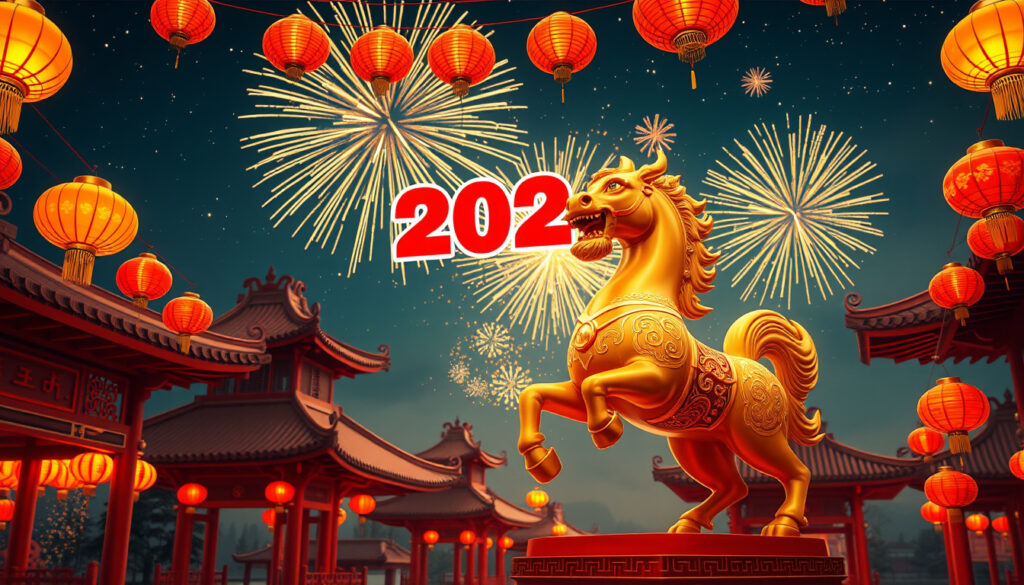
Happy Chinese New Year: Greetings, Meanings & 2026 Tips
If you’ve ever wished someone “Happy Chinese New Year” and wondered whether you should have said something else instead, you’re far from alone. The same warm wish takes dozens of forms across China’s regional dialects, and picking the right greeting can feel like navigating a maze with a blindfold. The good news: once you understand the logic behind the phrases, the whole system clicks into place.
2026 Date: February 17 · 2026 Zodiac: Horse · Common Greeting: Xīnnián hǎo · Cantonese Variant: Gong hei fat choy · Literal Meaning: New Year goodness
Quick snapshot
- Gong Xi Fa Cai means “Wishing you prosperity and wealth” (PatPat cultural guide)
- Mandarin’s top greeting is Gong Xi Fa Cai (South China Morning Post)
- Spring Festival spans 15 days of celebrations (PatPat cultural guide)
- Exact appropriateness in strict traditional settings
- How regional accents shift pronunciations
- 2026: Year of the Horse, starts February 17
- 2028: Year of the Dragon
- 2030: Year of the Horse returns
- Master the top three greetings for 2026
- Match your greeting to your audience’s dialect
- Respond correctly when someone greets you
These key facts establish the baseline for navigating Chinese New Year greetings across dialects and contexts.
| Label | Value |
|---|---|
| Official Name | Spring Festival |
| Calendar Type | Lunisolar |
| 2026 Animal | Horse |
| Top Greeting | Xīnnián hǎo |
| Cantonese Top | Gong hei fat choy |
How do you wish someone a happy Chinese New Year?
The most common Chinese New Year greeting is , pronounced as Gong Xi Fa Cai in Mandarin and Gong Hei Fat Choy in Cantonese (Tea Documentary cultural blog). Both mean “Wishing you prosperity and wealth” — a declaration, not a polite hope. The characters (gōng xǐ) mean “congratulations,” and (fā cái) means “to become prosperous.” In 2026, the Year of the Horse, some add horse-specific wishes like (mǎ dào chéng gōng — “success at horse-speed”) for extra festive punch.
Mandarin options
In Mandarin-speaking mainland China, two greetings dominate. Xīnnián hǎo ( ) translates directly to “New Year good” — an informal, friendly way to greet anyone from coworkers to relatives. Gong Xi Fa Cai ( ) carries more weight: it’s the greeting paired with red envelopes and business associates. According to Berlitz language guide, (xīn nián kuài lè — “Happy New Year”) works universally, though it lacks the prosperity emphasis that makes the other phrases feel more traditionally Chinese.
Cantonese variations
In Hong Kong, Guangdong, Macau, and overseas Cantonese communities, kung hei fat choi ( ) is the default Lunar New Year greeting. The pronunciation shifts the tones — (gōng) becomes gūng, (xǐ) becomes héi, (fā) becomes faat, (cái) becomes chòy. For a straightforward “Happy New Year,” Cantonese speakers say san nin fai lok ( ), a close phonetic cousin to Mandarin’s xīn nián kuài lè.
Pronunciation guide
Getting the tones right matters. Mandarin is tonal: Gōng xǐ fā cái requires a rising tone on xǐ. Cantonese has six tones, making the syllable shapes unfamiliar to English speakers. China Highlights travel resource notes that even a rough attempt is appreciated — locals recognize the effort. A simplified guide: “gong zee fa chai” (Mandarin) or “goong hay fat choy” (Cantonese) gets you close enough to be understood.
What does Gong Xi fa cai mean?
Gong Xi Fa Cai breaks into two parts: Gong Xi ( ) — “congratulations” — and Fa Cai ( ) — “to become rich” or “to prosper.” Combined, the phrase is a direct declaration: “Congratulations on your prosperity.” This isn’t a passive wish; Tea Documentary cultural blog describes it as a “manifestation” — speaking the fortune into existence.
Literal translation
- (gōng): respect, honor
- (xǐ): joy, happiness
- (fā): to develop, to prosper
- (cái): wealth, money
Cultural context
The greeting ties directly to the hongbao tradition. Red envelopes filled with money are exchanged alongside this phrase — the physical delivery of the declared prosperity. PatPat cultural guide lists related wishes like (may all your wishes come true) and (surplus year after year), which layer additional blessings onto the base greeting.
Usage tips
Use Gong Xi Fa Cai with elders, colleagues, and business contacts — it’s formal enough to show respect without being stiff. For close family and friends, Xīnnián hǎo feels warmer and less ceremonial. When someone greets you with Gong Xi Fa Cai, the proper response is to say it back — or offer (dà jí dà lì — “great luck and great prosperity”).
This phrase is not optional at Lunar New Year. If you learn just one greeting, make it this one — it’s the cultural shorthand for “I respect your traditions.”
Do you say happy Chinese New Year or happy Lunar New Year?
Both “Chinese New Year” and “Lunar New Year” are acceptable in English, though they carry different weight. “Chinese New Year” is the more festive, widely recognized term — it’s the phrase printed on holiday cards, workplace announcements, and restaurant promotions in Western countries. South China Morning Post notes that “Lunar New Year” has gained ground in Southeast Asia, partly to acknowledge Korean, Vietnamese, and other communities who observe the same lunar calendar. Neither term offends — but “Chinese New Year” lands warmer in most global contexts.
Terminology differences
The official Chinese name is (Chūnjié) — the Spring Festival. This 15-day celebration begins on the lunar new moon and ends with the Lantern Festival. The term “Lunar New Year” is technically more accurate since the calendar is lunisolar, but “Chinese New Year” has become the colloquial catch-all for the global diaspora celebration.
Global preferences
Singapore, Malaysia, and parts of Canada and the US use “Lunar New Year” to be more inclusive. Mainland China and Hong Kong prefer “Chinese New Year” or the local guò nián ( ). For global audiences, “Happy Chinese New Year” reads as inviting and culturally confident — it acknowledges the holiday’s Chinese roots without overclaiming.
Regional accuracy
If you’re speaking to someone from Hong Kong or Guangdong, “Kung hei fat choi” lands more naturally than the Mandarin pronunciation. For mainland contacts, Gong Xi Fa Cai signals familiarity. QuillBot writing resource points out that Xīnnián kuàilè works universally — it’s safe, neutral, and understood everywhere the holiday is observed.
What does “gong hei fat choi” mean?
“Gong hei fat choi” is the Cantonese pronunciation of — the same characters as the Mandarin version. The meaning shifts only in nuance: it translates to “Congratulations on getting rich” or, more diplomatically, “Wishing you happiness and prosperity.” South China Morning Post reports that in Hong Kong, kung hei fat choi appears on storefronts, billboards, and television ads throughout the holiday season — it’s the de facto greeting for that region.
Cantonese specifics
Cantonese uses different tones than Mandarin, making the same written characters sound distinct. The word becomes gūng (with a rounded vowel), becomes faat (with a checked tone), and becomes chòy. The ending sound “-oi” in “choi” is quintessentially Cantonese — it doesn’t exist in Mandarin.
Phonetic guide
- Gong — like “goong” (as in “moon”)
- Hei — like “hay” (rising tone)
- Fat — like “fat” but clipped, with a stopped consonant
- Choi — like “choy” (rhymes with “toy”)
Comparison to Mandarin
Mandarin: gōng xǐ fā cái — smooth, flowing syllables. Cantonese: gūng héi faat chòy — sharper, more percussive endings. The tone patterns create entirely different music even though the meaning is identical. LingoAce language platform confirms that both versions are given and received warmly — the recognition of effort matters more than perfect pronunciation.
Is it appropriate to say “Happy New Year” on Chinese New Year?
“Happy New Year” is never wrong, but it’s the least culturally specific option. Saying it in English to a Chinese colleague is perfectly polite — it signals awareness of the holiday without claiming deep cultural fluency. The trade-off: it reads as generic, the same phrase you’d use for January 1st. To signal that you know what’s being celebrated, swap in a Chinese phrase, even a simplified one.
Context matters
At a multicultural workplace in the US or UK, “Happy Chinese New Year” or “Happy Lunar New Year” strikes the right balance — warm, inclusive, and informed. At a family gathering in Hong Kong or Guangzhou, the Cantonese greeting shows respect for roots. At a business dinner, Gong Xi Fa Cai signals cultural literacy.
Alternatives preferred
Berlitz language guide lists a range of alternatives beyond the two classics: (family happiness), (gold and jade fill the halls), and (purple air from the east — a classical fortune wish). These suit written cards and formal speeches where you want extra depth.
Etiquette dos and don’ts
- Do attempt a Chinese phrase, even imperfectly — effort is recognized.
- Do pair greetings with a hongbao when appropriate.
- Don’t use “Happy New Year” in a card with a Chinese zodiac illustration — it creates a mismatch.
- Don’t assume all Chinese speakers use Mandarin; ask about regional preference if unsure.
How to wish happy Chinese New Year in 2026
The Year of the Horse in 2026 brings a specific energy: speed, success, and vitality. The element is Fire, adding warmth and momentum. Horse-year greetings work especially well with imagery of horses, red colors, and fire motifs — the elements align with the festive palette already in use.
Step-by-step greeting guide
- Identify your audience. Family and close friends get informal warmth (Xīnnián hǎo). Colleagues, elders, and business contacts get formal prosperity wishes (Gong Xi Fa Cai).
- Match the dialect. For Cantonese speakers (Hong Kong, Guangdong, overseas communities), use kung hei fat choi. For Mandarin speakers, use gong xi fa cai.
- Pronounce it clearly. Even a simplified attempt — “gong zee fa chai” — is better than avoiding the phrase. Repeat after an audio guide or a native speaker.
- Pair with a hongbao. Red envelopes amplify the greeting’s meaning. The phrase declares prosperity; the envelope delivers it.
- Respond in kind. When greeted, say the phrase back or offer a related wish like (dà jí dà lì — “great luck”). Enthusiasm matters — fortune favors the enthusiastic.
For global celebrants, the right greeting isn’t just politeness — it’s a bridge to a 5,000-year-old tradition. A single well-chosen phrase signals respect and cultural curiosity, which pays dividends in both personal and professional relationships.
Chinese New Year timeline
The zodiac cycle repeats every 12 years, with each animal bringing distinct thematic energy to the year’s celebrations.
| Year of the Horse, Lunar New Year falls on February 17 | |
| Year of the Dragon follows | |
| Year of the Snake | |
| Year of the Horse returns |
What we know — and what we don’t
Confirmed facts
- Gong Xi Fa Cai means “Wishing you prosperity and wealth”
- Gong Hei Fat Choy is the Cantonese pronunciation of the same phrase
- Xīnnián hǎo means “New Year good” and works for casual contexts
- Spring Festival lasts 15 days
- 2026 is the Year of the Horse
What’s unclear
- Exact pronunciation standards across regional accents
- Appropriateness in strict traditional settings — some elders prefer specific dialect forms
What experts say
“This isn’t a wish — it’s a declaration. Manifestation before manifestation was cool.”
“While New Year greetings may sound entirely different depending on the dialect, they all convey the same heartfelt wishes.”
— South China Morning Post
Summary
For global celebrants planning their 2026 greetings, the path is clear: lead with Gong Xi Fa Cai (Mandarin) or kung hei fat choi (Cantonese) for formal contexts and prosperity wishes, reserve Xīnnián hǎo for casual warmth, and remember that the Spring Festival spans 15 days of celebration. The Year of the Horse favors vitality and forward momentum — pair your greeting with enthusiasm, and the fortune follows. For non-Chinese speakers hesitant to attempt the phrase, the data is unambiguous: even a rough try is received with warmth and respect, and the effort itself signals the cultural awareness that makes global celebrations meaningful.
Related reading: Singapore Public Holidays 2026: Dates, List & Long Weekends · School Holidays 2026 Singapore: MOE Dates & Calendar
Celebrants often draw fresh inspiration from the 2026 CNY wishes collection to pair with classics like Gong Xi Fa Cai during Year of the Horse festivities.
Frequently asked questions
Is Gong Xi fa cai correct?
Yes — Gong Xi Fa Cai ( ) is the standard Mandarin spelling. Variants include Gong Xi Fa Cai, Gongxi Facai, or Gong Xi Fa Tsai. All refer to the same prosperity greeting.
Is it appropriate to say Gong Xi fa cai?
Absolutely. It’s the most recognized Chinese New Year greeting worldwide. Use it with elders, colleagues, and business contacts. For family and close friends, the simpler Xīnnián hǎo feels warmer.
When is Chinese New Year 2026?
Lunar New Year 2026 falls on February 17, marking the start of the Year of the Horse. The Spring Festival celebration runs through the Lantern Festival on March 3.
What are Chinese New Year greetings for the Year of the Horse?
Standard greetings work year-round: Gong Xi Fa Cai and Xīnnián hǎo. For Horse-year specificity, add (mǎ dào chéng gōng — “success at horse-speed”) to signal awareness of the zodiac. Fire Horse energy favors vitality and momentum.
How do you pronounce Gong Xi Fa Cai?
Simplified: “gong zee fa chai.” More precisely: /ɡʊŋ ɕi fɑ ˈtsʰɑɪ/. The key is the rising tone on xi (xǐ). Mandarin speakers will understand even approximate attempts.
What is the meaning of Kung Hei Fat Choy?
“Kung Hei Fat Choy” is the Cantonese pronunciation of . It means “Congratulations on getting rich” or “Wishing you prosperity and wealth.” It originates in Guangdong, Hong Kong, Macau, and overseas Cantonese communities.
Can you say Happy Chinese New Year to anyone?
Yes — “Happy Chinese New Year” or “Happy Lunar New Year” is always appropriate, especially in English-speaking contexts. Swapping in a Chinese phrase shows deeper cultural awareness, but the English version is warm, respectful, and never offensive.
More related posts
 Pet Store Near Me – Best Stores in Singapore
 Buy a Black Dress Online in Ireland: Best Stores 2025
 Chix Hot Chicken Menu: Full List, Locations & More
 Genting Theme Park Ticket 2026: Prices, Park Guide & Best Deals
 Boeing 737-800 Safety: Crash History, Features, and Seat Guide
 La Bottega Enoteca Reviews – Singapore and NYC Insights
 Hanguk Skin Solutions Reviews: Is It Legit? What You Need to Know
 Forex Awards Best Forex Nominations: Global Awards & Stats