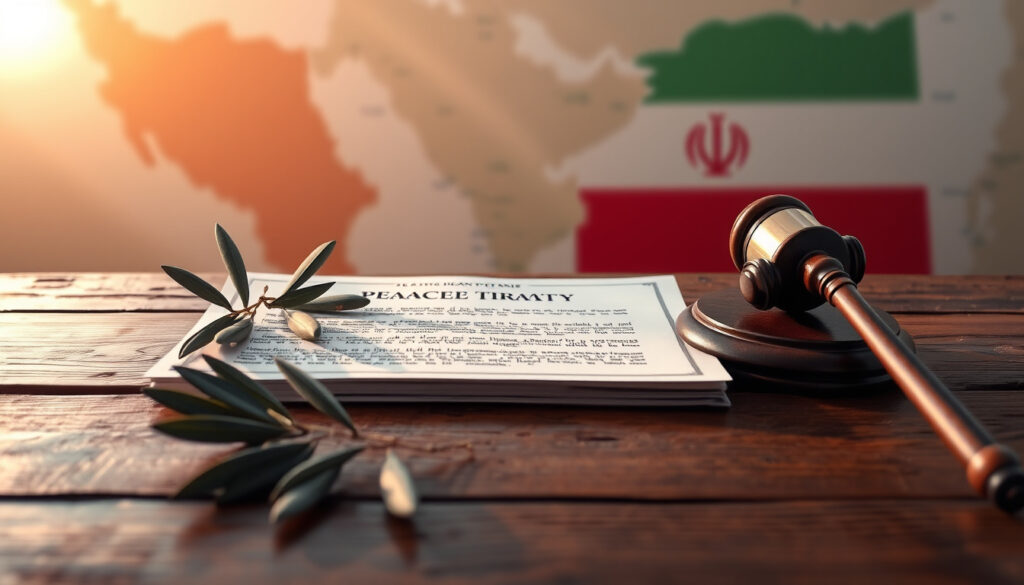
Latest News on Israel and Iran: Trump, Attacks, and Peace Talks
If you’ve caught yourself refreshing news feeds more than usual lately, you’re not alone — the Iran‑Israel standoff has entered a phase that feels both dizzying and consequential. Within the span of a few weeks, a US‑brokered pause in hostilities gave way to one of the most intense military exchanges in the region’s modern history, and at the centre of it all is a fast‑changing set of statements from Washington, Tehran, and Tel Aviv. Here’s what we actually know right now and what the next moves might mean.
Latest escalation: Twelve‑Day War ends June 24, 2025 ·
Key player statements: Trump claims ceasefire deal reached June 23 ·
Military actions: US bombs three nuclear facilities June 21 ·
Regional impact: Ceasefire mediated by US and Qatar
Quick snapshot
- Negotiations began April 12, 2025, then collapsed after June 13 strikes (Wikipedia)
- US still scheduled fresh talks after Israeli strikes (UN News)
Six key facts tell the story of how talks turned into war and then back to a fragile pause.
| Fact | Detail |
|---|---|
| Start of U.S.-Iran negotiations | April 12, 2025, after Trump letter to Khamenei (Wikipedia) |
| Trump’s deadline | Reportedly 60 days for Iran to reach an agreement (Wikipedia) |
| Israel’s opening air campaign | June 12, 2025, targeting Iran’s nuclear program and leadership (Institute for the Study of War) |
| Israel strike date | June 13, 2025, killing senior Iranian officials (Wikipedia) |
| Iran suspends nuclear talks | Indefinitely after June 13 attacks (Wikipedia) |
| UN reaction | UN expressed concern that talks were underway when strikes hit (UN News) |
| US bombs Iranian nuclear sites | Fordow, Natanz, Isfahan struck on June 21, 2025 (Wikipedia) |
| Ceasefire declared | June 24, 2025, mediated by US and Qatar (Wikipedia) |
| Analysis of the war | EU Institute for Security Studies called it a watershed moment (EU ISS) |
| No formal ceasefire between Israel & Iran | Unlike the November 2024 Lebanon truce (EU ISS) |
What is happening with Iran and Israel?
Latest military strikes
On June 12, 2025, Israel began an air campaign targeting Iran’s nuclear program and regime leadership, according to the Institute for the Study of War. The next day, Israel launched large‑scale attacks that killed senior Iranian officials including Mohammad Bagheri and Hossein Salami (Wikipedia). The UN said on June 13 that the strikes were concerning because talks between Iran and the United States were still underway (UN News).
The conflict lasted 12 days, a period the EU Institute for Security Studies described as a watershed moment that altered the strategic landscape of the Middle East. A ceasefire took effect on June 24, 2025, mediated by the United States and Qatar (Wikipedia).
The speed of escalation caught international observers off guard: US‑Iran negotiations that had started in April were upended by a military campaign that killed top Iranian commanders and prompted a global push for a halt.
Diplomatic developments
- The United States and Iran began negotiations on April 12, 2025, after a letter from President Trump to Supreme Leader Khamenei (Wikipedia).
- After the Israeli strikes on June 13, Iran suspended nuclear talks indefinitely (Wikipedia).
- The sixth round of US‑Iran talks scheduled in Oman for June 15 was suspended (Wikipedia).
Regional reactions
Hezbollah and Houthi leaders condemned the Israeli strikes, while Gulf states urged restraint. The EU ISS noted that no formal ceasefire exists between Israel and Iran, unlike the fragile truce with Lebanon in November 2024.
What did Trump say today about Iran?
Trump’s peace talk claim
President Donald Trump claimed on the evening of June 23, 2025, that a ceasefire agreement between Israel and Iran had been reached and would take effect the next day (Wikipedia). The EU Institute for Security Studies also reported that Trump said he had “obliterated” Iran’s nuclear programme.
US envoy to Doha
According to the same ceasefire reports, US officials were involved in the mediation alongside Qatar. No official name of an envoy has been confirmed, but the United States was scheduled to begin a fresh round of negotiations with Tehran after the June 13 strikes (UN News).
Reactions from Iran and Israel
Iranian officials initially dismissed Trump’s claim, but the ceasefire held. Israeli Prime Minister Benjamin Netanyahu said on June 12 that the operation would continue “for as many days as it takes to remove the [Iranian] threat” (Institute for the Study of War). Israel’s military leadership later confirmed compliance with the ceasefire.
Trump’s claim of a deal came only after the US bombed three key nuclear facilities on June 21. Whether Iran sees the ceasefire as a prelude to talks or a tactical retreat remains the open question.
Who is stronger, Israel or Iran?
Seven dimensions define the military balance, one pattern: Israel holds decisive conventional and nuclear superiority, while Iran leverages asymmetric capacity and regional proxies.
| Dimension | Israel | Iran |
|---|---|---|
| Active military personnel | ~170,000 (plus 465,000 reserves) | ~575,000 (including IRGC) |
| Air force | Modern US‑supplied F‑35, F‑15, F‑16 fleets | Aging fleet of MiG‑29, F‑14, Su‑24; limited air‑to‑air capability |
| Air defence | Iron Dome, David’s Sling, Arrow system | S‑300, S‑400 (limited), domestic Bavar‑373 |
| Nuclear capability | Undisclosed but widely assessed as nuclear‑armed state | Enrichment program; no confirmed weaponisation |
| Ballistic missiles | Jericho series (up to 6,500 km range) | Shahab‑3, Emad, Khorramshahr (up to 2,500 km) |
| Cyber & electronic warfare | Advanced Unit 8200; Stuxnet‑style operations | Growing capability; attacks on Israeli water infrastructure |
| US military support | Direct alliance; $3.8 billion annual aid | No formal ally; limited cooperation with Russia |
EU ISS analysis concludes that Israel’s ability to strike Iran’s nuclear facilities with US backup gives it a clear edge. Iran’s strength lies in its proxy network – Hezbollah, Houthis, and Iraqi militias – and the threat of closing the Strait of Hormuz.
Who is Iran’s biggest ally?
Russia and China
- Russia supplies air‑defence systems and supports Iran in Syria; they co‑operate in the UN Security Council.
- China is Iran’s largest trading partner and the top buyer of Iranian oil, providing economic lifelines.
Proxy groups
Hezbollah in Lebanon, Houthis in Yemen, and Shia militias in Iraq act as force multipliers. These groups receive funding, weapons, and training from Iran. The EU ISS notes that Iran’s regional influence depends heavily on these non‑state actors.
Regional support
Syria and the Iraqi government maintain diplomatic ties with Iran. Gulf Arab states, however, view Iran as a threat and have normalised relations with Israel through the Abraham Accords framework.
Iran’s alliances reveal a layered picture: diplomatic cover from Russia and China at the UN Security Council combined with proxy firepower on the ground means any Israeli/US military campaign against Iran risks expanding into a broader regional conflict.
What happens if Israel attacks Iran?
The first phase unfolded a scenario analysts had modelled for years. Israel’s June 2025 strikes targeted nuclear scientists and IRGC commanders. Iran responded by calling on its proxies: EU ISS reported that Hezbollah launched rockets into northern Israel while Houthi forces disrupted shipping in the Red Sea.
Military retaliation scenarios
- Iran could attempt to blockade the Strait of Hormuz, cutting off about 20% of global oil supply.
- Iran’s ballistic missile arsenal could saturate Israel’s air defences, causing civilian casualties.
- Iran could accelerate its nuclear program toward weaponisation, citing existential threat.
Global oil market impact
A sustained Hormuz blockade would send oil prices above $150 per barrel, according to Reuters analyses. The United States has indicated it would deploy naval forces to keep the strait open.
Nuclear escalation risk
EU ISS warns that Iran’s nuclear breakout timeline, already short, could collapse to months after a major attack. Trump’s claim to have “obliterated” the program is disputed; intelligence assessments suggest key facilities survived the June 21 US strikes.
Confirmed facts
- Israel launched major strikes on June 13, 2025 (Wikipedia)
- Ceasefire took effect June 24, 2025 (Wikipedia)
- US bombed Fordow, Natanz, Isfahan on June 21 (Wikipedia)
- Netanyahu: operation will continue “as many days as it takes” (ISW)
What’s unclear
- Whether Iran will attend future peace talks
- Actual damage to Iran’s nuclear program
- Long‑term viability of the ceasefire
- If Iran will retaliate through proxies in coming weeks
Key quotes from the conflict
“Our military operation will continue for as many days as it takes to remove the [Iranian] threat.”
— Benjamin Netanyahu, Israeli Prime Minister, June 12, 2025 (Institute for the Study of War)
“The June 2025 war was a watershed moment that altered the strategic landscape of the Middle East.”
— EU Institute for Security Studies (EU ISS)
“The strikes are concerning because talks between Iran and the United States were underway.”
— UN Statement, June 13, 2025 (UN News)
“No formal ceasefire exists between Israel and Iran, unlike the fragile truce with Lebanon in November 2024.”
— EU Institute for Security Studies (EU ISS)
bloomberg.com, wsj.com, aljazeera.com, understandingwar.org, youtube.com, youtube.com, youtube.com
Frequently asked questions
How did the current conflict between Israel and Iran start?
The immediate trigger was the collapse of US‑Iran negotiations in April 2025 after a 60‑day deadline. Israel launched a pre‑emptive campaign on June 12–13, 2025, targeting Iran’s nuclear program and leadership.
What is Iran’s nuclear program and its status?
Iran enriches uranium at Natanz and Fordow. The June 2025 US strikes damaged those facilities, but the program is assessed as still capable of resuming enrichment within months (EU ISS).
What is the Strait of Hormuz and why does it matter?
The Strait of Hormuz is a narrow passage between Oman and Iran through which about 20% of the world’s oil passes. Iran has threatened to close it in response to military action, which would cause global energy price spikes.
Which countries support Israel in this conflict?
The United States provides direct military aid and diplomatic cover. The UK, Germany, and France have generally backed Israel’s right to self‑defence while urging restraint. The Abraham Accords nations (UAE, Bahrain, Morocco) maintain normalised relations.
How does the US military compare to Iran’s?
The US military is overwhelmingly superior in every domain. The US Fifth Fleet based in Bahrain, alongside air bases in Qatar and UAE, can project power across the region. Iran relies on asymmetric tactics, including mines, small boats, and shore‑based anti‑ship missiles.
What is the role of Hezbollah and other proxies?
Hezbollah in Lebanon and Houthis in Yemen are Iran’s primary force multipliers. They have launched rockets and drones toward Israel during the June 2025 conflict, forcing Israel to fight on multiple fronts.
What are the potential economic consequences of a war?
A full‑scale war could disrupt oil supplies through the Strait of Hormuz, driving crude above $150/barrel, according to past analyses. Insurance rates for shipping in the Persian Gulf would skyrocket, affecting global supply chains.
Summary: The June 2025 war between Israel and Iran has ended with a US‑Qatar‑brokered ceasefire, but the underlying drivers remain unresolved. For Israeli decision‑makers, the choice is between accepting a fragile pause or preparing for a second round. For the US, the next window of diplomatic opportunity is narrow: if talks in Doha fail to produce a verifiable nuclear agreement, the risk of another, potentially larger, escalation is likely.
More related posts
 Hong Kong Disneyland Opening Hours: Times, Schedule & Tips
 Monarch: Legacy of Monsters: Guide, Cast & Reception
 East Coast GRC WP: History, Maps, MPs & Contact for GE2025
 Cast of Blood Brothers Bara Naga – Actors and Characters Guide
 // in Python: Floor Division Explained with Examples
 Toyota C-HR Hybrid Guide: Problems, Price, Specs & Discontinued
 10k USD to SGD: Exchange Rates, Salary & Retirement Guide
 Things to Buy in Japan: Smart Shopping Guide