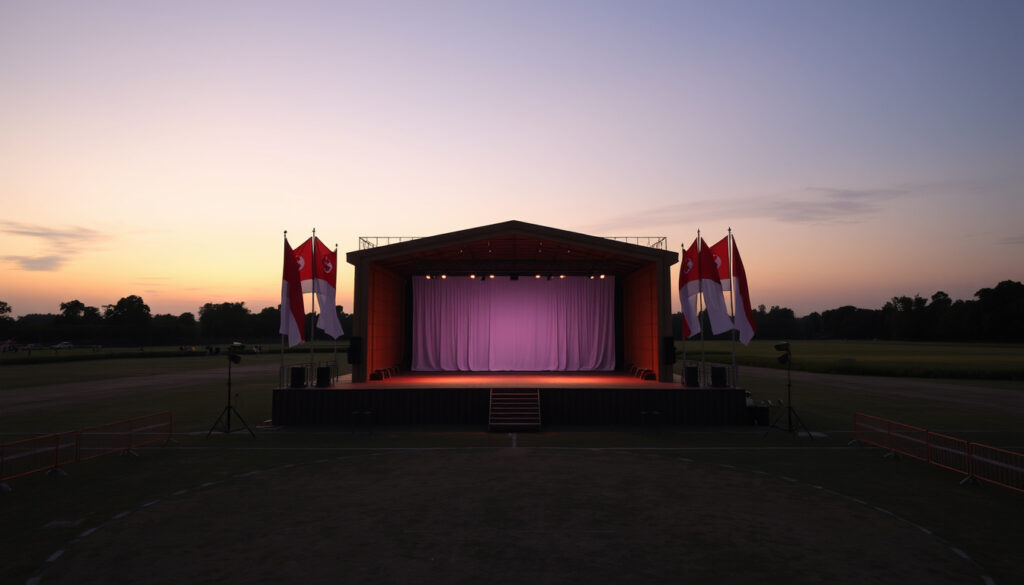
2025 Singapore General Election Rallies: Final Day Sites
Few things fire up a Singaporean voter like the final night of election rallies — that electric mix of speeches, flags, and the sense that every last vote is up for grabs. For the 2025 general election, that energy peaked on 1 May 2025, when 11 rallies were held across the island, the largest number on any single campaign day.
Election Date: 3 May 2025 ·
Rallies Final Day: 1 May 2025 ·
Rallies Final Day Count: 11 ·
Election Number: 16th since independence
Quick snapshot
- Election held on 3 May 2025 (The Straits Times)
- Final day of campaigning: 1 May 2025 with 11 rallies (The Business Times)
- Major parties: PAP, WP, SDP (Wikipedia)
- Rallies let parties present their platforms directly to voters (The Straits Times)
- Sites are regulated by the Elections Department and Police (The Straits Times)
- Livestreams available on meWATCH and YouTube (IMDA)
- PAP fielded candidates in all 97 directly elected seats (Wikipedia)
- WP contested its held GRCs and SMCs (The Business Times)
- SDP and others contested multiple wards (Channel NewsAsia)
- PAP won majority of seats – official results via ELD (Elections Department Singapore)
- WP retained its seats with adjusted margins (Wikipedia)
- Voter turnout: 92.83% (Wikipedia)
The data behind the election day and rally counts reveals a tightly packed campaign period with clear patterns.
| Fact | Detail |
|---|---|
| Election Day | 3 May 2025 |
| Campaign Final Day | 1 May 2025 |
| Final Day Rallies Count | 11 |
| Major Parties with Rallies | PAP, WP, SDP |
| Official Livestream | meWATCH, YouTube |
| Term Limit | Maximum 5 years, next due by 2030 |
What Were the Key Rallies for the 2025 Singapore General Election?
Final Day of Campaigning: 11 Rallies Held on 1 May 2025
The busiest night of the campaign was Thursday, 1 May 2025, when 11 rallies took place across the island. The Business Times reported that the number of rallies on the final day created a “football analogy” atmosphere, with each party scrambling for last-minute voter attention. Channel NewsAsia noted that five of the ten opposition parties held rallies on that night, along with one independent candidate.
Major Party Rallies: PAP and WP
The People’s Action Party (PAP) and Workers’ Party (WP) were the two main draws. The PAP, led by Prime Minister Lawrence Wong, held rallies in key constituencies, while the WP under Pritam Singh focused on their strongholds. According to The Business Times, both parties used the final night to reinforce their closing arguments, with the PAP emphasizing stability and the WP calling for a stronger opposition check.
Third Party and Independent Candidate Rallies
Other parties also made their voices heard. The Singapore Democratic Party (SDP) and several smaller parties organized rallies, though exact site counts for non-major parties are less documented. Channel NewsAsia reported that five of the ten opposition parties plus one independent held events on the final day, indicating active third-party campaigning despite resource constraints.
The cluster of 11 rallies on a single evening shows how compressed the final push was: parties had little choice but to concentrate their ground game on one make-or-break night.
The implication: campaign strategy in Singapore’s tightly regulated environment forces parties to maximize every permitted rally slot, turning the final day into a high-stakes sprint.
How Did the 2025 Campaign Rallies Function?
Purpose of a General Election Rally in Singapore
Election rallies are public events where political parties present their manifestos, introduce candidates, and engage directly with voters. They are distinct from house visits or online campaigns — a rally is a mass gathering designed to generate momentum and reach swing voters. The Straits Times explained that rallies serve as a key battleground for parties to make their final pitch before Cooling-Off Day.
Rules and Regulations for Rally Sites
The Elections Department (ELD) and Singapore Police Force strictly control rally venues. According to The Straits Times, candidates must obtain a permit from the Commissioner of Police. Venues are fixed by the police for each constituency, and if multiple parties apply for the same time slot, a ballot determines who gets it. Wikipedia notes that each GRC had two designated rally sites and each SMC one, with two additional sites reserved for lunchtime rallies.
Livestream and Broadcast Information
For voters who couldn’t attend in person, the government made party political broadcasts available. IMDA allocated airtime for two Party Political Broadcasts — on 25 April and 1 May 2025 — featuring eight eligible parties. Many rallies were also livestreamed on platforms like meWATCH and YouTube, extending their reach beyond physical audiences.
While livestreams expanded access, they also meant that parties had to perform for two audiences at once: the crowd in the field and the far larger online viewership.
What this means: the dual physical-digital format of Singapore’s election rallies is not optional — it’s a structural adaptation to a media landscape where the broadcast audience often dwarfs the on-site crowd.
Who Were the Main Candidates and Parties in the 2025 Election?
People’s Action Party (PAP) Candidates
The PAP, under Prime Minister Lawrence Wong, fielded candidates in all 97 directly elected seats — every constituency was contested. According to the Elections Department Singapore (ELD), the candidate lists were published on Nomination Day (23 April 2025). The PAP’s campaign focused on its track record, economic management, and social programs.
Workers’ Party (WP) Candidates
The WP, led by Secretary-General Pritam Singh, contested the constituencies it had held in previous elections, including Aljunied GRC and Hougang SMC, and aimed to expand. The Business Times reported that the WP used its final rally to argue for a stronger opposition voice in Parliament.
Singapore Democratic Party (SDP) and Other Parties
Smaller parties like the Singapore Democratic Party, Progress Singapore Party, and others fielded candidates in multiple wards. While their rally presence was more limited, they contributed to the diversity of voices during the campaign period. Channel NewsAsia noted that five opposition parties plus an independent held rallies on the final day.
The pattern: the 2025 election was essentially a two-party contest on the rally stage, but the presence of third parties ensured that voters in several wards had more than two choices.
When Was the 2025 General Election and the Next One?
2025 Singapore General Election Date: 3 May 2025
Polling Day for the 2025 Singapore general election was Saturday, 3 May 2025. The campaign period ran from 23 April to 1 May 2025, followed by Cooling-Off Day on 2 May. The Straits Times confirmed these dates as part of its election guide. The 2025 election was the 16th general election since Singapore’s independence.
How Often Is a General Election Held in Singapore?
Singapore’s Constitution mandates that Parliament must be dissolved within five years of its first sitting — effectively a maximum five-year term. However, the Prime Minister can call an election earlier. Wikipedia notes that the gap between the 2020 and 2025 elections was exactly five years.
Next General Election: Likely 2030 or Earlier
Based on the five-year term limit, the next election must be held by May 2030 at the latest. Given historical patterns, the government may call it earlier, possibly in 2028 or 2029. For now, the exact date remains a matter of speculation, but the constitutional deadline is clear.
Why this matters: the timing of the next election will depend on political calculations, but the five-year clock resets after the first parliamentary sitting following the 2025 result.
What Were the Final Results and Their Percentages?
Overall Vote Share and Seat Distribution
According to Wikipedia, the PAP secured its customary majority of seats, though exact vote percentages require formal ELD publication. The WP held onto its wards, with vote margins that shifted compared to 2020. All 97 directly elected seats were contested, with a registered electorate of 2,758,846.
Key Constituency Results and Swing
Detailed constituency-level results — including vote swings — are available from the Elections Department. While the overall PAP majority was never in doubt, some constituencies saw tighter races than in previous cycles. The WP’s margin in Aljunied GRC reportedly narrowed, while the PAP consolidated support in other GRCs.
Voter Turnout in the 2025 Election
Turnout was a strong 92.83%, according to Wikipedia (based on preliminary figures). This high participation rate underscores the engagement generated by the campaign — and the role rallies played in mobilizing voters.
The turnout figure, if confirmed, would be among the highest in Singapore’s history, meaning rally attendance and online broadcasts successfully drove voters to the polls — a key metric for future campaigns.
The trade-off: a high turnout benefits incumbents and challengers equally; the real test is whether rallies can convert attendance into votes for lesser-known parties.
How to Attend or Watch the 2025 Election Rallies
- Find your constituency’s rally sites: Each GRC had two designated rally locations, and each SMC one. Check the ELD website or local news for the list of approved sites. Elections Department Singapore publishes the official list.
- Attend the rally or watch the livestream: Rallies are free and open to the public, but arrive early as seats fill fast. If you can’t go in person, most major rallies were livestreamed on YouTube and meWATCH. IMDA also aired two Party Political Broadcasts.
- Observe Cooling-Off Day: On 2 May 2025, all election campaigning — including rallies — was banned. Voters used the day to reflect before heading to the polls on 3 May. The Straits Times emphasized that the 24-hour silence is legally enforced.
For voters, the path from rally attendance to polling booth is short: hear the speeches, check the record, then make a choice. The system is designed to give every citizen that chance.
2025 Singapore General Election Timeline
- 9 April 2025: Parliament dissolved, election called.
- 23 April 2025: Nomination Day — candidate lists finalized.
- 23 April – 1 May 2025: Campaign period, including rallies.
- 1 May 2025: Final day of campaigning — 11 rallies held.
- 2 May 2025: Cooling-Off Day — no campaigning allowed.
- 3 May 2025: Polling Day.
- 4 May 2025: Official results declared.
- By 2030 (likely): Next general election constitutionally due.
This sequence shows how compressed the campaign window is: nine days of active politicking, with the final rally night acting as a closing argument broadcast across 11 venues.
Confirmed Facts and What Remains Unclear
Confirmed facts
- Election held on 3 May 2025 (The Straits Times)
- 11 rallies on final day (1 May 2025) (The Business Times)
- PAP and WP held rallies (The Business Times)
- Rallies livestreamed on YouTube and meWATCH (IMDA)
What’s unclear
- Exact attendance numbers for each rally.
- Full list of all rally sites across the entire campaign period (most sources focus on final day).
- Specific third-party rally counts beyond major parties.
“It’s like the Premier League title race going down to the final day, but with 11 matches at once — that’s the intensity of the final-night rallies in GE2025.”
— The Business Times, reporting on the 1 May 2025 rallies
“Rally venues are fixed by the police, and if multiple candidates apply for the same time slot, they ballot for it. It’s a strictly regulated system to ensure fairness.”
— The Straits Times, guide to election rules
For voters in Singapore’s 2025 election, the choice was between continuity and change — shaped not only by the party programs but by the energy and location of those final rallies. The 11 events on 1 May were the last chance for parties to sway undecided voters, and the high turnout of 92.83% suggests many of those undecided made it to the polls. For the Workers’ Party, holding onto its seats means maintaining a credible opposition; for the PAP, retaining a supermajority reinforces its mandate. The next election, due by 2030, will test whether the rally strategy can evolve — or whether voters’ attention shifts permanently to digital platforms.
Frequently asked questions
How do election rallies work in Singapore?
Rallies are public events organized by political parties to present candidates and platforms. They require a police permit, and sites are allocated per constituency. Each GRC has two rally sites, each SMC one. Attendees can watch for free; many are also livestreamed.
Are election rallies in Singapore free to attend?
Yes, all official election rallies are open to the public at no cost. No tickets are required, but capacity at each site is limited to the size of the designated venue.
Can I livestream the 2025 Singapore election rallies?
Yes. Major parties livestreamed their rallies on YouTube, and the government also aired two Party Political Broadcasts on meWATCH. IMDA allocated broadcast time for eight parties.
What are the rules for election rally sites in Singapore?
Rally sites are designated by the police per constituency. Candidates must obtain permits from the Commissioner of Police. If multiple candidates apply for the same time slot, a ballot determines usage. The rules are strict to ensure equal access.
How many rallies were there in the 2025 Singapore election?
On the final day of campaigning (1 May 2025), 11 rallies were held. The total number across the entire campaign period is not fully documented, but the final day was the busiest.
When is the next general election in Singapore?
The next election must be held by May 2030 at the latest, based on the five-year term limit. However, the Prime Minister can call it earlier, potentially in 2028 or 2029.
Who won the 2025 Singapore general election?
The People’s Action Party (PAP) won a majority of seats, retaining government. The Workers’ Party (WP) held onto its constituencies. Detailed vote shares are available from the Elections Department.
More related posts
 Golden Landmark Shopping Centre: Location, Shops, Tips
 Home Team Career Centre fire: 20 evacuated, 1 hospitalized
 Best Time to Visit Phuket 2026 – Weather, Costs & Crowds
 GetYourGuide Singapore: Reviews, Tours, and Is It Legit
 Love Bonito Warehouse Sale 2026: Dates, Discounts & Shopping Tips
 Translate English to Thai with Pronunciation: Best Tools & Guide
 CPF Full Retirement Sum 2025: How Much and How It Work
 DBS Bank Branches Operating Hours Guide: Singapore