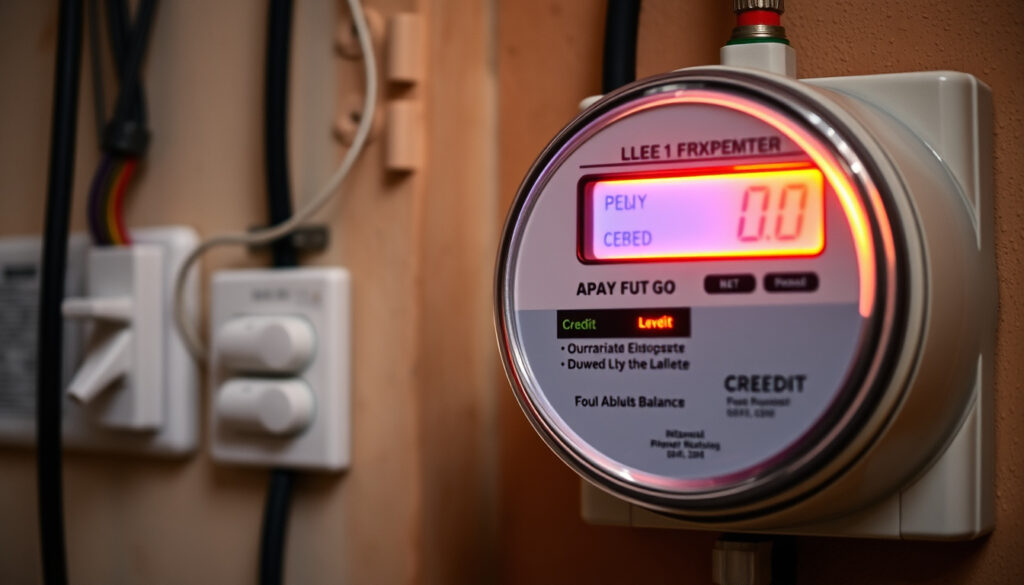
What Is a Prepaid Meter? Pay-As-You-Go Electricity Guide
Anyone who’s ever stared at an energy bill and wondered where all those kilowatt-hours went knows the appeal of paying exactly for what you use, before you use it. That’s the promise of a prepaid meter — a device that puts you in control of your electricity spending, one top-up at a time.
Prepaid meter users in UK: over 4 million households (Ofgem 2024) ·
Typical prepaid electricity cost per day in Ireland: €1.50–€2.50 (PrepayPower estimates) ·
Average prepaid meter installation cost: £0–£200 depending on supplier (Citizens Advice) ·
Number of units for 20,000 Naira in Nigeria: approx. 100–150 kWh (Band A rate varies)
Quick snapshot
- Top up using app, card, key, or at a shop
- Meter deducts credit as you use electricity
- When credit runs low, you get a warning
- If credit reaches zero, power goes off until you top up again
- Normal meter: billed after consumption
- Prepaid meter: pay before you use
- Prepaid avoids debt but may have higher unit rates
- Normal meter often cheaper per kWh with direct debit discounts
- Smart meters digitally record and send data
- Prepaid meters can be smart or standard
- Smart prepaid meters combine pay-as-you-go with remote reading
- Smart meters enable time-of-use tariffs
- Installation can be free or up to £200
- Standing charge often higher than direct debit
- PrepayPower typical cost per day: €1.50–€2.50
- In Nigeria, 20,000 Naira buys ~100–150 kWh depending on band
Five facts, one pattern: prepaid meters shift the payment risk from the supplier to the consumer — but they also hand you the budgeting lever.
| Fact | Value |
|---|---|
| Definition | A prepaid meter is a pay-as-you-go electricity meter that requires users to load credit before power is supplied. |
| Top up methods | Mobile app, prepaid card, physical key, USSD code, at retail vendor |
| Eligibility for free installation | Available in South Africa through MAF; UK suppliers may provide free if you have debt or qualify |
| Typical cost per kWh (UK prepaid) | Around 30p/kWh vs 24p/kWh for direct debit (2025 rates, varies by region) |
| Balance warnings | Most meters give visual or audible warning when balance falls below a threshold (e.g., £2 or 50 kWh) |
What is a prepaid meter for electricity?
How does a prepaid meter work?
A prepaid meter is a device that measures your electricity consumption and deducts from a credit balance you load in advance. Think of it as a “pay-as-you-go” plan for your home’s power. You top up using a mobile app, a prepaid card, a physical key, a USSD code, or by visiting a retail vendor. Once the balance reaches zero, the supply cuts off automatically until you add more credit.
The mechanics vary by country. In South Africa, Eskom (state power utility) uses a voucher-to-CIU credit process: customers buy a voucher and enter the number into a Customer Interface Unit. In the UK, prepayment meters can be topped up at PayPoint or Payzone outlets, or online via the supplier’s app. In Ireland, Bonkers.ie (price comparison service) describes prepay meters that work with a key or card.
Prepaid meters give you real-time feedback on your spending, but they also demand discipline: one forgotten top-up and you’re sitting in the dark.
What is the typical prepay power meter reading process?
Unlike traditional meters that need a physical read every few months, prepaid meters often feature remote read capability — especially modern smart prepaid models. However, many older prepaid meters still require you to enter a code shown on the meter display when you top up. The code confirms the credit has been loaded. Some suppliers, like British Gas (major UK supplier), send a confirmation via text or app.
The implication: prepaid meters eliminate estimated bills, a major source of household frustration. But they also shift the onus onto you to manage the balance.
What is the difference between a prepaid meter and a normal meter?
Prepaid meters vs traditional billing: pros and cons
A normal (postpaid) meter simply records consumption; your supplier reads it periodically and sends a bill for what you used. A prepaid meter flips that: you pay first, then consume. The core difference is cash flow — and risk.
Four comparisons, one theme: prepaid eliminates debt but often at a premium per unit.
| Feature | Prepaid meter | Normal (postpaid) meter |
|---|---|---|
| Payment timing | Pay before use | Pay after use (monthly/quarterly bill) |
| Credit check required | No | Often yes for account setup |
| Debt risk | Low – can’t go into debt | Possible – late or missed payments |
| Typical unit rate (UK) | ~30p/kWh (higher standing charge) | ~24p/kWh with direct debit discount |
| Eligibility for free installation | Often free if you have debt or low credit | N/A – standard meter already installed |
| Billing method | Self-managed top-ups | Supplier issues bill, you pay within terms |
The catch: while prepaid shields you from bill shock, the higher unit rate and standing charge mean you pay more per kilowatt-hour over the long run. Money Guide Ireland (consumer finance site) reports a prepaid electricity basic unit rate of 38.32 cent before VAT and an annual standing charge of €410 — significantly more than standard postpaid rates.
If you’re a heavy energy user in the UK, the 6p/kWh premium on prepaid could add hundreds of pounds to your annual bill. The trade-off is worth it only if budgeting control matters more than getting the cheapest kWh.
How prepaid billing differs from postpaid billing
Postpaid billing typically includes a fixed monthly charge plus variable consumption. Prepaid billing, by contrast, has no monthly bill — you simply load credit when you need it. However, many prepaid tariffs still levy a daily standing charge that’s deducted automatically, even if you don’t use any power. That standing charge is often higher for prepaid customers.
Prepaid meter vs smart meter: what’s the difference?
How smart meters differ from prepaid meters
A smart meter is a digital meter that records consumption every half-hour and sends that data to your supplier automatically. A prepaid meter, as we’ve seen, requires you to pay upfront. The two are not mutually exclusive — modern smart meters can operate in prepayment mode. If you already have a prepayment meter and request a smart meter, you’ll get a smart meter operating in prepay mode.
The difference comes down to features. Basic prepaid meters have no remote communication; you must enter a code or swipe a card to load credit. Smart prepaid meters handle top-ups via mobile app and give you real-time usage data on an in-home display. They also enable time-of-use tariffs, letting you pay less at off-peak hours — something standard prepaid meters cannot do.
Here is how the two types stack up across key features.
| Feature | Traditional prepaid meter | Smart meter (prepayment mode) |
|---|---|---|
| Remote reading | No | Yes – automatic data transmission |
| Top-up method | Key, card, or manual voucher entry | App, phone, web – instant credit transfer |
| Time-of-use tariffs | Rarely supported | Supported – cheaper night rates possible |
| In-home display | Usually not included | Included – shows real-time consumption |
| Installation cost (UK) | £0–£200 | Free under government rollout |
| Eligibility for free | Supplier discretion | All UK households – Smart Energy GB (government-backed body) says at no extra charge |
What this means: smart prepaid meters combine the budgeting control of prepay with the rate flexibility and convenience of digital technology — a meaningful upgrade for anyone already committed to prepayment.
Can a smart meter be used as a prepaid meter?
Yes. In the UK, every smart meter can operate in either credit (postpaid) or prepayment mode. Suppliers must aim to install smart meters in every home, and those with prepayment meters will get a smart meter in prepay mode. In Ireland, Electric Ireland (main supplier) markets smart prepay price plans that claim savings of over 70% at certain off-peak times.
If you’re on prepayment and want the cheapest power, ask for a smart meter. It won’t change your pay-as-you-go habits, but it unlocks cheaper tariffs and eliminates the need to trek to a shop for a top-up.
How much does a prepaid meter cost?
Prepaid meter installation cost UK
Installation cost ranges from free to about £200, depending on your supplier and circumstances. You do not have to pay to get a smart meter installed, and British Gas provides smart meter installation at no extra cost. If you request a traditional prepaid meter (non-smart), some suppliers may charge a connection fee. However, if you’re in debt or have a poor credit record, suppliers often install a prepaid meter for free to recover costs via higher standing charges.
Prepaid electricity meter price in South Africa
In South Africa, ServiceLink SA (installation service) estimates a standard single-phase prepaid meter installation at R1,400 to R2,500, including meter and labour. Three-phase installations cost R3,400 to R5,000. Some municipal programs, such as the Meter Acquisition Fund (MAF), offer free installations for qualifying low-income households. The overall trend: installation is affordable, but it’s not universally free.
How to get a free prepaid meter
In the UK, free installation is typical if you’re switching from a standard meter at the supplier’s request or if you qualify for debt-related prepay. In South Africa, the MAF provides free meters for qualifying users. In Nigeria, recent social media posts have claimed that the federal government banned installation charges — but these claims are unconfirmed. A Facebook group post suggested free meters, and another attributed the policy to Nigerian authorities — but no official circular from the regulator or ministry has been found to date. Treat this as unconfirmed.
The pattern: free installation is most accessible where prepaid meters are framed as a social tool (debt management, universal access) rather than a premium product.
What are the benefits and disadvantages of using a prepaid meter?
Benefits of prepaid electricity
- No bill shock – You only spend what you’ve already paid.
- Budgeting control – Small, frequent top-ups suit tight cash flows.
- No credit check – Anyone can get one, regardless of credit history.
- Avoids disconnection debt – If you can’t top up, you lose supply but don’t accrue debt.
Disadvantages of prepaid electricity
- Higher unit rates – Prepaid tariffs are typically 5–10p/kWh more than direct debit in the UK.
- Higher standing charges – Daily fixed costs are often higher than postpaid.
- Risk of self-disconnection – Running out of credit means no power until you buy more.
- Limited tariff choice – Some time-of-use discounts are not available on basic prepaid meters.
Upsides
- No bills, no debt
- Perfect for budgeting
- Accessible to all credit backgrounds
Downsides
- Per-kWh cost is higher
- Self-disconnection risk
- Higher standing charges
The trade-off: prepaid meters deliver budget certainty at a per-unit premium — a choice that suits some households far better than others.
What the experts say
Prepayment meters let you pay for your energy in small amounts but it’s not right for everyone.
Prepay electricity is a way to pay for electricity on a pay-as-you-go basis. A prepay electricity meter is installed in your home and topped up in a way not too dissimilar to topping up a phone.
A prepayment meter is a pay-as-you-go energy meter that lets you pay in advance for the gas and electricity you use.
The trade-off is clear: prepaid meters exchange lower per-unit costs for total budget control and zero debt risk. For a UK household that struggles with monthly bills, the control outweighs the premium. For a South African family that can access free installation via MAF, it’s a no-brainer. For a Nigerian consumer waiting for the government to confirm free meters, the safest move is to check with the local distribution company before paying anyone. For anyone else: if you want to know exactly where your money goes, a prepaid meter — ideally a smart one — is the answer. But if you’re chasing the cheapest possible kWh, stick with direct debit and a standard smart meter.
Frequently asked questions
How do I know if I have a prepaid meter?
Look at your meter display: prepaid meters typically show a balance or a “CREDIT” screen. If you need to insert a key or card to add credit, it’s prepaid. Your bill (if you get one) will also say “prepayment” on it.
How to get a free prepaid meter in the UK?
Contact your supplier. Many, like British Gas, install smart prepaid meters for free under the government rollout. If you’re in debt or have a low credit score, suppliers often offer a free prepay meter to manage repayments.
How many units is 20,000 on a prepaid meter in Nigeria?
At Band A rates (roughly ₦200 per kWh), 20,000 Naira buys about 100 kWh. At lower bands (₦150 per kWh), it buys about 133 kWh. Exact figures vary by distribution company and tariff classification.
Can I switch from a prepaid meter to a normal meter?
Yes, but your supplier may require a credit check and may charge a switching fee. You’ll also lose the budgeting benefits of prepay. In the UK, you can request a change but the supplier will assess your credit history first.
Is prepaid electricity more expensive than direct debit?
Generally, yes. UK prepaid standing charges and unit rates are higher. In Ireland, Money Guide Ireland reports a basic unit rate of 38.32 cent for prepaid compared to lower postpaid rates. The gap narrows if you use time-of-use tariffs on a smart prepaid meter.
What happens if my prepaid meter runs out of credit?
The power shuts off. To restore it, you need to top up. Some meters give an emergency credit (usually £5–£10) that you must repay on your next top-up. In South Africa, Eskom’s split meters allow a grace period via vendor credit.
Can I get a smart meter if I have a prepaid meter?
Yes. You’ll get a smart meter in prepayment mode. The installation is free in the UK under the national rollout.
How do I top up a prepaid electricity meter?
Via mobile app, online portal, at a PayPoint/Payzone shop (UK), at a retail vendor (SA), or by entering a USSD code (Nigeria). Some older meters use a plastic key or card that you take to a shop to load credit.
More related posts
 Best Credit Card for Overseas Spending 2026: No Foreign Transaction Fees
 Jennifer Ang 3D Printed Fidget: Costs, Safety, Trends
 How to Cancel ChatGPT Subscription: Web, iPhone, Mac
 iPhone 16 Pro Ireland: Price, Deals & Worth It 2025
 Singapore MRT Line Map: PDF Download, 2026 Plans & Apps
 Starbucks 1 for 1 Singapore: Deals, Dates & Redemption
 Hakata Ikkousha Ramen (Chijmes): Menu, Hours & Reviews
 Ngee Ann City Parking Rate: Guide & Cheap Alternatives