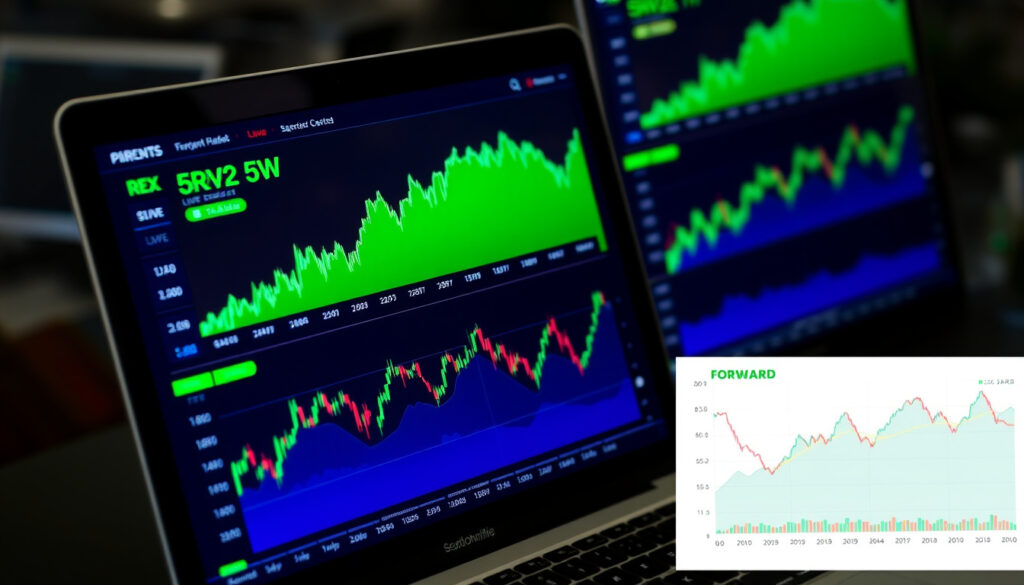
Rex Intl Share Price: Live Updates, History & Forecast (SGX:5WH)
Singapore oil explorer Rex International Holding has had a brutal few years on the SGX, but nothing quite prepared investors for what happened in late March 2026. When the company’s auditor flagged doubts about its ability to keep operating, the stock nosedived—losing more than a third of its value in a single session. For anyone holding shares or watching the energy sector, the question is no longer whether Rex is in trouble, but how deep that trouble runs.
Current Price: 0.104 SGD · 1-Day Change: -1.89% · Recent Drop: -35.4% · 52-Week Low: -79.41% · Volume: 1,521,500
Quick snapshot
- Shares crashed 35.4% to S$0.084 on March 25, 2026 after Deloitte flagged going concern doubts (The Business Times)
- Auditor Deloitte & Touche LLP filed an unqualified opinion with material uncertainty on April 1, 2026 (MarketScreener)
- Whether debt restructuring negotiations with Lime Petroleum bondholders have concluded
- Exact timeline for SGX regulatory response to the going concern flag
- Updated production figures for Oman, Norway, and Germany operations post-March 2026
- Bondholders vote on restructuring terms for US$224.9M LPH debt
- Next earnings report due August 2025 (per earlier guidance—date may shift)
- SGX monitoring situation for potential delisting trigger
Key trading and financial metrics for Rex International are summarised in the table below.
| Metric | Value |
|---|---|
| Stock Symbol | SGX:5WH |
| Latest Close | 0.0800 SGD |
| Today’s High | 0.0770 SGD |
| Avg Volume | 215,500 |
| 52-Week Range | 0.050 – 0.230 SGD |
| ISIN Code | SG2G04994999 |
Why is Rex International share price falling?
The answer traces directly to a pair of numbers that should alarm any investor: US$248.7 million in total loans and borrowings against a company that lost US$152.7 million in 2025. When Deloitte & Touche LLP audited Rex International’s books for the year ending December 31, 2025, the firm found enough doubt about the company’s survival to formally question its ability to continue as a going concern—a red flag that rattled markets (The Business Times).
Auditor’s going concern warning
Deloitte’s concern centers on Rex’s subsidiary structure. Lime Petroleum Holding (LPH) carries US$224.9 million in senior secured bonds, while Jasmine Energy holds another US$23.4 million. Those two subsidiaries alone account for nearly all of the parent company’s debt load. When the auditor looks at cash flows, operational losses, and the maturity schedule of those bonds, the math doesn’t add up to confidence (MarketScreener).
Rex’s board pushed back, stating that preparing financials on a going concern basis “remains appropriate” due to expectations of successful debt restructuring. Bondholders for one unit approved liquidity funding in late March, pushing shares up 3%—but that relief proved short-lived (Moomoo).
Recent price drops
The March 25 crash was brutal by any measure. Shares fell S$0.046 in a single session, closing at S$0.084—erasing roughly S$64 million in market capitalisation in hours. Trading volume spiked to 1.5 million shares, roughly seven times the recent daily average. The stock has now lost 79.41% from its 52-week high of S$0.230, set sometime in 2025 (Moomoo).
Rex International’s price-to-sales ratio of 0.5x looks cheap versus Singapore’s Energy Services median of 0.8x—but only if you ignore that the company has negative equity and negative operating margins. Cheap can get cheaper when survival is in question.
Why this matters: The going concern warning signals that Deloitte views the debt burden as potentially fatal, not merely challenging. Investors pricing the stock as a turnaround play are betting on restructuring success—a high-stakes gamble given the scale of accumulated losses.
What is Rex International’s price target?
Analysts tracking Rex International on platforms like Fintel and TradingView have set an average one-year price target of S$0.33, with the range clustering between S$0.32 and S$0.34 (Fintel). That represents roughly three times the current share price—and about a 300% upside from where the stock traded after the March crash.
Analyst forecasts
Those targets predate the going concern warning. It’s unclear whether analysts have updated their models since Deloitte filed its unqualified opinion on April 1. Standard practice would be to either suspend coverage or slash targets significantly given the elevated bankruptcy risk. Investors searching for “Rex intl share price target” will find older forecasts that may no longer reflect current sentiment (TradingView).
SGX:5WH predictions
What the market is actually pricing in tells a grimmer story. The stock trades roughly 15% below its 200-day moving average, a technical signal that typically indicates sustained bearish momentum. Return on capital sits at -21.44%, and the price-to-earnings ratio is deeply negative at -0.61 on a trailing twelve-month basis. These metrics suggest professional investors see meaningful default probability built into the current valuation (Stockopedia).
Bottom line: Pre-warning analyst targets of S$0.33 now appear aspirational at best. The market’s pricing reflects substantial doubt about the company’s survival, making the gap between analyst targets and actual trading levels a warning sign rather than an opportunity.
Is Rex International a good investment?
Honest answer: not for most investors. The energy sector occasionally offers turnaround plays where deeply discounted stocks recover dramatically, but Rex International faces structural headwinds that make it a high-risk bet. The company’s operating margins stand at -37.2%, meaning it loses money on every barrel of oil it produces. When you add a US$248.7 million debt burden to that picture, the path to profitability becomes difficult to see (Stockopedia).
Upsides
- P/S ratio of 0.5x versus sector median of 0.8x suggests valuation compression
- Bondholder approval of liquidity funding shows creditors willing to negotiate
- Core assets in Oman, Norway, and Germany retain real operational value
- Board maintains confidence in restructuring success
Downsides
- Negative equity on balance sheet due to accumulated losses
- Operating margin of -37.2% means no profitability in sight
- Going concern warning raises delisting risk
- Lower production reported from all three operating regions in March 2026
- US$152.7 million net loss in 2025 compounds balance sheet deterioration
What happened to Rex shares?
The story unfolds across two years of deteriorating fundamentals and occasional false dawns. In October 2024, the stock jumped 34% on what appeared to be positive news—though even that rally left shares down 24% over the following twelve months. Investors who bought that dip found themselves underwater almost immediately (Moomoo).
Key events
The timeline below captures the acceleration of Rex’s decline:
- October 2024: 34% monthly surge, later revealed as unsustainable
- December 31, 2025: Financial year ends with US$152.7 million net loss
- March 25, 2026: 35.4% single-day collapse after auditor warning
- March 31, 2026: Bondholders approve unit liquidity funding; shares recover 3%
- April 1, 2026: Annual report filed with formal going concern doubt
- April 16, 2026: Shares trading at S$0.081, still down from pre-crash levels
Administration updates
The company has not filed for administration, and the board continues to assert that restructuring negotiations will succeed. However, the gap between board optimism and auditor skepticism has created a credibility problem. Deloitte’s opinion was unqualified in form but devastating in substance—it said the numbers raise “material uncertainty” about survival, which is corporate-speak for “we’re not sure this company will exist in twelve months” (MarketScreener).
What will happen to my Rex shares?
For existing shareholders, the path forward hinges entirely on whether the debt restructuring succeeds. If Lime Petroleum Holding bondholders accept haircut terms, the company could emerge with a cleaner balance sheet and a fighting chance at profitability. That scenario would likely trigger a sharp short squeeze given how badly the stock has sold off. If restructuring talks collapse, Rex faces administration or delisting—and shareholders would rank last in any asset distribution, meaning total loss of capital is a real possibility.
What is Rex International share price history?
For investors researching “rex intl share price history,” the long-term chart tells a story of persistent decline punctuated by sharp but fleeting rallies. The 52-week range of S$0.050 to S$0.230 captures wild swings that reflect both sector volatility and company-specific stress (Moomoo).
Recent trading data
Trading data from mid-April shows the stock stuck in a narrow band around S$0.077 to S$0.081, with volume running well below the March panic levels but still elevated versus historical norms. Market capitalisation has shrunk to roughly S$110 million with 1.36 billion shares outstanding—meaning the company trades at a significant discount to its underlying asset value if those assets can be monetised orderly (Moomoo). For a different kind of crisis, you can read about the Tai Po blaze Hong Kong at $Tai Po blaze Hong Kong.
Chart overview
The stock has essentially traced a consistent downward channel since mid-2024, with each rally failing to reach prior highs. Technical analysts tracking “rex international share price target” projections would note that S$0.050 represents a critical support level—breaking below that opens the path to near-zero valuations. The distance from current levels to 52-week highs represents a recovery requiring more than 180% upside (Stockopedia).
“The group’s financial woes are heavily tied to the debt load of its subsidiary Lime Petroleum Holding.”
— The Business Times, reporting on the March 2026 share collapse
“Rex International Holding’s price-to-sales ratio of 0.5x is worth a mention when the median P/S in Singapore’s Energy Services industry is similar at about 0.8x.”
— Simply Wall St analyst commentary via Moomoo
The implication is stark: investors pricing Rex at a discount to peers are effectively applying a distress multiple that assumes either a debt restructuring haircut or outright default. The going concern warning validates that pessimism, at least in the auditor’s view.
Rex International’s next moves on the LPH debt restructuring will determine whether this becomes a managed workout or a disorderly collapse. Bondholders hold significant leverage—and their patience will be tested if operational losses continue mounting.
Investor takeaway: The stock’s history shows a company unable to sustain rallies, with each attempt to recover meeting fresh setbacks. Current prices reflect market consensus that survival is uncertain, not a bargain basement entry point.
Related reading: BRK.B Share Price – Live Quote, Performance & Analysis · Low Keng Huat Share Price – Delisted Status and Historical Analysis
Frequently asked questions
What is the current Rex intl share price?
As of recent market data, Rex International (SGX:5WH) trades around S$0.080–S$0.104. The stock fell 35.4% in a single session on March 25, 2026, and has not recovered to pre-crash levels. For real-time pricing, check SGX announcements directly.
Why did Rex International shares drop recently?
Shares plummeted after Deloitte & Touche LLP issued a going concern warning in the audited 2025 financial statements filed April 1, 2026. The auditor questioned whether the company can survive given US$248.7 million in debt against US$152.7 million in annual losses. The market reacted violently to this red flag.
What are analyst forecasts for SGX:5WH?
Pre-warning consensus price targets averaged S$0.33, with a range of S$0.32 to S$0.34. These targets were set before the going concern flag and may be revised once analysts update their models. The current share price represents roughly 70–75% discounts to those targets.
Is Rex International at risk of delisting?
SGX has not issued any delisting notice, but the going concern warning puts Rex on a watchlist. If the company fails to resolve its debt situation or continues reporting losses, the exchange may initiate delisting proceedings. Investors should monitor SGX announcements for any regulatory updates.
How has Rex intl share price performed historically?
The stock peaked near S$0.230 in 2025 before declining sharply. It briefly rallied 34% in October 2024 but gave back those gains. The current price represents roughly a 65–79% decline from 52-week highs, with the March 2026 auditor warning marking the steepest single-day loss.
What factors affect Rex International share price future?
Three factors dominate: debt restructuring outcomes for the US$224.9 million LPH bond programme, production volumes from Oman, Norway, and Germany operations, and broader oil price movements. The going concern warning means auditor confidence now joins that list.
Should I hold Rex International shares?
That depends on your risk tolerance and belief in the restructuring plan. Holders face meaningful downside if restructuring fails, while successful negotiations could trigger a significant short squeeze given how badly the stock has sold off. The stock is suitable only for investors who can afford total loss of capital.
More related posts
 Red Crowns Senior Living: Guide to Co-Living, Costs, 2024 Fine
 Grab Driver Teo Negligent: Fined S$3,500, Banned 18 Months
 How to Get Rid of Dark Eye Circles Fast
 In Lieu Of Meaning: Definition, Examples, and Synonyms
 GetYourGuide Singapore: Reviews, Tours, and Is It Legit
 Oak Ville @ AMK – October 2025 BTO Launch Guide
 Does Not Equal Sign (≠): How to Type and Use It | Guide
 DBS Bank Branches Operating Hours Guide: Singapore