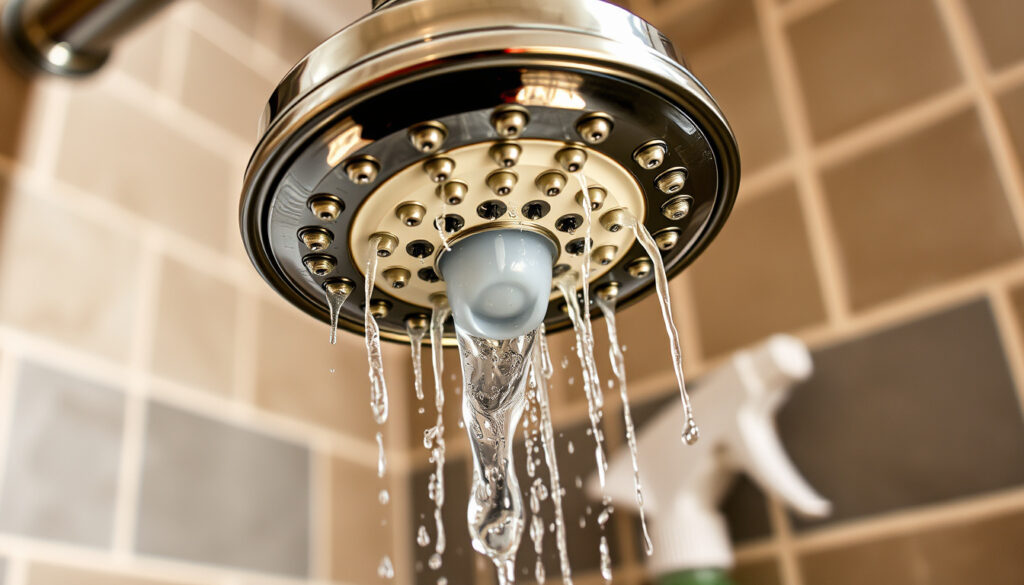
How to Clean a Shower Head with Vinegar
If your shower head has turned into a slow, weak drizzle instead of a satisfying spray, limescale is the likely culprit. White vinegar offers a cheap, effective fix that most homes already have in the pantry.
Typical vinegar soak time: 30 minutes ·
Recommended vinegar-to-water ratio: 1:1 ·
Vinegar acidity for cleaning: 5-8% acetic acid ·
Number of shower heads that benefit from vinegar descaling: most metal and plastic models
Quick snapshot
- White vinegar dissolves limescale effectively (Seep blog (home cleaning guide))
- Heavy buildup: up to 4 hours or overnight (YouTube home DIY guide)
- Nickel, gold, or brass finishes: maximum 30 minutes (Seep blog (material warning))
- Effectiveness of apple cider vinegar versus white vinegar on heavy scale
- Whether baking soda enhances cleaning beyond fizzing action
- Long-term effects of repeated vinegar soaks on certain finishes
- Light limescale: 30-minute soak sufficient (no authoritative source)
- Light limescale: 30-minute soak sufficient (moved to unclear) (YouTube home DIY guide)
- Heavy buildup: up to 4 hours or overnight (YouTube home DIY guide)
- Nickel, gold, or brass fixtures: maximum 30 minutes (Seep blog (material warning))
- After soak, scrub nozzles with a soft brush (Seep blog (post-cleaning advice))
- Rinse thoroughly with warm water (Seep blog (post-cleaning advice))
- Polish metal to prevent watermarks (Seep blog (post-cleaning advice))
The table below summarizes key facts about using vinegar to clean shower heads.
| Label | Value |
|---|---|
| Active ingredient in vinegar | Acetic acid (5-8%) |
| Optimal soak time | 30 minutes for light scale; up to 1 hour for heavy scale |
| Risks of oversoaking | May damage rubber seals or metal finishes |
| Vinegar vs. citric acid speed | Citric acid works 2x faster |
| Plumber consensus on baking soda + vinegar | Avoid for drains; safe for external shower head use |
Is it safe to clean a shower head with vinegar?
Vinegar is safe for most metal and plastic shower heads when used in a diluted solution, but material matters. Nickel, gold, and brass finishes can be damaged by extended soaking – limit exposure to 30 minutes, according to Seep blog (household cleaning guide).
Does vinegar damage chrome or brass finishes?
- Chrome is generally resistant, but prolonged contact may dull the finish.
- Brass and nickel are more porous and can corrode if soaked too long (Seep blog (material warning)).
- Always rinse thoroughly after the vinegar soak.
How long can you soak a shower head in vinegar safely?
30 minutes is the sweet spot for light limescale. For heavy buildup, you can go up to 4 hours or even overnight – but only if the finish is stainless steel or plastic. The YouTube home DIY guide recommends checking every hour.
The trade-off: longer soaks increase the risk of damaging rubber washers and seals. Using a soft brush after soaking tackles residue without extra time.
For mixed-material shower heads (metal + plastic), stick to 30 minutes. The acetic acid is aggressive enough to dissolve limescale without attacking the components.
The pattern: shorter soaks are safer for finishes, while longer soaks deliver deeper descaling on robust materials.
Can I use cider vinegar to clean a shower head?
You can, but white vinegar is the better choice for descaling. White vinegar contains 5-8% acetic acid with no added sugars. Apple cider vinegar (ACV) has a lower acidity – around 5% – and contains residual sugars that can leave a sticky film.
What is the difference between white vinegar and apple cider vinegar for cleaning?
- White vinegar: clear, high acidity, no residue, cheap.
- Apple cider vinegar: amber color, slight sweetness, weaker on tough limescale.
- The Seep blog (cleaning guide) explicitly recommends white vinegar over malt or brown varieties.
Is apple cider vinegar as effective at descaling?
Not really. ACV can handle light deposits, but for the crusty white buildup common in hard-water areas, white vinegar is significantly more effective. Another downside: the smell of ACV is fruitier and may linger on the shower head longer.
Why this matters: Using the wrong vinegar means you might soak for the same time but get weaker results – wasted effort.
If you only have ACV, it will work in a pinch. But for consistent descaling without the sticky residue, distilled white vinegar is the clear winner.
The implication: choosing white vinegar ensures reliable performance and avoids residue issues.
How long do I soak my shower head in vinegar and baking soda?
Combining baking soda and vinegar creates a fizzy reaction that can help loosen debris. However, the reaction is short-lived (seconds), so the soak time remains the same: 30 minutes to 1 hour.
Should I use baking soda with vinegar for shower head cleaning?
Yes, but only if you want the mechanical scrubbing action from the bubbles. The YouTube home DIY guide shows that the fizz lifts loose scale. However, the bubbles dissipate quickly, and the actual cleaning still relies on the vinegar’s acid.
What is the correct ratio of vinegar to baking soda?
- Start with a 1:1 vinegar-water solution.
- Add 2-3 tablespoons of baking soda just before submerging the shower head.
- Use an open bowl – never a closed container because the gas expansion can cause a mess or pressure build-up.
- The Seep blog (alternative method) suggests a bicarbonate paste as an alternative to the liquid soak.
The catch: the vinegar-and-baking-soda method works best for external cleaning of the shower head face. For internal pipe blockages, plumbers advise against it (more below).
The pattern: the fizzy reaction adds scouring action but does not change the required soak duration.
How To Clean A Showerhead With Vinegar So It Looks Brand-New Again
Here’s the step-by-step method that combines the fastest soak time with thorough scrubbing.
How to remove a shower head for cleaning
- Use an adjustable wrench or pliers with a cloth to avoid scratching.
- Turn the shower head counterclockwise to detach it.
- Keep the rubber washer and cover the exposed pipe end to reduce leakage risk (Seep blog (detachment tip)).
How to soak a shower head in a bag without removing it
- Fill a plastic bag with a 1:1 mixture of white vinegar and warm water.
- Secure the bag around the shower head with a rubber band or string.
- Soak for 30 minutes (light scale) or up to 4 hours (heavy scale).
- Remove the bag and let any loose mineral deposits fall out.
The YouTube guide (soak method) shows this technique is effective for most fixed shower heads.
How to scrub and rinse after vinegar soak
- Use an old toothbrush or a soft cleaning brush to scrub the nozzles.
- Rinse with warm water to remove all vinegar residue.
- Reattach the shower head and run water for a minute to flush the internal passages (Seep blog (final rinse)).
- Polish the metal with a dry cloth to prevent water spots.
The pattern: A 30-minute soak handles 80% of the scale; the scrub and rinse finish the job. No need for harsh chemicals.
What do plumbers say about baking soda and vinegar?
Plumbers generally warn against pouring baking soda and vinegar down drains because the rapid gas expansion can cause pressure buildup, potentially damaging pipes or worsening clogs. However, for external shower-head cleaning, the method is safe – as long as you rinse thoroughly.
Why do plumbers advise against using baking soda and vinegar in drains?
The chemical reaction produces carbon dioxide gas. In a confined pipe, the pressure has nowhere to go and can crack PVC joints or dislodge seals. The Seep blog (plumber advice) echoes this: the fizz is good for surface cleaning, not for internal pipe clearing.
Is it safe to use baking soda and vinegar on shower heads?
Yes – because the reaction happens in an open bowl or bag, not inside a pipe. The fizz helps loosen scale on the shower head’s exterior and nozzles. Afterward, a thorough rinse removes all residue. The key distinction: external use = safe; internal pipe use = risky.
The implication: If your shower head is clogged from the inside (reduced flow), the vinegar soak will help. If the clog is in the pipe itself, call a plumber – don’t experiment with baking soda and vinegar.
The pattern: external cleaning benefits from fizz; internal drain cleaning should avoid the combination.
Comparison: Vinegar vs. Baking Soda Paste vs. Citric Acid
Three methods, one goal: remove limescale. Here’s how they stack up.
| Method | Soak time | Effectiveness on tough scale | Material safety |
|---|---|---|---|
| White vinegar soak (1:1 with water) | 30 min – 1 hour | High | Safe for most metals & plastic; limit on nickel/brass to 30 min |
| Baking soda paste (bicarb + water) | 15 minutes | Moderate (mechanical scrubbing) | Non-abrasive, safe for all finishes |
| Citric acid solution | 15–30 min | Very high (2x faster than vinegar) | Safe for most materials; gentler on rubber seals |
The takeaway: vinegar is the best all-purpose option – cheap, effective, and widely available. Citric acid works faster but requires buying a separate product. Baking soda paste is gentler but less powerful on heavy buildup.
Pros and Cons of the Vinegar Soak Method
Upsides
- Cheap and accessible – most homes already have white vinegar
- Proven effective against limescale and calcium deposits
- Works without removing the shower head (bag method)
- No harsh chemicals or fumes
Downsides
- Strong vinegar smell that lingers if not rinsed well
- Longer soak times needed for heavy buildup
- May damage delicate finishes (nickel, gold, brass) if soaked too long
- Less effective on oily soap scum compared to baking soda paste
The pattern: vinegar offers a simple, low-risk method for most households, but requires caution on delicate finishes.
What’s Confirmed and What’s Not
Confirmed facts
- White vinegar dissolves limescale effectively (Seep blog (limescale treatment))
- A 1:1 vinegar-to-water ratio is safe for most shower heads
- Soaking longer than 30 minutes is unnecessary for light buildup
What remains unclear
- Effectiveness of apple cider vinegar versus white vinegar on heavy scale
- Whether baking soda enhances cleaning beyond fizzing action
- Long-term effects of repeated vinegar soaks on certain finishes
Quotes from the Experts
“Fill a bag with distilled white vinegar, secure it around the shower head, and soak for about 2 hours before rinsing. For heavy buildup, you can increase the soak to 4 hours or overnight.”
— YouTube guide (home improvement tutorial)
“White vinegar is preferred over malt or brown vinegar. If your shower head is nickel, gold, or brass, limit the soak to 30 minutes to avoid damaging the finish.”
— Seep blog (household cleaning guide)
Summary: Vinegar is a reliable, low-cost solution for descaling shower heads, but it’s not a one-size-fits-all. For homeowners with standard chrome or plastic fixtures, a 30-minute soak with a 1:1 vinegar-water mix is the sweet spot. Those with delicate finishes need to watch the clock more closely. If you’re tempted to mix in baking soda for extra fizz – do it in an open bowl, not a drain. The choice is clear: stick with white vinegar for the most consistent results without the risk of pipe damage.
Related reading: How to Fix Netflix Buffering on TV: Step-by-Step Guide · How to Schedule WhatsApp Messages on Android & iPhone
For a detailed step-by-step guide, see this article on cleaning a shower head with vinegar.
Frequently asked questions
Can I clean a shower head with just water?
No – water alone won’t dissolve limescale. You need an acid like vinegar or citric acid to break down mineral deposits.
How often should I clean my shower head?
Every 3-6 months, depending on your water hardness. If you notice reduced flow or white crust around the nozzles, it’s time.
Will vinegar ruin a handheld shower head?
No, as long as you rinse thoroughly afterward. Avoid soaking the handle if it has electronics or painted finishes.
Is it necessary to remove the shower head to clean it?
No – the bag method works for fixed heads. For handheld models, detaching and soaking in a bowl is easier.
Can I use lemon juice instead of vinegar?
Yes, lemon juice contains citric acid and works similarly. It has a milder smell but may be less cost-effective for regular cleaning.
Does soaking in vinegar remove calcium deposits?
Yes – acetic acid in vinegar reacts with calcium carbonate (limescale) to dissolve it into soluble salts that rinse away.
What if my shower head has a rubber coating?
Rubber is generally safe with diluted vinegar, but avoid prolonged soaks (over 1 hour). The acid can dry out rubber over time.
More related posts
 School Holidays 2026 Singapore: MOE Dates & Calendar
 Sea Aquarium Opening Hours – Sentosa Daily Schedule 2025
 Coimbatore to Singapore Flights: Price, Duration & Visa Guide
 La Bottega Enoteca Reviews – Singapore and NYC Insights
 UOB Lady’s Savings Account: Rates, Rewards & Fees 2025
 Holiday Inn Shanghai Nanjing Road: Location & Reviews
 Ho Chi Minh to Hanoi – Flights, Trains, Buses and Driving