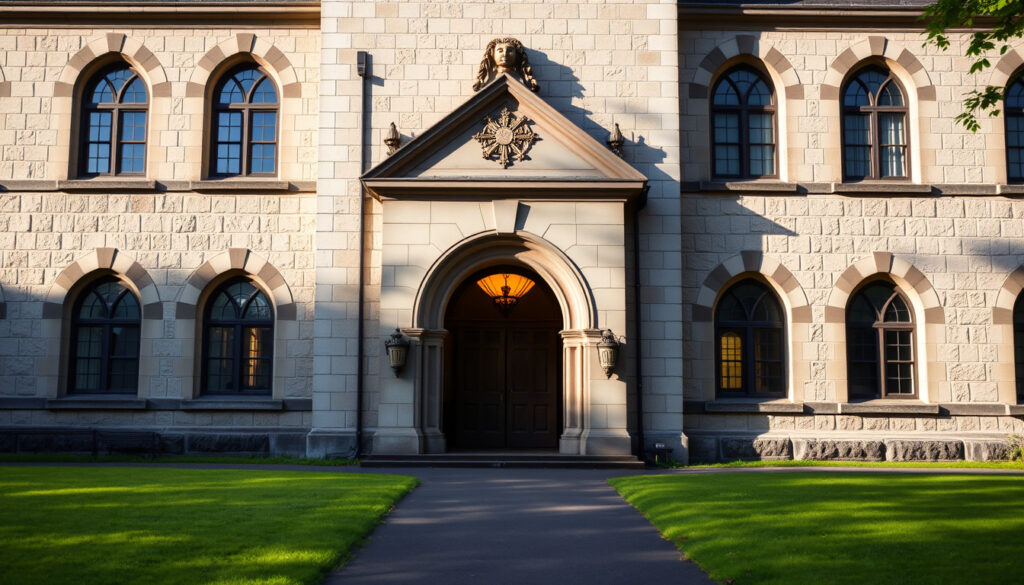
St Andrew’s Secondary School Dublin: Fees, Status & Ethos
For parents weighing secondary schools in Dublin, the decision often comes down to a handful of practical questions: is it private, what does it cost, and what kind of school is it, really? This guide cuts through the marketing language, using official school documents and government records to give you a clear, data-backed picture of the fees, the school’s private status, and its religious affiliation.
Year founded: 1894 · Location: Dublin, Ireland · Student body: co-educational · Curriculum offered: Leaving Certificate and International Baccalaureate · School type: private, independent day school
Quick snapshot
- Co-educational private day school (St Andrew’s College Dublin)
- Offers Leaving Certificate and International Baccalaureate (U.S. State Department)
- Church of Ireland foundation, not Roman Catholic (International School Guide)
- Exact current fee for each year group beyond 2025/2026 announced figures
- Detailed breakdown of charges for uniforms, books, and extracurricular activities
- Whether non-Catholic students receive any fee discount
- Fees increased by 5% in 2023 according to The Irish Times
- Annual tuition for 2025/2026 set at €9,100–€9,600 for Leaving Certificate years (The Irish Times)
- IB programme fees at €12,000 for the same academic year (The Irish Times)
- Fees are invoiced in July and must be paid in full by 4 June each year (St Andrew’s College Dublin)
- Parents can pay in instalments, including a nine-month direct debit option (St Andrew’s College Dublin)
- Admission applications follow the school’s published policy (St Andrew’s College Dublin)
Is St Andrew Secondary a boy school?
St Andrew’s College Dublin is a co-educational school, meaning it enrolls both boys and girls across all year levels. This is confirmed by the school’s own admissions policy, which makes no gender-based distinction in its enrollment criteria St Andrew’s College Admissions Policy. The student body is mixed from 1st Year through to 6th Year, and the school’s official website consistently refers to itself as co-educational.
What is the gender policy of St Andrew’s College Dublin?
The school’s admissions documents state that it is a fee-paying co-educational day school. There are no single-sex classes or separate streams for boys and girls. This places it in the majority of Dublin’s private secondary schools, where co-education has become the norm, unlike some older single-sex institutions in the city. The school does not offer a boys-only or girls-only track.
The implication: For parents ruling out single-sex education, St Andrew’s College Dublin fits squarely in the co-educational category. No gender-selective admissions or streaming exists.
Is St Andrews school private?
Yes. St Andrew’s College Dublin is a private, independent day school. It charges annual tuition fees, which are set each year by the Board of Management and approved by the Board of Governors St Andrew’s College Admissions Policy. The school is not funded by the Irish state in the same way as public secondary schools, and it does not receive per-student capitation grants from the Department of Education.
Parents considering St Andrew’s College need to budget for full tuition costs, unlike at free secondary schools where the state covers most operational expenses. The school’s independent status also means it sets its own admissions criteria and fee schedule.
Is St Andrews Dublin a private school?
In the Irish context, “private school” and “fee-paying school” are often used interchangeably. St Andrew’s College Dublin is registered with the Department of Education as a fee-paying secondary school, and its official documentation states it is “fee-paying” St Andrew’s College Admissions Policy. This distinguishes it from the vast majority of Irish second-level schools, which are free. According to the U.S. State Department, it is listed among Dublin’s private international schools and acts as an independent day school U.S. State Department Dublin Fact Sheet.
The catch: Private status means no state funding for bus transport, books, or school meals, which can add hidden costs to the advertised tuition. Parents should factor these in.
How much are St Andrews high school fees?
For the 2025/2026 academic year, St Andrew’s College Dublin has published a detailed fee schedule. The school lists secondary school fees at €9,100 for 1st, 2nd, 3rd, 5th, and 6th Year. Transition Year (4th Year) fees are set at €9,600. The International Baccalaureate (IB) programme, which runs alongside the Leaving Certificate, costs €12,000 per year St Andrew’s College Dublin Fee Schedule 2025/2026.
Fees have risen in recent years. The Irish Times reported a 5% increase in 2023, bringing most secondary fees from €7,700 to €8,100 at that time The Irish Times. The subsequent jump to €9,100 in 2025 represents a cumulative increase of roughly 18% in two years. The school allows payment in one instalment, two equal instalments, or by direct debit over nine months, with a €50 administration fee for the direct debit option. All fees must be paid in full by 4 June each year.
What is the current fee structure for St Andrew’s College Dublin?
Here is the fee breakdown from the school’s 2025/2026 fee schedule:
Six fee categories, with a clear distinction: IB costs a premium of about 32% over the standard Leaving Certificate track.
| Year group | Annual fee (€) | Curriculum track |
|---|---|---|
| 1st Year | 9,100 | Leaving Certificate |
| 2nd Year | 9,100 | Leaving Certificate |
| 3rd Year | 9,100 | Leaving Certificate |
| Transition Year (4th Year) | 9,600 | Leaving Certificate / IB |
| 5th Year | 9,100 | Leaving Certificate |
| 6th Year | 9,100 | Leaving Certificate |
| IB Programme (any year) | 12,000 | International Baccalaureate |
These are tuition fees only. Additional costs for books, uniforms, extracurricular activities, and school trips are not included. The school’s admissions policy states that fees are subject to annual review by the Board of Management St Andrew’s College Admissions Policy.
The pattern: fee increases at St Andrew’s have outpaced inflation, and parents should plan for annual bumps of 5% or more.
Is St Andrew secondary school a Catholic school?
No. St Andrew’s College Dublin is not a Roman Catholic school. It was founded in 1894 by members of the Presbyterian community in Dublin International School Guide, and its religious ethos today is Church of Ireland (Anglican). The school’s official documentation describes it as having a Church of Ireland foundation, and it welcomes students of all faiths and none. This distinction matters for parents in Dublin, where the majority of state-funded secondary schools are under Catholic patronage.
A Protestant ethos school in Dublin typically does not require religious instruction in the Catholic tradition, nor does it follow the Catholic sacramental calendar. For non-Catholic families, or those seeking a broader religious environment, this can be a meaningful distinction from the local Catholic-run schools.
What is the religious ethos of St Andrew’s College Dublin?
The school’s website and admissions materials do not prominently advertise a specific religious ethos, but third-party sources and historical records confirm its Presbyterian/Church of Ireland roots. The school describes itself as inclusive, with a pastoral care system that respects all beliefs. It does not require students to attend religious services, and its curriculum includes religious education as part of a broader ethical and philosophical framework. For parents specifically asking “Is it Catholic?”, the answer is clear: it is not Roman Catholic, but it is a Protestant-founded school with a Church of Ireland character.
The pattern: St Andrew’s College Dublin sits in the minority of Irish fee-paying schools that are not Catholic-run. This gives it a distinct position in the market for families seeking a faith-based but non-Catholic environment.
What is the ranking of St Andrew Secondary School?
St Andrew’s College Dublin consistently ranks among the top secondary schools in Ireland for academic performance. The school achieves high average points in the Leaving Certificate, with many students progressing to competitive university courses. Its International Baccalaureate results are also strong, with the school reporting high pass rates and average scores above the global mean. According to third-party directories, the school is placed in the selective private/IB segment of Dublin’s secondary market Global School Guide.
How does St Andrew’s College Dublin perform academically?
The school does not publish an official league table ranking on its own website, but anecdotal and third-party data suggest it is a high-performing institution. The Leaving Certificate is the most common route, and the school’s results place it in the top tier of fee-paying schools. The IB programme, while smaller, draws students specifically seeking an international curriculum. The school’s admissions are selective, with an entrance assessment required for entry, which means its academic profile is partly shaped by its enrollment criteria. St Andrew’s College Dublin lists the IB as a key offering alongside the Leaving Certificate.
Upsides
- Strong academic results in both Leaving Certificate and IB
- Co-educational environment
- Non-Catholic religious ethos (Church of Ireland)
- Clear fee structure published online
- Located in well-regarded Blackrock area
- Established history since 1894
Downsides
- High annual fees (€9,100–€12,000)
- Additional costs for uniforms, books, activities
- Annual fee increases (5% in 2023, cumulative 18% since then)
- Selective admissions (entrance assessment required)
- No state bus transport subsidies
- Limited fee reduction or scholarship information publicly available
sac.ie, brightkey.co, expatschoolguide.com, brightkey.co, doris.school, smapse.com, fitzgabrielsschools.com, internationalschoolguide.com, ed-ex.com
Frequently asked questions
What is the student-teacher ratio at St Andrew’s College Dublin?
The school does not publicly disclose an exact ratio on its website, but typical private schools in Dublin aim for class sizes of 20–25 students per teacher. Parents should request this directly from the admissions office.
What extracurricular activities does St Andrew’s College Dublin offer?
The school offers a range of activities including rugby, hockey, tennis, drama, music, and debating. Specific offerings vary by term and are detailed on the school’s extracurricular page.
How do I apply for admission to St Andrew’s College Dublin?
Admission applications are submitted through the school’s online portal. Prospective students sit an entrance assessment. Full details are in the school’s admissions policy St Andrew’s College Admissions Policy.
Does St Andrew’s College Dublin offer scholarships?
The school does not prominently advertise a scholarship program on its website. Some fee-paying schools in Ireland offer means-tested bursaries; parents should inquire with the admissions office directly.
What is the IB pass rate at St Andrew’s College Dublin?
The school reports strong IB results, but specific pass rate data for recent years is not published on the main website. Third-party directories suggest performance above global averages.
What is the school’s policy on bullying?
St Andrew’s College Dublin has a published anti-bullying policy, which is available to parents on request. The school emphasizes pastoral care and a respectful school culture.
Is there a school bus service for St Andrew’s College Dublin?
The school does not operate its own bus service. Students typically use public transport, with Dublin Bus and the DART serving the Booterstown/Blackrock area.
What are the school hours at St Andrew’s College Dublin?
The school day runs from approximately 8:50 AM to 4:00 PM, with variations for extracurricular activities. Specific timetables are provided upon enrollment.
St Andrew’s College Dublin’s own admissions policy states plainly: “The school is fee-paying.” That one sentence is the clearest summary of what parents are signing up for — a selective private education that carries both the benefits of small classes and strong results, and the burden of rising annual costs.
— St Andrew’s College Admissions Policy
According to The Irish Times, fee increases at fee-paying schools like St Andrew’s College are becoming a pattern: “The hidden costs of private schools” include annual rises of 5–6% that outpace inflation, forcing parents to budget for real growth in tuition The Irish Times.
— The Irish Times
For parents in Dublin weighing St Andrew’s College Dublin against other options, the decision comes down to a clear set of variables. The school is private, co-educational, and Church of Ireland — not Catholic. Its fees have climbed sharply in recent years, with the IB programme commanding a significant premium. Academic results place it among the top tier of Irish fee-paying schools, and the selective admissions process ensures a motivated student body. But the cost trajectory is real: parents should expect annual increases in the 5% range, and factor in additional spending on uniforms, books, and activities that can push the total well beyond €10,000 per year. For Dublin families seeking a non-Catholic private education with strong academic credentials, St Andrew’s College Dublin is a leading candidate — provided the budget can absorb the rising fees.
For more financial guidance, see our guide to S&P 500 Index Fund: Best Funds, Returns, Tax Guide for Ireland. Also check out Buy a Black Dress Online in Ireland: Best Stores 2025.
More related posts
 5 Star Hotels in Singapore: Best, Famous & Where Celebrities Stay
 How to Get Rid of Dark Eye Circles Fast
 Black Rain Hong Kong: Warning, Rules & Latest Event
 0700 HK Share Price: Tencent Stock Analysis & Forecast
 Ngee Ann City Parking Rate: Guide & Cheap Alternatives
 How to Fix Netflix Buffering on TV: Step-by-Step Guide
 Build A Bear Singapore – No Stores, Nearest KL Guide
 The Theatre at Mediacorp: Capacity, Seating & Location