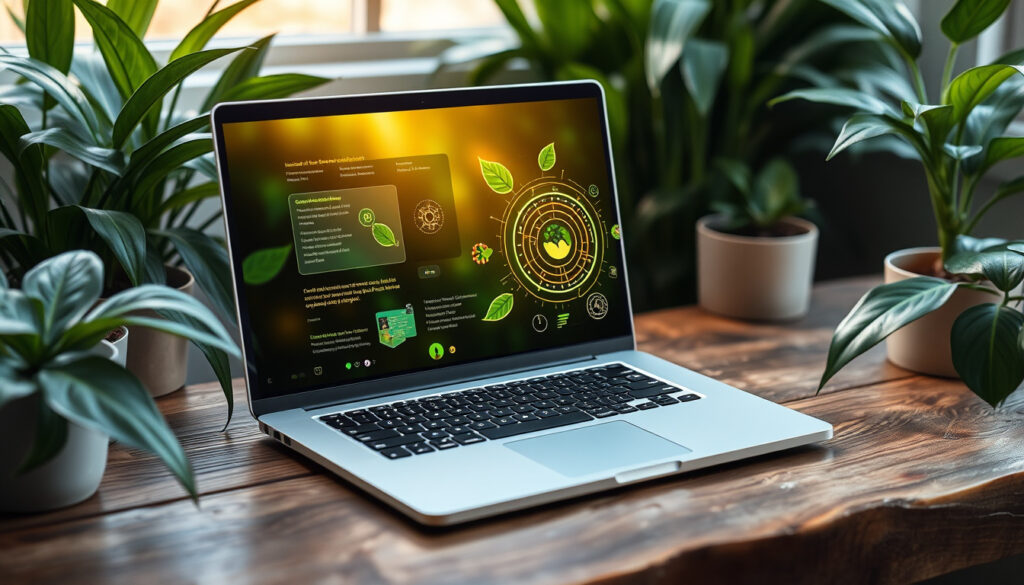
Web Design Trends 2025 – AI, 3D and Sustainable Design
The web design landscape is shifting faster than ever. As we move through 2025, artificial intelligence has transitioned from a novelty to a fundamental driver of how digital experiences are conceived, built, and delivered. Industry analysts report that AI integration in web workflows is growing at 25.2% annually, fundamentally altering the relationship between designers, developers, and the tools they use.
Simultaneously, immersive 3D interfaces have moved beyond gaming portals and luxury brand sites into mainstream ecommerce, architecture, and automotive sectors. The convergence of these technologies—with sustainability, accessibility, and mobile-first design serving as non-negotiable foundations—defines what successful web presence looks like in 2025. Understanding these interconnected trends has become essential for businesses seeking to maintain digital relevance.
What Are the Top Web Design Trends for 2025?
Four interconnected themes dominate the current web design landscape, each reinforcing the others while addressing distinct user needs and business objectives.
These trends share a common thread: they respond to user expectations for experiences that feel both sophisticated and effortless. Research from industry publications indicates that sites incorporating these elements see measurable improvements in session duration and conversion rates compared to static predecessors.
Key insights shaping 2025:
- AI tools have demonstrated efficiency gains exceeding 40% in prototyping workflows for teams adopting integrated pipelines.
- 3D product visualizations increase engagement by approximately 25% in ecommerce contexts where physical product inspection adds value.
- Sustainable, lightweight design directly correlates with improved Core Web Vitals scores and better search visibility.
- Mobile-first approaches have shifted from best practice to baseline requirement as mobile traffic continues dominating global statistics.
- Bento grid layouts and custom illustrations with subtle animations organize complex information for smaller screens without sacrificing depth.
- Dark mode adoption remains strong, particularly for applications used in low-light environments and those emphasizing minimalist aesthetics.
| Trend | Key Statistic | Primary Application |
|---|---|---|
| AI Integration | 25.2% annual growth through 2030 | Content generation, prototyping, personalization |
| 3D/WebGL Experiences | Rising VR/AR accessibility | Ecommerce, architecture, gaming, automotive |
| Micro-Interactions | Measurable engagement uplift | Navigation, feedback, brand differentiation |
| Bold Typography | AI-customized typefaces emerging | Hero sections, brand identity, mobile readability |
| Dark Mode | Continued low-light appeal | Apps, media sites, minimalist portfolios |
| Sustainable Design | Reduced carbon footprint | All sectors, corporate responsibility |
How Will AI Transform Web Design in 2025?
Artificial intelligence has completed its transition from experimental feature to essential workflow component. The technology now powers hyper-personalization engines that adapt content delivery based on user behavior, preferences, and contextual signals gathered in real time.
Design automation through AI handles tasks that previously consumed significant production hours. Rapid prototyping tools generate layout variations from text prompts—designers report creating functional mockups in minutes rather than days. Specialized models now serve branding exercises and ecommerce optimization with increasing sophistication, analyzing performance data to recommend adjustments without manual intervention.
Real-time collaboration features built on adaptive algorithms enable distributed teams to work on shared canvases simultaneously, with AI mediating conflicts and suggesting optimizations. Crucially, industry experts emphasize that these tools augment rather than replace human creativity—the most effective implementations use AI to eliminate repetitive tasks while preserving space for strategic thinking and artistic judgment.
Teams adopting AI-driven workflows report efficiency gains, but success depends on a clear integration strategy. Begin with one specific use case—content generation or prototype iteration—and measure results before expanding scope.
The AI-3D Partnership
A particularly significant development involves the intersection of AI capabilities with 3D rendering. Text-to-3D model generation has emerged as a practical tool, allowing designers to describe objects in natural language and receive renderable outputs. This capability accelerates ideation cycles and enables rapid iteration on spatial concepts.
When combined with 3D interfaces, AI creates unique user pathways and custom illustrations that respond to individual interaction patterns. The technology stack supporting these experiences—WebGL, CSS3, JavaScript libraries, and AI text-to-3D generators—has matured to the point where implementation no longer requires specialist graphics programming expertise.
What Visual Design Trends Dominate 2025?
Visual language in 2025 reflects a tension between maximalist expression and minimalist function. Bold, unconventional color palettes coexist alongside clean dark mode interfaces, while experimental typography integrates with AI and 3D technologies to create personalized visual journeys.
3D Interfaces and Immersive Experiences
Immersive 3D interfaces have moved decisively into mainstream web design, powered by mature browser technologies and increasing demand for differentiated digital experiences. The applications span diverse sectors: ecommerce sites enable virtual product trials, architecture firms present walkthroughs of unbuilt projects, gaming platforms deliver console-quality graphics through browsers, and automotive manufacturers let customers configure vehicles in photorealistic detail.
Several techniques define current practice. VR/AR playgrounds allow users to explore 3D spaces through standard web browsers. Claymorphism brings tactile, AR/VR-inspired textures to flat interfaces. Cursor-triggered 3D interactions—including perspective shifts, parallax depth, and motion trails—add dynamism without demanding dedicated applications.
Hero sections have become primary showcases for 3D dynamism, with AI integration enabling accessible, real-time editing capabilities previously requiring specialized software. This democratization of 3D design tools means smaller teams and independent creators can now compete with enterprise implementations.
Typography, Color, and Dark Mode
Typography in 2025 operates at the intersection of artistic expression and functional optimization. Dynamic, experimental typefaces integrate with AI systems to deliver personalized reading experiences—adjusting weights, spacing, and even typeface selection based on user context and preference.
Color trends embrace boldness. Designers report increasing client appetite for unconventional palettes that challenge conventional brand guidelines. Simultaneously, dark mode remains highly relevant, offering reduced eye strain in low-light conditions and aligning with minimalist design principles favored by technology-forward audiences.
Bento grid layouts combined with custom animated illustrations represent a growing approach to mobile-friendly information organization. This composition style balances visual interest with navigational clarity on constrained screen sizes.
What UX and Sustainability Trends to Watch in 2025?
User experience design in 2025 reflects heightened awareness of accessibility, environmental responsibility, and the demands of mobile-first browsing. These concerns no longer represent optional enhancements—they form the baseline expectation for any serious digital presence.
Micro-Interactions and Interactive Elements
Micro-animations and interactive elements have proven their value in boosting engagement metrics. Subtle motions, hover effects, parallax scrolling, and experimental hero sections respond to user actions while providing feedback that guides subsequent behavior.
Cursor interactions represent a particular area of innovation. Shape changes, blend modes, and custom cursor trails transform browsing into a more tactile experience. Navigation elements incorporate 3D animations that highlight interactive regions and communicate system states without relying on static labels.
Hand-drawn sketches and organic illustration styles add warmth to digital interfaces, counterbalancing the precision of technical elements. This human touch resonates particularly well with audiences seeking alternatives to corporate aesthetic defaults.
Sustainable, Accessible, and Responsive Design
Conscience-driven sustainability has emerged as a defining value in contemporary web design. This manifests through lightweight codebases that reduce server resource consumption, efficient asset delivery that minimizes energy expenditure, and design decisions that prioritize longevity over trend-chasing.
Accessibility considerations now integrate from project initiation rather than serving as late-stage additions. AR/VR tangibility features demonstrate how immersive technologies can serve users with different abilities. Shadow effects, contrast ratios, and interaction alternatives ensure broader usability without sacrificing visual sophistication.
Responsive, mobile-first layouts using CSS Grid enable creative, brand-differentiated compositions while maintaining compatibility across device categories. Minimalism ensures clean, impactful user experiences that extend beyond static page presentations to encompass interactive and animated content.
Reports caution against over-reliance on AI for originality. While AI tools accelerate production and enable new capabilities, differentiation increasingly depends on distinctly human creative decisions that AI cannot replicate.
Timeline: The Evolution from 2023 to 2025
Understanding current trends requires recognizing their development trajectory over recent years. The milestones below illustrate how established patterns emerged and converged into today’s landscape.
- 2023 – Neumorphism peak: Soft UI with extruded plastic-like elements dominated interface design, emphasizing depth through shadows and highlights.
- 2023–2024 – Glassmorphism transition: Frosted glass effects with translucency and blur replaced solid neumorphic surfaces as browser technology improved.
- 2024 – AI integration begins: Early AI tools appeared in design software, primarily for image generation and layout suggestions.
- 2024 – WebGL maturity: Browser-based 3D rendering achieved performance levels suitable for production deployments well beyond demonstrations.
- 2025 – AI/3D fusion: The current phase combines artificial intelligence capabilities with immersive 3D interfaces for personalized, dynamic experiences.
- 2025 – Sustainability emphasis: Environmental consciousness becomes an explicit design requirement rather than an implicit consideration.
What the Evidence Confirms—and Where Uncertainty Remains
Industry analysis draws a clear line between trends that are now firmly established and those still taking shape. That distinction matters for practitioners deciding where to commit resources and how to frame client expectations.
| Established and Confirmed | Emerging or Less Certain |
|---|---|
| Mobile-first as baseline requirement | Web3 integration extent and timeline |
| AI growth trajectory at 25.2% annually | VR/AR mainstream adoption beyond specific sectors |
| 3D/WebGL viability for production use | Long-term impact on human creativity roles |
| Dark mode relevance for accessibility | Optimal AI tool combinations |
| Sustainability as design value | Regional variation in trend adoption |
Why These Trends Matter for Digital Success
The convergence of AI, 3D, sustainability, and accessibility reflects fundamental shifts in how users relate to digital interfaces. Attention spans remain constrained while expectations for sophistication continue rising—a combination that rewards approaches capable of delivering more with less computational and cognitive overhead.
Businesses that successfully implement these trends report improvements across multiple performance indicators. User retention correlates with the engaging micro-interactions that transform passive viewing into active participation. Conversion rates benefit from personalization capabilities that anticipate user needs rather than reacting to them. Search visibility improves when Core Web Vitals metrics—themselves influenced by sustainable, lightweight design practices—meet established thresholds.
The competitive implications extend beyond immediate performance metrics. Early adopters of immersive 3D experiences report differentiation advantages as late movers scramble to catch up. Similarly, teams that develop proficiency with AI-augmented workflows build structural efficiency advantages that compound over time.
Industry Sources and Expert Perspectives
Analysis in this area draws from multiple professional sources, each contributing a distinct perspective on emerging developments. Design agencies tracking implementation across client portfolios report practical adoption patterns that complement theoretical frameworks. Technology platforms developing tools for these workflows provide insight into capability trajectories.
Reports from web development communities emphasize practical considerations often overlooked in trend-focused coverage: the learning curves associated with new technologies, the organizational changes required to incorporate AI tools effectively, and the ongoing need for human judgment in creative decisions. These sources generally advocate measured adoption rather than wholesale replacement of existing workflows.
“The most effective teams treat AI as an amplifier of existing capabilities rather than a replacement for human creativity. The technology excels at generating options and handling routine production tasks, but the strategic direction and emotional resonance still depend on human decision-makers.”
Summary and Next Steps
Web design in 2025 is defined by intelligent integration rather than isolated features. AI has become essential infrastructure, 3D has moved into mainstream production, sustainability has emerged as an explicit design value, and accessibility has become a non-negotiable baseline requirement.
For practitioners and businesses seeking to update their digital presence, the path forward involves strategic assessment rather than comprehensive overhaul. Review the Fed Rate Cuts 2025 analysis for broader economic context shaping technology investment decisions, or explore the FIFA World Cup 2025 Guide to see these design trends applied under high-traffic event conditions. Begin with specific use cases that address clear business needs, measure outcomes rigorously, and expand capability gradually as confidence builds.
What is the next big thing in web design?
The AI-3D fusion represents the most significant current development, combining artificial intelligence capabilities with immersive 3D interfaces for personalized, dynamic user experiences that respond to individual interaction patterns.
How important is sustainable web design in 2025?
Sustainability has shifted from optional consideration to explicit design requirement. Lightweight codebases, efficient asset delivery, and longevity-focused design decisions now influence both user experience metrics and organizational environmental responsibility commitments.
What role does AI play in modern web design?
AI functions as essential infrastructure powering hyper-personalization, content generation, rapid prototyping, and design automation. The technology handles repetitive production tasks while augmenting human creativity rather than replacing it.
Is dark mode still relevant in 2025?
Dark mode remains highly relevant, particularly for applications used in low-light conditions and those emphasizing minimalist aesthetics. User adoption continues growing as operating systems and browsers provide native dark mode support.
What are the best tools for implementing 3D web design?
Key technologies include WebGL, CSS3, JavaScript libraries, Adobe Express, AI text-to-3D generators, and platforms like TurboSquid for accessing ready-made models. Implementation no longer requires specialist graphics programming expertise.
How do micro-interactions improve user engagement?
Micro-animations and interactive elements provide feedback that guides subsequent user behavior, transform passive viewing into active participation, and add personality that distinguishes brands from competitors.
What is the expected growth for AI in web design?
AI integration in web design workflows is projected to grow at 25.2% annually through 2030, according to industry analyses tracking technology adoption across design and development sectors.
More related posts
 GlobalFoundries Singapore Pte Ltd: Role, CEO, and Ownership
 Charles & Keith Orchard: Hours, Locations & Singapore Deals
 Things to Buy in Japan: Smart Shopping Guide
 காலை வணக்கம்: Tamil Good Morning Wishes & Cultural Guide
 Holiday Inn Shanghai Nanjing Road: Location & Reviews
 Christmas Log Cake Singapore 2025: Where to Buy & Prices
 CATL HK Share Price: 3750.HK Live Quote, Forecast & Buy Guide
 Female Normal Sugar Levels in Ireland: Charts & Ranges