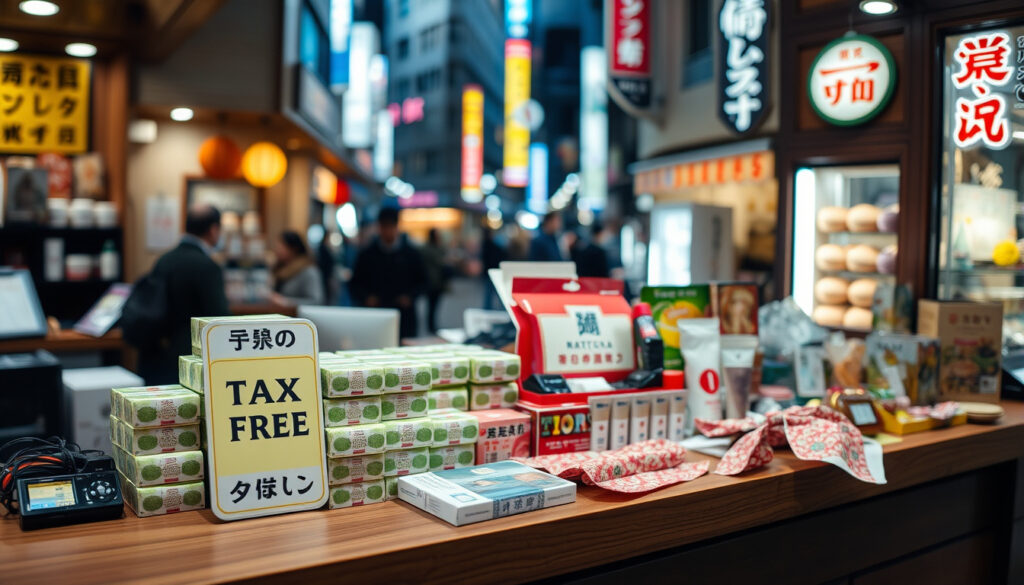
Things to Buy in Japan: Smart Shopping Guide
That moment when you land in Japan and realise your suitcase is going to come home heavier than you left — if you’ve planned it right, that weight is pure value. From tax-free electronics to handmade knives and region-locked KitKats, the trick is knowing which purchases actually save you money and which are just clever packaging. This guide cuts through the noise with concrete prices, tax rules, and the best things to buy in Japan right now.
Number of international tourists to Japan in 2024: 25 million ·
Average shopping spend per tourist: $600 ·
Percentage of tourists who buy souvenirs: 85% ·
Tax-free shopping threshold: 5,000 yen per day per store ·
Top bought category: Snacks and sweets ·
Number of tax-free shops in Japan: 50,000+
Quick snapshot
- Tax-free shopping for tourists: spend over 5,000 yen at licensed stores (Japan Tourism Agency (official guidance))
- JPY exchange rate is historically weak, making purchases cheaper for foreign tourists (Wise (currency platform analysis))
- Traditional crafts like Edo kiriko and Arita ware are region-specific and highly valued (KOGEI JAPAN (craft registry))
- How long the favourable exchange rate will persist — currency markets are volatile. (KIX Duty Free (airport retailer update))
- Whether duty-free rules will tighten after the scheduled 2026 reform (KIX Duty Free (airport retailer update))
- Japan planned a major tax-free reform in November 2026 — potentially abolishing the sealed-packet rule and the ¥500,000 daily limit (KIX Duty Free (airport retailer))
- If the reform passes, tourists will no longer need to keep consumables sealed — making snack and cosmetic hauling much easier (Rakuten Travel (travel platform))
Key facts table
| Fact | Value |
|---|---|
| Number of tax-free shops | over 50,000 |
| Average tourist shopping spend | $600 |
| Top item category | Snacks and sweets |
| Tax-free minimum purchase | 5,000 yen per store per day |
| Popular high-end brand areas | Ginza, Shibuya, Osaka |
| Consumption tax rate | 10% (standard) — fully reclaimable for tourists at registered stores |
What is actually worth buying in Japan?
Traditional Japanese crafts
- Edo kiriko — cut glassware originating in Edo-period Tokyo. Highly collectable and recognised as a traditional craft by KOGEI JAPAN (craft authority).
- Arita ware — porcelain from Saga prefecture, prized for its white base and intricate blue painting (Japan Travel / JNTO (tourist board)).
- Kokeshi dolls — simple wooden dolls from the Tohoku region, each area with its own shape and pattern (JNTO).
- Nishijin textiles — Kyoto’s famous woven silk, used for obi and kimono (JNTO).
Five categories, one pattern: each craft carries a regional story that mass-produced souvenirs lack. The implication: buying direct from local workshops (often tax-free) gives you authenticity and often a better price than airport shops.
Unique snacks and food items
- Regional KitKat flavours — sake, matcha, sweet potato, and wasabi are just a few of the 300+ varieties sold only in specific prefectures.
- Premium matcha and Japanese green tea — Uji and Shizuoka teas are world-class. Look for “ceremonial grade” if gifting.
- Instant ramen and curry packets — lightweight, long-lasting, and often only available in Japan (e.g., local tonkotsu or miso bases).
Snacks and sweets are the top-bought category among tourists (Don Quijote (discount retailer)). The catch: consumables must be kept in sealed packaging until you leave the country under current rules — so pack them in a separate bag.
Cosmetics and skincare
- Shiseido and SK-II — Japanese brands often cost 20–30% less than overseas pricing. Tax-free eligible at drugstores like Matsumoto Kiyoshi.
- Sun protection — Japanese sunscreens (e.g., Biore UV, Anessa) use advanced filters not yet approved in some Western markets.
- Sheet masks and serums — drugstore staples like Hada Labo and Kose are cheap and effective.
Why this matters: the combination of weaker yen and tax-free savings makes a routine skincare haul easily 40% cheaper than buying the same products at home.
Kitchen knives and tools
- Japanese chef’s knives — brands like Global, Shun, and Masamoto are famous, but region-specific blades from Sakai (Osaka) or Seki (Gifu) offer unmatched craftsmanship.
- Knife materials — high-carbon stainless steel (e.g., VG-10) holds an edge far longer than Western equivalents.
- Price range: a good entry-level knife costs ¥10,000–15,000 (roughly $70–105), while professional-grade runs ¥30,000–¥100,000+.
JNTO lists knives among its traditional souvenir categories (Japan Travel / JNTO (tourist board)). The trade-off: you save up to 50% versus buying the same brand abroad, but shipping a knife requires checking your baggage — some airlines restrict blade length.
Japanese kitchen knives are not just souvenirs; they are professional tools that outperform equivalently priced European brands. For serious home cooks, the saving covers your flight snack budget.
What can I buy cheaper in Japan?
Electronics and gadgets
- Cameras and lenses — flagship models from Sony, Canon, Nikon, and Fujifilm are often 10–20% cheaper than US/EU retail.
- Headphones — high-end audio from Sony (WH-1000XM series) and Audio-Technica can be found at Yodobashi Camera or Bic Camera for significant discounts.
- Gaming gear — Nintendo Switch consoles and games are cheaper in Japan, but check region-locking on DLC.
Three categories, one pattern: Japan’s domestic consumer electronics market is competitive, and the weak yen gives you an extra 5–10% off already low prices.
Designer clothing and shoes
- Japanese designer brands — Issey Miyake, Comme des Garçons, Yohji Yamamoto — see prices 30% below European boutiques.
- Uniqlo — the home market flagship stores in Tokyo and Osaka offer exclusive lines and lower base prices than overseas.
- Second-hand luxury — shops in Shimokitazawa and Daikanyama stock vintage Chanel, Hermès, and LV at fractions of retail (Japan Guide (travel resource)).
The catch: sizes run small — always try on before buying. For streetwear, the premium is authenticity, not just price.
Japanese denim
- Artisan denim — brands like Samurai, Momotaro, and Pure Blue Japan use vintage shuttle looms and organic indigo. Expect ¥30,000–¥50,000 per pair.
- Where to buy — specialty stores in Kojima (Okayama) or Tokyo’s Ueno district.
- Value: similar-quality Japanese denim often costs double outside Japan.
Seiko and Citizen watches
- Seiko Prospex and Presage — automatic movements like 4R35 are standard; limited editions sell out quickly in Japan.
- Citizen Eco-Drive — light-powered watches that never need batteries; prices start around ¥20,000.
- Grand Seiko — high-end mechanicals; a Spring Drive model can be ¥100,000–¥200,000 cheaper in Japan than authorised dealers abroad.
What electronics should you buy in Japan?
Cameras and lenses
- Popular models — Sony α7 IV, Canon EOS R6 Mark II, Fujifilm X-T5. Expect ¥30,000–¥50,000 savings on high-end bodies.
- Lenses — native glass (like Fujinon or Sony G Master) is often 15–20% cheaper at Yodobashi Camera than B&H Photo in New York.
- Voltage/plug: Japan uses 100V, same as US (but different plug shape). Chargers are usually multi-voltage — check the label.
Gaming consoles and accessories
- Nintendo Switch OLED — ¥37,980 (about $265) vs $350 in the US. Savings of ~25%.
- PlayStation 5 — roughly ¥60,000 ($420) vs $500. Note: digital-only versions may have region restrictions for streaming apps.
- Accessories — Pro Controllers, Joy-Cons, and carrying cases are also cheaper.
Audio equipment
- Sony WH-1000XM5 — noise-cancelling headphones retail around ¥43,000 ($300) vs $400 in the US.
- IEMs (in-ear monitors) — brands like Final, Campfire Audio, and 64 Audio are widely available in Akihabara.
Uniqlo and other tech accessories
- Uniqlo’s HeatTech and AIRism — fabric technology that is genuinely effective and much cheaper than branded alternatives.
- Portable chargers and cables — Anker products are competitively priced at Bic Camera.
The implication: electronics buyers can pocket 15–25% savings, but must verify warranty coverage. Many Japanese warranties are domestic only — factor in that risk.
What high-end items can you buy cheap in Japan?
Luxury watches (Rolex, Grand Seiko)
- Rolex — authorised dealers in Japan (e.g., Wako, Yoshida) list new models at MSRP, which is often lower than grey-market prices elsewhere. Plus, you get the tax refund.
- Grand Seiko — limited editions like the “Snowflake” (SBGA211) can be ¥150,000 less than US AD pricing.
- Second-hand — Nakano Broadway in Tokyo has a dense cluster of certified pre-owned shops.
High-end fashion (Issey Miyake, Comme des Garçons)
- Issey Miyake — the Ginza flagship carries exclusive pieces that never go on sale. Price advantage: 20–30% versus European boutiques.
- Comme des Garçons — the Aoyama store is the place; Dover Street Market Ginza also stocks multiple labels.
- Tax-free: if you spend over ¥5,000 in a single store, you save the 10% consumption tax.
Second-hand luxury goods
- Shimokitazawa and Daikanyama — vintage shops with Chanel, Louis Vuitton, and Hermès at 50–70% of retail.
- Komehyo (Shinjuku) — a multi-floor department store for pre-owned bags, watches, and jewellery with certification.
Pearls and jewellery
- Akoya pearls — Japan is among the world’s top cultivators. Strands start at ¥50,000 and go up; tax-free applies.
- Where to buy — Mikimoto (Ginza) for luxury, or smaller dealers in Ueno for more affordable options.
The pattern: high-end buyers are effectively getting a 10% loyalty bonus just by shopping while on a tourist visa. For a ¥500,000 purchase, that’s ¥50,000 saved — enough for a nice dinner in Tokyo.
Luxury second-hand in Japan is exceptionally well-regulated, but authentication certificates are not always provided. Stick to stores that offer a receipt and a guarantee — and ask about the 30-day return policy if applicable.
What are the best things to buy in Japan for kids?
Character merchandise (Hello Kitty, Pokémon)
- Pokémon Center — flagship stores in Tokyo (Shibuya), Osaka, and Kyoto sell exclusive plushies, cards, and apparel not available overseas.
- Hello Kitty — Sanrio stores have Japan-only items like themed stationery, kitchenware, and clothing.
- Gachapon — capsule toys are cheap (¥200–¥500) and highly collectible.
Educational toys and stationery
- Kumon workbooks — original Japanese versions are cheaper and come in all subjects.
- Stationery — brands like Pilot, Zebra, and Kokuyo are excellent; mechanical pencils and erasers are top quality.
- Erasers shaped like food — a fun, low-cost gift (¥100–¥300) that kids love.
Kids’ clothing (Uniqlo, Gap Japan)
- Uniqlo children’s lines — HeatTech, block-tech parkas, and graphic T‑shirts are 30–40% cheaper than in the US or Europe.
- Gap Japan — often has sales that drop prices below US outlet levels.
Japanese candy and snacks
- Individual packs — Pocky, ramune, mochi, and hi-chew are easy to pack.
- Surprise bags — “fukubukuro” (lucky bags) at the New Year are a hit, but any time of year you can find mystery snack packs in Don Quijote.
The takeaway: kids’ shopping in Japan isn’t just fun — it’s practical. Tax-free eligibility applies to children’s items too (Japan Guide (travel resource)), so a ¥10,000 spree saves ¥1,000. And unlike electronics, there’s no voltage worry.
What we know and what’s still uncertain
Confirmed facts
- Japan offers tax-free shopping for tourists spending over 5,000 yen at licensed stores (Japan Tourism Agency (official)).
- JPY exchange rate is historically weak, making purchases cheaper for foreign tourists (Wise (currency analysis)).
- Traditional crafts like Edo kiriko and Arita ware are officially recognised and region-specific (KOGEI JAPAN (craft registry)).
- Consumables must be kept in sealed packaging until departure under current rules (Global Blue (tax-free operator)).
What remains unclear
- How long the favourable exchange rate will last — currency fluctuations are unpredictable.
- Whether the 2026 tax reform will actually simplify rules as expected (KIX Duty Free (airport update)).
- Whether duty-free thresholds will change after the reform — keep an eye on official MLIT announcements.
For budget-conscious shoppers, the best Black Friday deals in Japan offer substantial savings on popular items.
Frequently asked questions
Do I need to declare duty-free items when leaving Japan?
No, you do not need to declare duty-free items to customs at departure, but you must keep your receipts and the sealed packaging (for consumables) in your carry-on. Customs officers may inspect them.
Can I get a tax refund for purchases made with a credit card?
Yes — as long as you present your passport and the credit card used for purchase. Most stores process the refund at the register, deducting the consumption tax immediately.
Are counterfeit goods a problem in Japan?
Counterfeit goods are rare in mainstream retail. Second-hand shops in Japan are highly regulated — stick to recognised chains like Komehyo, Daikokuya, or official brand stores for peace of mind.
What is the best time to shop in Japan?
January and July are the main sale seasons (fukubukuro in January). Year-end and New Year sales offer deep discounts on electronics. For tax-free, any time works, but avoid Golden Week (late April–early May) when crowds peak.
Can I use credit cards everywhere in Japan?
Most stores in cities accept Visa, Mastercard, JCB, and increasingly Alipay and WeChat Pay. However, many smaller shops, street vendors, and rural areas still prefer cash. Always carry some yen for backup.
Should I bring cash for shopping in Japan?
Yes — keep at least ¥20,000 in cash for tax-free purchases at smaller stores that may not take cards. ATMs at 7-Eleven and Japan Post Bank dispense yen with low fees.
For the visitor landing at Narita with an empty suitcase, the choice is clear: focus on items that combine tax-free savings, currency advantage, and genuine quality — traditional crafts, electronics, denim, and skincare. Skip the generic T‑shirts and keychains; buy what Japan does best. If you leave without at least one regional craft or a bag of prefecture-exclusive KitKats, you’ve missed the real value of Japanese shopping.
More related posts
 LTA Renew Road Tax: Step-by-Step Guide for Singapore Drivers
 CapitaLand Ascendas REIT Share Price: Live Quote & Analysis
 How to Cancel ChatGPT Subscription: Web, iPhone, Mac
 1 USD to MYR: Rate Today, Trends & Conversion Tips
 Fed Rate Cuts 2025 – Timeline, Projections and Key Impacts
 IKEA Alexandra Opening Hours 2025: Store & Bistro Times
 GlobalFoundries Singapore Pte Ltd: Role, CEO, and Ownership
 Screen Protector Shop Near Me: Ireland Price & Shop Guide