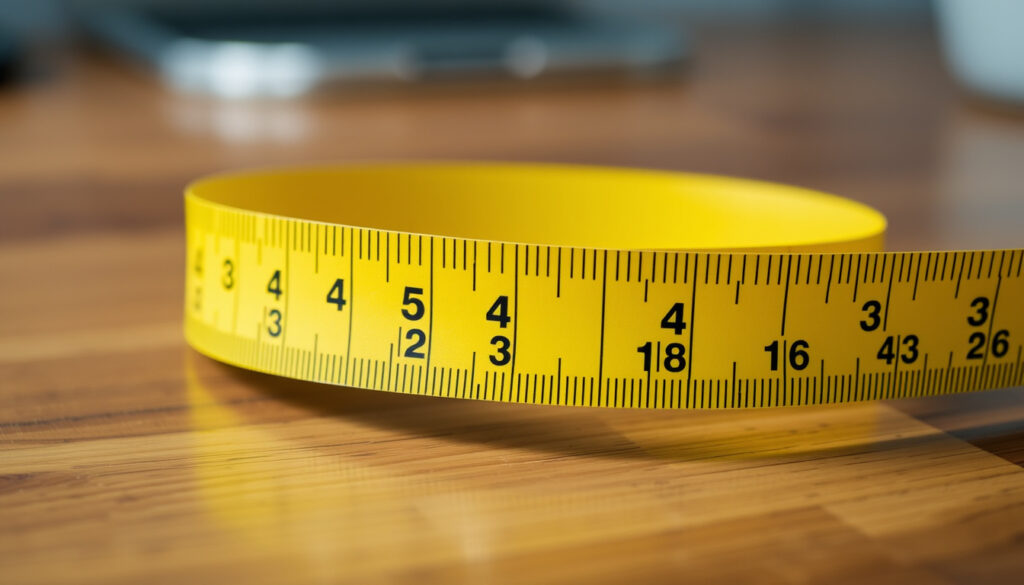
4 Inches in CM: Exact Converter (10.16 cm) + Guide
If you’ve ever grabbed a ruler and wondered whether that 4-inch mark really lines up with 10 centimeters, you’re not alone. It’s one of the most common measurement questions — and it’s closer to true than most people think, though not quite exact. This guide walks through the precise math, visual comparisons, and practical tools so you never have to guess again.
4 inches equals: 10.16 cm · 1 inch equals: 2.54 cm · Formula: inches × 2.54 · Reverse: 4 cm: 1.57 inches · Common near: 20 cm: 7.87 inches
Quick snapshot
- 4 in = 10.16 cm (SplashLearn)
- 1 in = 2.54 cm exactly (YouTube conversion tutorial)
- Conversion factor 2.54 is an international standard (Fohrmann engineering tables)
- No regional variation in how the 2.54 standard is taught
- Limited data on practical measurement error rates for home use
- The 2.54 conversion factor became an international standard during 20th-century measurement unification
- Online converters now handle the math instantly — but knowing the formula helps when tools aren’t handy
Five key measurements anchor this guide: 4 inches converts to 10.16 cm, 4 cm back to 1.57 inches, and three related benchmarks (2 in = 5.08 cm, 3 in = 7.62 cm, 5 in = 12.70 cm) that people encounter most often.
| Measurement | Value | Source |
|---|---|---|
| 4 inches | 10.16 cm | SplashLearn |
| 1 inch | 2.54 cm | YouTube conversion tutorial |
| 4 cm | 1.57 inches | BYJU’S |
| Conversion factor | 2.54 | RapidTables |
| 20 cm | 7.87 inches | SplashLearn |
| 2 inches | 5.08 cm | SplashLearn |
| 3 inches | 7.62 cm | SplashLearn |
| 5 inches | 12.70 cm | SplashLearn |
| 0.25 inches | 0.635 cm | SplashLearn |
| 0.5 inches | 1.27 cm | SplashLearn |
Is 4 inches 10 cm?
No — 4 inches equals 10.16 centimeters, not exactly 10 cm. The difference is only 0.16 cm (about 1.6 mm), which is why many people round it mentally, but for any precision work, 10.16 is the correct figure. SplashLearn (math education platform) confirms this value across multiple conversion examples.
Exact conversion value
To convert 4 inches to centimeters, multiply 4 by the exact conversion factor of 2.54. The math is straightforward: 4 × 2.54 = 10.16. This factor — 2.54 — is not a rounded approximation but an international standard definition that makes 1 inch exactly 2.5400 centimeters. Fohrmann (precision engineering reference) lists the precise specification as 2.5400 cm for engineering applications.
Why not exactly 10 cm?
The metric system doesn’t use convenient round numbers when converting from imperial units — that’s by design. The 2.54 factor ensures accuracy, not simplicity. Think of it this way: if you need a piece that’s “about 4 inches,” rounding to 10 cm works fine. But if you’re cutting a component for electronics or woodworking, that 0.16 cm gap (roughly the width of a pencil lead) matters. BYJU’S (mathematics education platform) emphasizes the exact conversion in their converter tool.
Rounding 10.16 to 10 works for rough estimates, but in manufacturing or design, that 1.6 mm error compounds quickly — 100 such pieces would be off by 16 cm total.
Is 20 cm 4 inches?
No — 20 cm equals 7.87 inches, not 4 inches. The confusion often arises because people see “20 cm” on metric tools and mentally match it to “4 inches” on imperial rulers, but these are different measurements. SplashLearn provides a conversion table showing 20 cm = 7.87 in.
20 cm in inches
To convert 20 cm back to inches, divide by 2.54 or multiply by 0.393701 (the inverse conversion factor). The calculation: 20 ÷ 2.54 = 7.874 inches, typically rounded to 7.87. BYJU’S lists the inverse factor as exactly 0.393701 inches per centimeter.
Comparison to 4 inches
The gap between these measurements is significant: 20 cm (7.87 in) is nearly double 4 inches (10.16 cm). If you place a ruler showing both scales side by side, you’ll see that the 4-inch mark falls well before the 20-centimeter mark. RapidTables (conversion reference) shows both conversions on their interactive tool.
What does 4 cm look like in inches?
Four centimeters equals 1.57 inches — just over 1.5 inches. To visualize this, think of the width of a standard USB Type-A connector (about 1.5 cm), then double it. That’s roughly 4 cm. BYJU’S confirms 1 cm = 0.393701 inches, so the math is simple: 4 × 0.393701 = 1.574804.
4 cm to inches
The inverse conversion uses the factor 0.393701. For 4 cm: 4 × 0.393701 = 1.574804 inches. Most tools round this to 1.57 inches for practical use. RapidTables states that one centimeter equals 1/2.54 of an inch — the exact reciprocal of the forward conversion.
Visual references
Here are everyday objects close to 4 cm that help build intuition:
- Width of a small bottle cap (like a travel-size shampoo)
- Length of a standard paperclip (unfolded or large size)
- The short side of a sticky note is about 5 cm, so 4 cm is just under that
- Diameter of a large coin or small button
If you’re ordering parts from a supplier who lists dimensions in centimeters and you need about 1.5 inches, knowing that 4 cm = 1.57 in helps you verify the right size without a calculator.
Is 8 cm 4 inches?
No — 8 cm equals 3.15 inches, which is notably less than 4 inches. The math: 8 × 0.393701 = 3.1496 inches, or about 3.15 when rounded. SplashLearn’s conversion table doesn’t list 8 cm directly, but the same formula applies.
8 cm conversion
To convert 8 cm to inches: 8 ÷ 2.54 = 3.1496 inches. This is roughly 3 + 1/8 inches — noticeably shorter than 4 inches. RapidTables uses the standard division method for reverse conversions.
Common confusions
The confusion typically arises because 8 cm sounds close to “about 4 inches” in casual estimation. In reality:
- 4 inches = 10.16 cm
- 8 cm = 3.15 inches (not half of 4 inches)
- To get 4 inches in cm, you need 10.16 cm — that’s 2.16 cm more than 8 cm
8 cm sounds like “about 4 inches” — but it’s actually closer to 3.1 inches. If you’re estimating without doing the math, you’ll consistently overestimate metric sizes when converting from inches.
Is 8 inches the same as 20 cm?
Close, but not exact — 8 inches equals 20.32 cm, which is 0.32 cm (3.2 mm) more than 20 cm. The difference is small but measurable. SplashLearn confirms 8 in = 20.32 cm using the formula 8 × 2.54.
8 inches to cm
The calculation: 8 × 2.54 = 20.32 cm. This is the most precise figure. For rough purposes, 20 cm is close enough, but for precision work, 20.32 is correct. Fohrmann’s engineering tables use the 2.5400 specification for precision applications.
Exact match?
No — they differ by 0.32 cm. Think of it this way: 8 inches is about 3 mm longer than 20 cm. In everyday terms, that’s about the thickness of three stacked dimes. For most home projects, the difference won’t matter. For engineering, it absolutely will.
A dual-scale ruler shows the 0.16 cm gap visually — for anyone who learns better by seeing than calculating, this physical proof makes the precision memorable.
How to convert inches to cm: step by step
Whether you’re working with a ruler, a calculator, or mental math, here’s how to convert any inch measurement to centimeters accurately.
Step 1: Identify the conversion factor
The conversion factor between inches and centimeters is exactly 2.54. This number is an international standard — not a rounded approximation. Educational tutorials emphasize this exact specification. You can remember it as “2 and a half centimeters per inch,” though 2.54 is more precise.
Step 2: Multiply inches by 2.54
For 4 inches: take 4, multiply by 2.54, and you get 10.16. The formula written out: Length (cm) = Length (in) × 2.54. SplashLearn (math vocabulary reference) defines this as the standard conversion formula for inches to centimeters.
Step 3: For reverse conversion, divide by 2.54
To convert centimeters to inches: Length (in) = Length (cm) ÷ 2.54. Alternatively, multiply by 0.393701. For 4 cm: 4 ÷ 2.54 = 1.57 inches. BYJU’S lists both methods in their converter explanation.
Step 4: Verify with visual alignment (optional but helpful)
If you have both an imperial ruler (inches) and a metric ruler (centimeters), line up the zero marks and compare. Four inches on the inch scale aligns near the 10.1-10.2 cm mark on the centimeter scale. Visual guides on YouTube demonstrate this ruler comparison technique. This provides a physical check on your math.
Visual comparison: 4 inches on a ruler
Understanding where 4 inches falls on a standard ruler helps build practical measurement intuition. Most rulers in the US show inches divided into fractions: whole inches, half inches, quarter inches, eighth inches, and sixteenth inches.
Where 4 inches falls on standard rulers
On a standard 12-inch ruler, 4 inches is exactly 4/12 of the ruler length — the first third. The inch scale has 16 subdivisions between each whole number, so 4 inches includes 64 of those tiny marks. RapidTables notes that one inch equals 1/12 of a foot, providing context for the ruler scale.
Comparing inch and centimeter markings
A dual-scale ruler (imperial on one edge, metric on the other) makes the comparison visible. When you align the zero marks, the 4-inch mark lands at approximately 10.16 cm — not exactly 10 cm. The metric side typically shows millimeter marks, so you can see the 0.16 cm difference clearly.
A dual-scale ruler shows the 0.16 cm gap visually — for anyone who learns better by seeing than calculating, this physical proof makes the precision memorable.
For anyone who measures regularly — whether in crafts, cooking, or construction — understanding that 4 inches equals 10.16 cm (not a round 10) makes the difference between a project that fits and one that doesn’t. The math is simple: multiply by 2.54 and you’ll always land on 10.16 for 4 inches. SplashLearn reinforces this conversion across all their educational materials.
Confirmed facts and common misconceptions
Several facts about inch-to-centimeter conversion are well-established and verifiable; others are commonly misunderstood or involve outdated information.
What’s confirmed
- 1 inch = exactly 2.54 cm (international standard, verified by multiple sources)
- 4 inches = 10.16 cm (verified by SplashLearn, BYJU’S, and other educational platforms)
- The conversion factor 2.54 is precise to four decimal places (2.5400 cm)
- To convert cm to inches, divide by 2.54 or multiply by 0.393701
- One centimeter = 1/100 of a meter and 10 millimeters
- Fractional inches (1/4 = 0.635 cm, 1/2 = 1.27 cm) convert using the same factor
Common misconceptions
- “4 inches = 10 cm exactly” — false; it’s 10.16 cm
- “8 cm is close to 4 inches” — false; 8 cm = 3.15 inches
- “20 cm is the same as 4 inches” — false; 20 cm = 7.87 inches
- “8 inches = 20 cm” — false; 8 inches = 20.32 cm
- “The conversion factor 2.54 is approximate” — false; it’s an exact international standard
The distance in centimeters is equal to the distance in inches times 2.54. This factor is exact by international agreement, not a rounded approximation.
— RapidTables (conversion reference database)
4 inches is equal to 10.16 centimeters — multiply the inch value by 2.54 to get the centimeter equivalent.
— BYJU’S Mathematics (educational platform)
The unit cancellation method (4 in × 2.54 cm/1 in = 10.16 cm) ensures you end up with the correct unit after conversion.
— Educational math tutorials (YouTube)
Related reading: 46 inches to cm · inches to cm conversions
youtube.com, youtube.com, youtube.com, math.answers.com, us.misumi-ec.com
While 4 inches hits 10.16 cm precisely, the 10 inches in cm ruler guide offers detailed visuals and charts for comparing nearby sizes effortlessly.
Frequently asked questions
What is 5 inches in cm?
Five inches equals 12.70 centimeters (5 × 2.54). SplashLearn
How many cm is 3 inches?
Three inches equals 7.62 centimeters (3 × 2.54). SplashLearn
What is 4 inches in mm?
Four inches equals 101.6 millimeters. Since 1 inch = 25.4 mm, multiply 4 × 25.4 = 101.6 mm. RapidTables
How to measure 4 inches on a ruler?
Find the “0” mark, count four whole inch markings to the right. On a standard ruler, each inch has 16 small divisions (1/16 inch each), so 4 inches = 64 of those small marks from zero. Align the 4-inch mark with a metric ruler to see 10.16 cm. YouTube visual guide
What is 24 inches in cm?
Twenty-four inches equals 60.96 centimeters (24 × 2.54). SplashLearn
How many inches is 10 cm?
Ten centimeters equals 3.94 inches (10 ÷ 2.54). Using the inverse factor: 10 × 0.393701 = 3.93701 inches. BYJU’S
Is 10 cm exactly 4 inches?
No — 10 cm is 3.94 inches, while 4 inches is 10.16 cm. The difference is 0.16 cm (1.6 mm). SplashLearn
More related posts
 Banyan Tree Kuala Lumpur: Intimate 55-Room Luxury Hotel
 A3 Size in Inches – Exact Dimensions & Myths Cleared
 Samsung Find My Mobile: Complete Guide to Tracking and Recovery
 Black Rain Hong Kong: Warning, Rules & Latest Event
 Condolence Message to a Friend: Best Examples & Tips
 Cast of Workin’ Moms: Actors, Characters & Facts
 Live Band Near Me: Gigs Tonight in Dublin, Tullamore & Tralee
 5 Star Hotels in Singapore: Best, Famous & Where Celebrities Stay