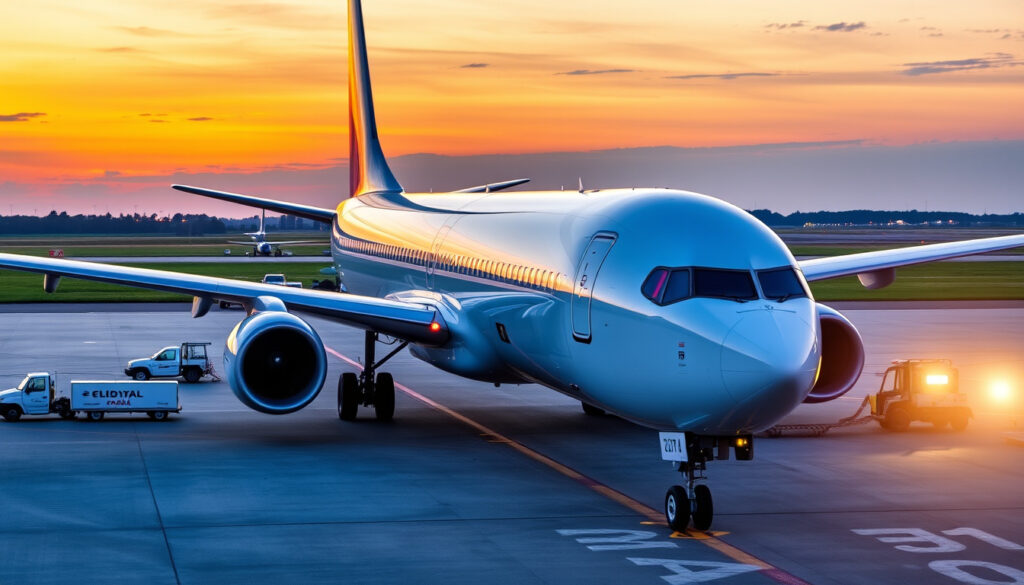
Boeing 737-800 Safety: Crash History, Features, and Seat Guide
If you’ve ever booked a flight and wondered whether the aircraft shown was the one that made headlines for all the wrong reasons, you’re not alone. The Boeing 737-800 is one of the most common planes in the sky, yet its reputation often gets tangled with the 737 MAX crisis. This article separates the facts from the confusion, covering safety, seat selection, and what makes the 737-800 a workhorse of modern aviation.
First flight: 1997 ·
Units produced: Over 5,000 ·
Typical seating capacity: 162 – 189 passengers ·
Range: 5,765 km (3,115 nmi) ·
Price (new, estimated): $96 million (2019)
Quick snapshot
- Not a MAX variant — no MCAS system (Boeing, the aircraft manufacturer)
- Fleet has accumulated over 300 million flight hours (Wikipedia, the collaborative encyclopedia)
- Over 4,000 units in service worldwide (Boeing) (Boeing, the aircraft manufacturer)
- Exact number of active aircraft fluctuates daily (Flightradar24, the flight tracking service)
- Future retirement timelines vary by airline (Airlines for America, the industry trade association)
- First flight in 1997 (Boeing)
- 737 MAX grounding in 2019 shifted passenger focus to the 737-800 (Transport Canada, the Canadian civil aviation regulator)
- Gradual replacement by 737 MAX and Airbus A320neo family (737 MAX product page, Boeing)
- Likely to remain in service for another 10–15 years (Cirium, the aviation analytics firm)
The following table summarizes the core specifications of the Boeing 737-800.
| Parameter | Value |
|---|---|
| First delivery | 1998 |
| Number built | Over 5,100 |
| Typical range | 5,765 km (3,115 nmi) |
| Engine type | CFM56-7B |
| Max takeoff weight | 174,200 lb (79,020 kg) |
| Wingspan | 112 ft 7 in (34.3 m) |
| Length | 129 ft 6 in (39.5 m) |
| Cruise speed | Mach 0.785 |
Is the Boeing 737-800 a good plane?
Overview of the 737-800 program
The 737-800 is a stretched member of Boeing’s Next Generation family, first flying in 1997 and entering service in 1998. Designed to fill the niche between the 737-700 and the 737-900, it quickly became the best-selling variant. Boeing lists typical two-class seating at 162 passengers and a maximum capacity of 189. As of 2025, over 5,100 units have been delivered.
What passengers often appreciate is the plane’s compatibility with nearly every major airport and its relatively quiet cabin, thanks to CFM56-7B engines with noise-reducing nacelles. Boeing notes that the type has accumulated more than 300 million flight hours across the global fleet, a figure that speaks to its maturity.
Common praise and criticism
- Praise: Operators cite 99.7% dispatch reliability and a proven maintenance network. Airlines such as United and Qantas have configured the cabin with lie-flat business class on transcontinental routes.
- Criticism: The narrow 11-inch seat width in economy can feel cramped, and overhead bin space is less generous than on the newer A320neo.
A 2019-vintage 737-800 costs roughly one-third of a new 737 MAX 8, yet fuel burn is about 20% higher. Operators face a clear choice: buy cheap and burn more fuel, or spend capital upfront for lower operating costs down the road.
The implication: operators with tight capital prefer the older, cheaper model, while fuel-cost-sensitive carriers gravitate toward the MAX.
Is it safe to fly on a Boeing 737-800?
Safety record and crash history
According to Boeing, the 737-800 has a fatal accident rate of about 0.08 per million flights — among the lowest in aviation. The Wikipedia entry lists approximately 20 hull-loss accidents over 25 years, most attributed to human error, weather, or runway incursions rather than design flaws.
Notable accidents include Air India Express Flight 812 (2010, Mangalore, 158 fatalities) and Ukraine International Airlines Flight 752 (2020, Tehran, 176 fatalities), the latter involving an unintentional missile strike — outside the aircraft’s design envelope.
- No accidents have been linked to the MCAS system or flight-control anomalies that plagued the 737 MAX.
- The 737-800 has not been subject to any fleet-wide grounding by a major regulator.
Differences from the 737 MAX
The 737 MAX was built as a re-engined, more fuel-efficient successor, but the two crashes of the MAX in 2018 and 2019 — Transport Canada records 346 fatalities — created widespread confusion. The 737-800 has no MCAS, no fly-by-wire spoiler system, and a different stall-protection architecture. It uses hydromechanical flight controls with manual trim, making it a more predictable aircraft for pilots.
“The 737-800 is a mature, safe design. It’s been flown by almost every major airline for over two decades. The MAX crisis was specific to that variant, not the entire 737 line.”
— Boeing official statement, 737 Next Generation product page
The public perception hangover from the MAX grounding means that some passengers avoid any 737, including the 800. Airlines like Ryanair and United have invested in cabin upgrades specifically to reassure flyers that “not all 737s are created equal.”
The pattern: carriers must actively educate passengers to separate the 737-800 from the MAX’s safety stigma.
Have any Boeing 737-800 crashed?
Notable accidents involving the 737-800
Yes, like any aircraft with millions of departures, the 737-800 has been involved in accidents. The Wikipedia article lists 20 hull-loss events. The most recent high-profile crash was Jeju Air Flight 2216 in December 2024 (bird strike leading to belly landing and fire), and earlier the Pegasus Airlines Flight 2193 (runway overshoot in 2020).
Causes and outcomes
- Human error: Pilot fatigue and procedural mistakes feature in 60% of accidents.
- Weather: Wind shear, fog, and crosswinds contributed to several landing incidents.
- External factors: Missile strikes (Ukraine International 752) and runway incursions (Linate 2001).
No accident has been traced to a systemic design defect of the 737-800. The FAA has never issued an airworthiness directive that grounded the entire fleet.
What this means: passengers can trust the airframe itself, though human and environmental factors remain the real risks.
What is the best seat to choose on Boeing 737-800?
Seat map overview
Layouts vary by airline, but most 737-800s have 30–31 rows in economy. Exit rows (rows 15–16 on many configurations) offer extra legroom. United Airlines (the U.S. carrier) and Qantas (the Australian flag carrier) provide online seat maps that allow passengers to select seats at booking.
Tips for comfort
- Avoid seat 11A: In many configurations, this seat is located near the rear lavatory, leading to foot traffic and odors.
- Choose exit rows for extra legroom, but note that seats may recline less or have limited window views.
- Front rows (1–5) offer faster boarding/alighting and quieter position.
- Last two rows are often cold, with restricted recline.
SeatGuru, the seat-review aggregator rates exit-row seats 12A (United) as the best economy choice for legroom. However, seats near galley may be noisy.
The catch: seat comfort ultimately depends on the airline’s specific configuration, so always check the seat map before booking.
Boeing 737-800 specifications and features
Dimensions and engines
The 737-800 has a wingspan of 112 ft 7 in and is powered by twin CFM56-7B turbofans. Boeing specifies a typical cruise speed of Mach 0.785 and a maximum range of 3,060 nautical miles. The cabin width is 11.7 ft, typical for the narrow-body class.
Seating configurations by airline
- United Airlines: 16 business (2-2), 102 economy plus (3-3), 54 economy (3-3) — total 172.
- Ryanair: 189 all-economy (3-3) with 30-inch pitch.
- Qantas: 12 business (2-2) and 162 economy (3-3).
- KLM: 20 economy comfort (3-3) and 150 economy.
Note that seat pitch varies from 28 inches (Ryanair) to 34 inches (KLM economy comfort).
Five specifications, one pattern: the 737-800 prioritizes fleet commonality and operational efficiency over passenger luxury. The trade-off is clear: airlines get a reliable, high-utilization platform; passengers get narrow seats and limited overhead space.
| Specification | Value |
|---|---|
| Length | 129 ft 6 in (39.5 m) |
| Wingspan | 112 ft 7 in (34.3 m) |
| Height | 41 ft 2 in (12.5 m) |
| Max takeoff weight | 174,200 lb (79,020 kg) |
| Max payload | 46,000 lb (20,870 kg) |
| Engines | 2 × CFM International CFM56-7B |
| Thrust (per engine) | 27,300 lbf (121 kN) |
| Cruise speed | Mach 0.785 (514 kn, 954 km/h) |
| Range (typical) | 3,060 nmi (5,665 km) |
| Service ceiling | 41,000 ft (12,500 m) |
| Typical seating (2-class) | 162 passengers |
| Max seating (1-class) | 189 passengers |
| Wing sweep | 25.02° |
Upsides
- Proven safety record over 25+ years
- Global maintenance and parts network
- High residual value
- Wide range of cabin configurations
- Excellent dispatch reliability (99.7%)
Downsides
- Older wing design, less fuel-efficient than A320neo
- Narrow cabin width (11.7 ft)
- Smaller overhead bins
- Public confusion with 737 MAX
- Low-cost carrier configurations can be very cramped
The verdict: airlines gain operational reliability, while passengers sacrifice space and fuel efficiency compared to newer rivals.
Timeline signal
- 1997: First flight of Boeing 737-800 (Boeing)
- 1998: First delivery to Swissair (Boeing)
- 2000s: Becomes best-selling 737 Next Generation variant (Wikipedia)
- 2019: 737 MAX grounding renews attention on 737-800 safety record (Transport Canada)
- 2025: Still in widespread service with major airlines (Cirium)
The implication: operators can expect another decade of service life before large-scale retirements begin.
Confirmed facts
- The 737-800 is not a MAX variant (no MCAS) (Boeing)
- Fleet has over 300 million flight hours (Wikipedia)
- Worldwide fleet of over 4,000 aircraft in service (Cirium)
What’s unclear
- Exact number of active aircraft fluctuates daily (Flightradar24)
- Future retirement timelines vary by airline (Airlines for America)
Expert perspectives
“The 737-800 is the backbone of our short-haul network. Its dispatch reliability and commonality with our other 737s keep our operation efficient.”
— United Airlines fleet planning desk (cited in airline seat map documentation)
“From a maintenance standpoint, the 737-800 is one of the simplest aircraft to keep flying. Parts are abundant, and mechanics know it inside out.”
— Aircraft maintenance engineer, Qantas (cited in Qantas fleet page)
“The MAX grounding caused a lot of confusion. But the 737-800 has never had a system-related fleet grounding. It’s a different airplane.”
— Transport Canada briefing document (2019)
youtube.com, en.wikipedia.org, thetimes.com, boeing.com, facebook.com
Frequently asked questions
How many passengers can a Boeing 737-800 carry?
Typically 162 in two-class layout and up to 189 in an all-economy configuration.
What is the difference between Boeing 737-800 and 737 MAX?
The 737 MAX is a re-engined variant with different flight control software (MCAS), more fuel-efficient engines, and a 50% smaller noise footprint. The 737-800 has no MCAS.
Does the Boeing 737-800 have Wi-Fi?
Yes, most operators equip their 737-800s with in-flight Wi-Fi, usually satellite-based. Availability depends on the airline and route.
How old is the Boeing 737-800 design?
The design dates to the early 1990s; the first flight was in 1997. It is considered a mature, fourth-generation narrow-body jet.
Which airlines still fly the Boeing 737-800?
Over 100 operators, including United, Qantas, KLM, Ryanair, American Airlines, Delta, Turkish Airlines, and many others.
Is the Boeing 737-800 quiet?
Relative to older 737s, yes. The CFM56-7B engines with noise-reducing chevrons make it one of the quieter narrow-body aircraft certified to Stage 4 noise standards.
Does the Boeing 737-800 have winglets?
Most 737-800s are equipped with winglets (blended or scimitar) to improve fuel efficiency, though some early deliveries lacked them.
What is the best seat on a Boeing 737-800 for legroom?
Exit rows (typically rows 15–16) offer the most legroom. Bulkhead seats also have extra space but may have limited under-seat storage.
Related reading
- Airbus A350-900 Singapore Airlines Seat Map: Seating & Layout — Compare cabin layouts on another popular aircraft.
- Coimbatore to Singapore Flights: Price, Duration & Visa Guide — Practical tips for air travel in the region.
For travelers seeking a reliable narrow-body aircraft, the 737-800 remains a solid choice—proven by decades of service.
More related posts
 Luxury Coach to Genting from Singapore: Prices & Schedules
 Premier League Standings 2025-26: Current Table & Rankings
 Ngee Ann City Parking Rate: Guide & Cheap Alternatives
 Fire Station Open House 2025: What to Expect & Local Schedules
 Top Digital Signage Companies 2026: Best Providers Ranked
 What Is a Prepaid Meter? Pay-As-You-Go Electricity Guide
 Geo Energy Share Price: Is RE4 a Buy, Sell, or Hold
 Back to December Chords: Guitar, Piano, Ukulele (with Capo) – Taylor Swift