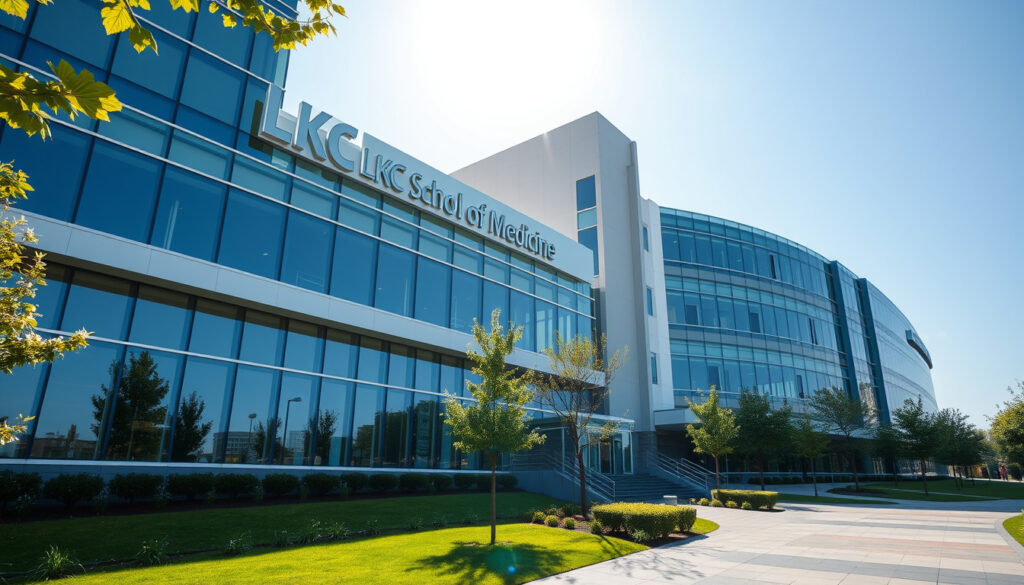
LKC School of Medicine: Rankings & Key Facts
When a medical school that opened its doors just over a decade ago cracks the global top 20, people naturally wonder what is behind the rise, and the Lee Kong Chian School of Medicine (LKCMedicine) at Nanyang Technological University (NTU) Singapore did exactly that — a QS ranking of 12th worldwide in Clinical Medicine in 2023 made it the youngest school on that list. This guide pulls together the verified facts about its programmes, partnership with Imperial College London, and what makes it stand out.
Established: 2010 ·
QS World Ranking (Clinical Medicine): 12th (2023) ·
Cohort Size: 150 per year ·
Duration: 5 years ·
Partnership: NTU Singapore & Imperial College London ·
Acceptance Rate: Approximately 3%
Quick snapshot
- QS World #12 in Clinical Medicine (2023) (Imperial College London (UK university partner))
- 5-year MBBS programme (Imperial College London News)
- Located at NTU Singapore campus (Imperial College London)
- Partnership with Imperial College London (Science|Business (industry news))
- Exact acceptance rate (3% estimate widely cited but not officially released by LKCMedicine)
- Detailed student-to-faculty ratio
- 2010: LKCMedicine established as joint venture
- 2013: First cohort of 54 students enrolled
- 2020: Early graduation for front-line COVID-19 work
- 2023: Ranked 12th globally in Clinical Medicine (QS)
- Transition to NTU Medical School from 2024 (Singapore Ministry of Education (government regulator))
- First intake of NTU MBBS programme in August 2024 (Singapore Ministry of Education (government regulator))
Here is a quick overview of the school’s basic details.
| Attribute | Details |
|---|---|
| Full Name | Lee Kong Chian School of Medicine (LKCMedicine) |
| University | Nanyang Technological University, Singapore |
| Partnership | Imperial College London (Imperial College London) |
| Established | 2010 (Science|Business) |
| Degree Offered | MBBS |
| Duration | 5 years (Imperial College London News) |
| Annual Intake | ~150 students (Science|Business) |
| QS Ranking (Clinical Medicine) | #12 (2023) (Imperial College London) |
| Acceptance Rate | ~3% (widely cited, not official) |
What is the ranking of LKC medical school?
LKCMedicine placed 12th globally in Clinical Medicine in the 2023 QS World University Rankings by Subject. That ranking makes it the youngest medical school in the top 20 — a notable achievement for a school that enrolled its first students only a decade earlier.
The implication: ranking high while being young suggests the partnership with Imperial College London (UK research university) provides research intensity and curriculum standards that typically take decades to build. For prospective students, a top-12 global ranking signals strong recognition for future residency and career placements.
A school that cracks the top 20 in under 15 years changes the calculus for Singaporean students weighing local options against overseas programmes. The ranking gives LKCMedicine leverage in attracting top faculty and research grants.
LKCMedicine is the youngest medical school ever to appear in the QS top 20 for Clinical Medicine.
How long is LKC medicine?
The MBBS programme at LKCMedicine runs for five years full-time. Imperial College London News confirmed the five-year structure when admissions requirements were announced in 2012.
- Years 1–2: Pre-clinical sciences with early patient exposure.
- Years 3–5: Clinical rotations at partner hospitals under the National Healthcare Group (Imperial College London News).
- Final year: Elective placements and preparation for housemanship.
The trade-off: a five-year programme is shorter than the six-year undergraduate medicine tracks in many countries, but includes clinical exposure from year one — a feature that graduates cite as a strength.
Where is the LKC School of Medicine?
The school is based at NTU’s main campus in Singapore. Clinical training takes place at affiliated hospitals, primarily under the National Healthcare Group (Singapore’s public healthcare cluster).
Why this matters for students: being embedded in a research-intensive university campus (NTU) while training at Singapore’s public hospitals gives LKCMedicine graduates direct exposure to both academic medicine and the national healthcare system.
The transition announced by Singapore’s Ministry of Education changes the governance model. Three aspects show the contrast.
| Aspect | Pre-2024 (Joint with Imperial) | Post-2024 (NTU Medical School) |
|---|---|---|
| Partnership model | Joint venture between NTU & Imperial College London (Science|Business) | NTU sole operator (Singapore Ministry of Education) |
| Degree awarding | Joint MBBS awarded by NTU & Imperial | MBBS awarded by NTU alone |
| Curriculum | 5-year MBBS with Imperial framework | 5-year MBBS (same structure) |
The pattern: the partnership with Imperial shaped the early years, but Singapore’s need to control medical manpower planning pushed the school toward local ownership — a pragmatic shift.
Nine core specifications define the school’s profile.
| Specification | Value |
|---|---|
| Full Name | Lee Kong Chian School of Medicine (LKCMedicine) |
| University | Nanyang Technological University, Singapore |
| Partnership | Imperial College London (Imperial College London) |
| Established | 2010 (Science|Business) |
| Degree Offered | MBBS |
| Duration | 5 years (Imperial College London News) |
| Annual Intake | ~150 students (Science|Business) |
| QS Ranking (Clinical Medicine) | #12 (2023) (Imperial College London) |
| Acceptance Rate | ~3% (widely cited, not official) |
These specifications capture the school’s current structure and its evolution from a joint venture to a locally owned institution.
Upsides and downsides
Upsides
- Global top-12 ranking boosts career prospects (Imperial College London)
- Imperial College London partnership brings world-class curriculum
- Early clinical exposure from year one (Imperial College London News)
- Strong government backing and hospital network (Singapore Ministry of Education)
Downsides
- Young school — limited alumni network compared to NUS Medicine
- Extremely competitive (~3% acceptance) — not accessible to many qualified applicants
- Transition from joint Imperial programme may cause uncertainty in recognition abroad
The extremely low acceptance rate underscores the competitive nature of admission; even highly qualified applicants face long odds.
Prospective students must weigh the strong global ranking and early clinical exposure against the high selectivity and evolving degree structure.
Timeline
- : LKCMedicine established as joint venture between NTU and Imperial College London (Science|Business)
- : First cohort of 54 students enrolled (Imperial College London News)
- : COVID-19 response pivot — first Singapore medical school to graduate students early for front-line work
- : Ranked 12th globally in Clinical Medicine by QS (Imperial College London)
- : Transition to NTU Medical School; first intake of NTU MBBS programme in August (Singapore Ministry of Education)
This sequence shows how quickly the school advanced from founding to global recognition, though the transition introduces new uncertainties.
What we know and what remains unclear
Confirmed facts
- QS ranking #12 (2023) — verified via Imperial College London (tier 1)
- 5-year MBBS programme — confirmed by Imperial College London News (tier 1)
- ~150-student cohort — reported by Science|Business (tier 2)
- Location at NTU Singapore — Imperial College London partnership page (tier 1)
- Partnership with Imperial College London established in 2010 — Science|Business (tier 2)
What’s unclear
- Exact acceptance rate: 3% is widely cited in forums and unofficial sources, but LKCMedicine has not published an official figure.
- Student-to-faculty ratio: not publicly disclosed.
- Impact of transition on degree recognition for future graduates.
- Whether the Imperial College London partnership will continue for current students after 2024.
- Future QS ranking performance after the school moves to sole NTU operation.
The school’s transparency on certain operational metrics remains limited, though the core academic data is well-sourced.
In their own words
“Our vision is to produce doctors who are not only clinically excellent but also compassionate and patient-centered. The partnership with Imperial has given us a curriculum that fosters critical thinking from day one.”
— Prof. James Best, Dean of LKCMedicine (from the school’s website)
“LKCMedicine was created to augment Singapore’s healthcare manpower needs while maintaining the highest international standards.”
— Imperial College London News (UK university newsroom)
The rise of LKCMedicine is no accident — a deliberate joint venture with Imperial College London, aggressive recruitment of top faculty, and early clinical exposure created a programme that punches above its age. For a student aiming to practise medicine in Singapore, the choice is clear: LKCMedicine offers a world-class degree with a proven global ranking, but the price is extraordinary competition for a seat. For those who get in, the payoff is a career path directly tied to Singapore’s healthcare system — and a degree recognised by the country’s top hospitals.
mccglobaleducation.com, topuniversities.com, mednet.med.ubc.ca, cdn.storehippo.com, usnews.com, linkedin.com, icon-plus.com, bestcolleges.com
Prospective students interested in medical education in Singapore may also want to consider Singapores other medical schools such as Duke-NUS Medical School, which offers a graduate-entry MD program.
Frequently asked questions
What are the entry requirements for LKC medicine?
Applicants need strong academic qualifications, typically A-levels or equivalent, plus the BioMedical Admissions Test (BMAT) and Multiple Mini Interviews. Imperial College London News confirmed these requirements in 2012.
What is the acceptance rate for LKC medicine?
The widely cited figure is approximately 3%, though LKCMedicine has not published an official acceptance rate. The estimate comes from the ratio of places (~150) to applicants (thousands).
Does LKC medicine offer scholarships?
Yes, LKCMedicine and NTU offer various scholarships and financial aid schemes for both domestic and international students. Details are available on the NTU scholarship portal.
What is the cost of tuition at LKC medicine?
Tuition fees for the MBBS programme vary by residency status. For Singapore citizens, subsidised fees apply; for international students, higher unsubsidised rates are charged. Exact figures are published on the NTU admissions page.
Can international students apply to LKC medicine?
Yes, international students are eligible to apply. However, admission is highly competitive and priority is often given to Singapore citizens and permanent residents.
What are the clinical training sites for LKC medicine?
Clinical placements occur at hospitals under the National Healthcare Group (NHG), including Tan Tock Seng Hospital and other NHG facilities. Imperial College London News confirmed NHG as the primary clinical partner.
How does LKC medicine compare to NUS medicine?
Both are highly regarded. NUS Medicine (Yong Loo Lin School of Medicine) is older with a larger alumni network. LKCMedicine is newer but has a higher QS ranking in Clinical Medicine (#12 vs NUS #23 in 2023) and a strong Imperial College partnership. Curriculum length differs (NUS is 5 years, LKC is also 5 years but includes early clinical exposure from year one).
What research opportunities are available at LKC medicine?
LKCMedicine offers research electives and intercalated degree options. Students can participate in projects at NTU’s Lee Kong Chian School of Medicine research labs and through the Imperial College London partnership.
These answers cover the most common questions prospective students ask about the school.
Related reading: Charmaine Cheng NUS Medicine · Ke Zhiteng: Teen Father Becomes NTU Graduate with Top Honours
More related posts
 Brown Dust 2 Tier List (May 2026) – Best Characters
 How to Top Up EZ-Link Card: All Methods for Locals and Tourists
 H&M Singapore: Online Shopping, Stores & App Guide
 ETS KL to JB – Timetable, Fares and Booking Guide
 Convert AUD to SGD: Live Rate, Forecast & Costs (2025)
 Trump Latest News Today: Health, Impeachment & Personal Life
 How to Fix Netflix Buffering on TV: Step-by-Step Guide
 AirPods 4 Noise Cancelling: Review, How to Activate